

Blue Glazed Ceramic Jug
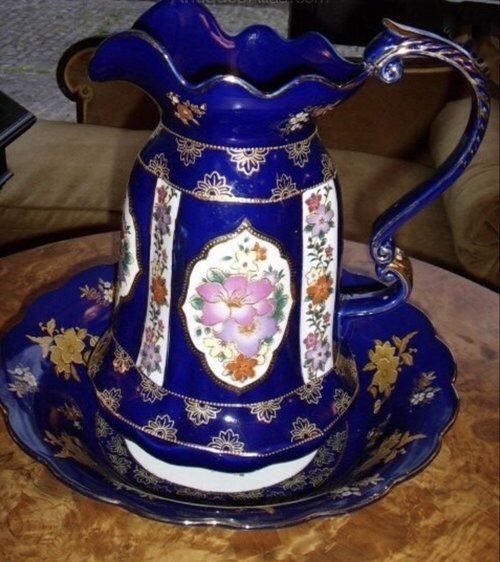
A blue glazed ceramic jug brings hand-thrown weight and deep cobalt colour to a table, tracing centuries of domestic pouring vessels.
Blue Glazed Ceramic Jug
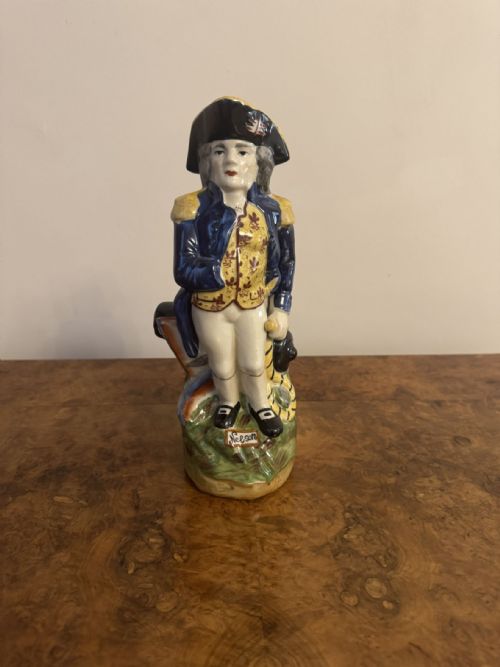
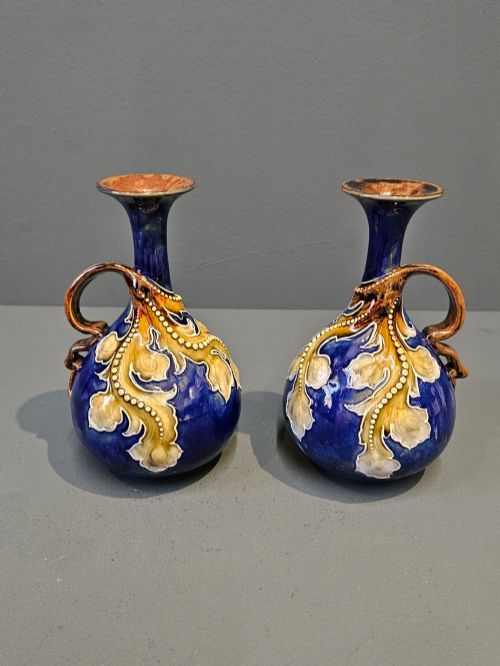
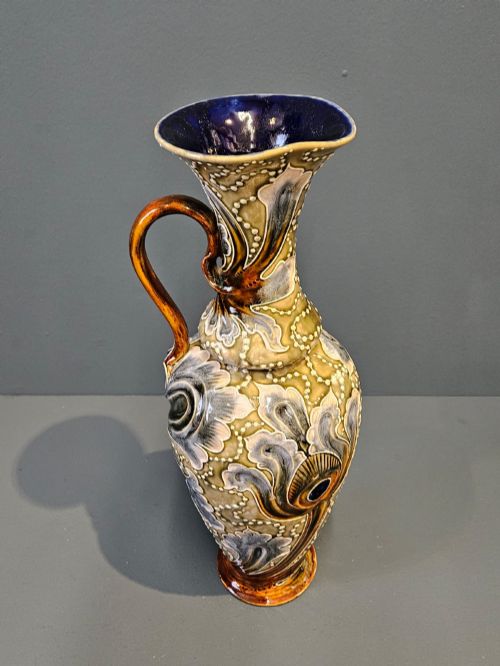
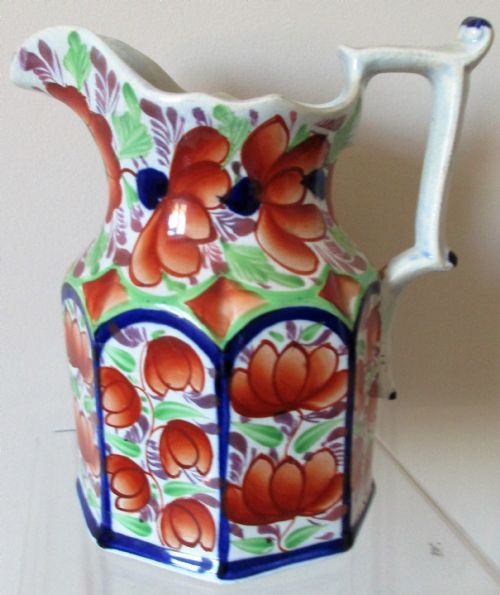
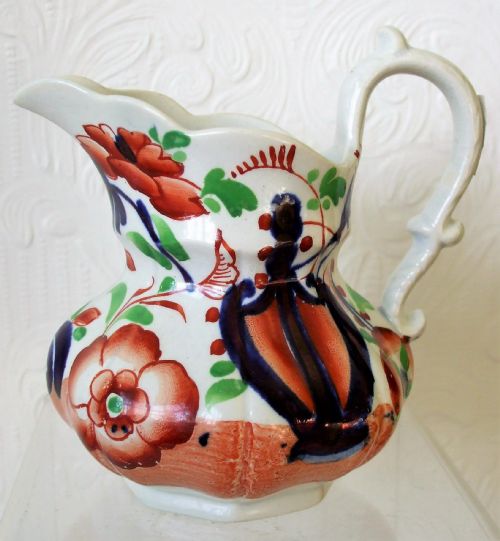
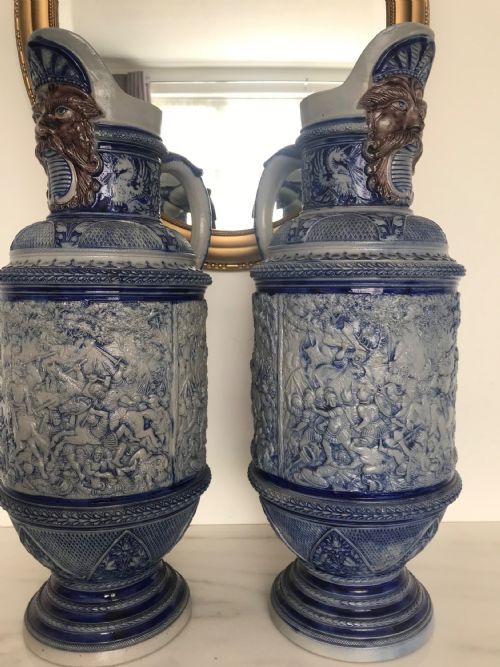
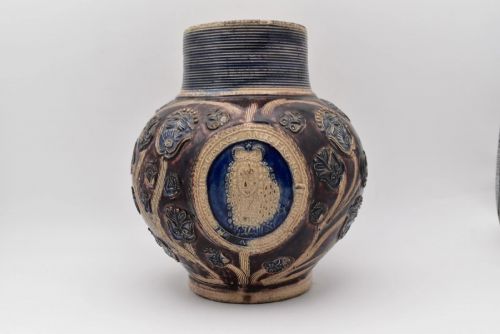
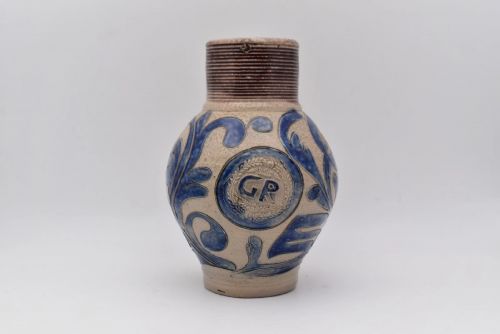
A blue glazed ceramic jug encompasses utilitarian pitchers, decorative ewers, and figural toby jugs shaped from earthenware, stoneware, and porcelain. The selection ranges from robust German salt-glazed vessels of the seventeenth century to intricate Victorian art pottery.
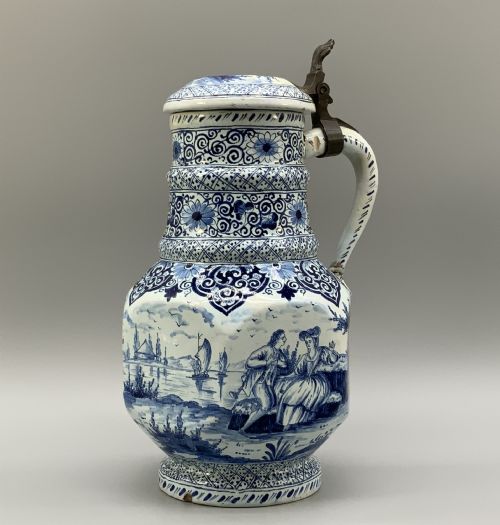
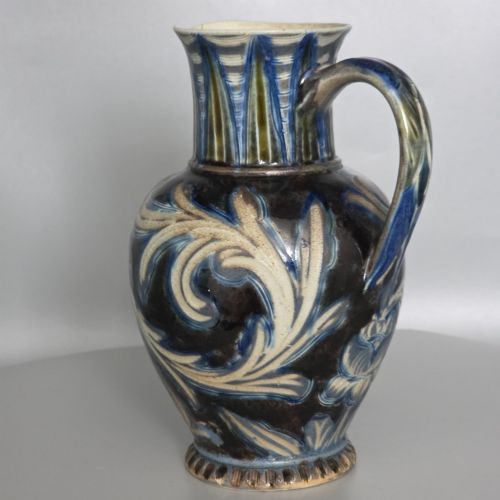
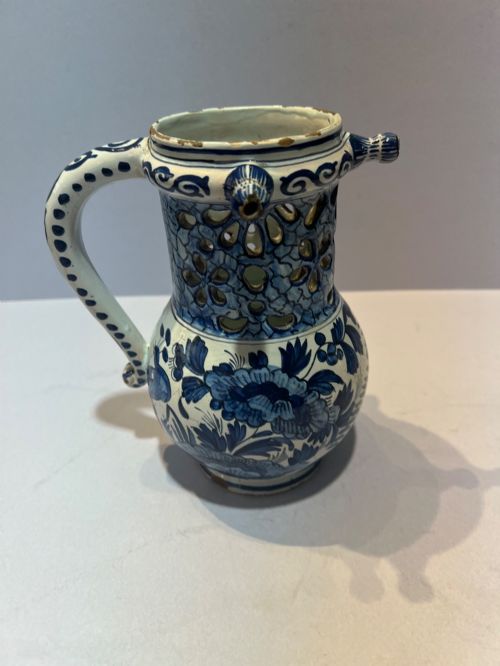
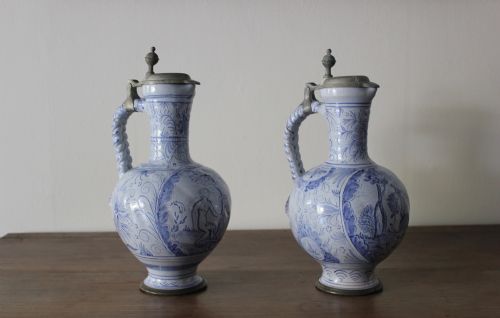
Dutch delftware examples showcase tin-glazed surfaces painted with blue floral and Chinoiserie motifs, sometimes fitted with pewter lids. Later nineteenth-century pieces lean towards the robust salt-glazed stoneware of Doulton Lambeth and German Westerwald manufactories.
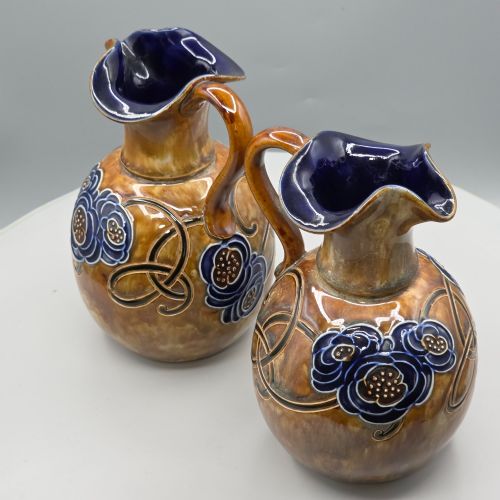
Buyers will encounter matched pairs, monumental ewers, and diminutive puzzle jugs designed for eighteenth-century tavern amusement. The form bridges daily utility and cabinet display across multiple European traditions.
How they were made
Potters shaped these vessels on the wheel or in moulds using clay bodies such as earthenware, stoneware, and porcelain. Salt glazing produced a pitted, orange-peel texture during kiln firing, while tin glazing created an opaque white surface ready for cobalt brushwork.
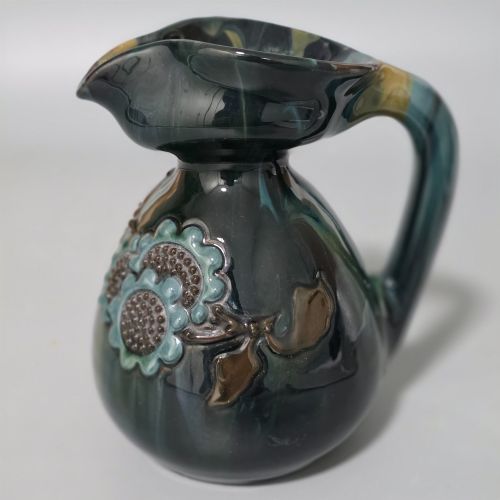
Studio potters like Sir Edmund Elton applied iridescent slips, and workshops utilised incised stamps, moulded reliefs, and applied pewter lids. Cobalt oxide provided the characteristic blue pigment under transparent or opaque covers.
Listings feature salt-glazed stoneware, tin-glazed delftware, and earthenware spanning the seventeenth to the twentieth century.
What varies in quality
The precision of the cobalt painting dictates visual depth, separating loosely brushed floral motifs from sharply rendered historical scenes and Chinoiserie figures. Crispness in incised stoneware detailing and well-defined mouldings reveal the skill behind the piece.
The harmony between the glaze depth and the underlying clay body determines the tactile success of the vessel. Intact pewter mounts, clear maker stamps, and well-preserved handles complete the standard of the better examples.
Royal Doulton·Doulton Lambeth·Simon Peter Gerz·Sir Edmund Elton·Pieter Verburg
The Blue Glazed Ceramic Jug Glossary
- Tin Glaze
- A lead glaze rendered opaque by the addition of tin oxide, providing a white background for blue painted decoration. This technique defines traditional delftware production.
- Salt Glaze
- A ceramic finish achieved by throwing common salt into the kiln during high-temperature firing, creating a durable textured surface. It is typical of Westerwald and early stoneware production.
- Puzzle Jug
- An eighteenth-century ceramic vessel featuring a hollow, pierced rim and multiple spouts that trick the drinker into spilling unless held correctly. They were popular in taverns for social amusement.
- Toby Jug
- A pottery jug shaped as a jovial seated figure, usually wearing eighteenth-century attire and holding a mug of beer. Staffordshire potteries produced these extensively.
- Ewer
- A large jug with a flared spout and curved handle, historically used for pouring water at the washstand or dining table.
Blue Glazed Ceramic Jug: Frequently Asked Questions
How do I spot a genuine salt glaze?
A genuine salt glaze presents a characteristic orange-peel texture with minute dimples across the stoneware surface, caused by vaporised salt reacting with the hot clay body during firing.
This finish is durable and impermeable, distinguishing traditional German and English stoneware jugs from smoother lead-glazed earthenware pieces.
Were these jugs used daily?
Many examples served practical roles at the table, pouring water, milk, or beer in domestic and tavern settings throughout the eighteenth and nineteenth centuries.
Finer decorative ewers and studio art pottery pieces were often intended strictly for display rather than heavy kitchen service.
How do I care for antique pottery?
Keep antique ceramic jugs away from direct sunlight and sudden temperature changes to protect the glaze and clay body from stress.
Dust them gently with a dry cloth and avoid submerging pieces with old repairs or delicate pewter mounts in water.
What is delftware?
Delftware is tin-glazed earthenware produced in the Netherlands and England, featuring white surfaces painted with blue designs inspired by imported Chinese porcelain.
These pieces often display floral or Chinoiserie motifs and sometimes carry pewter lids characteristic of the seventeenth and eighteenth centuries.