



Antique Maritime Pottery
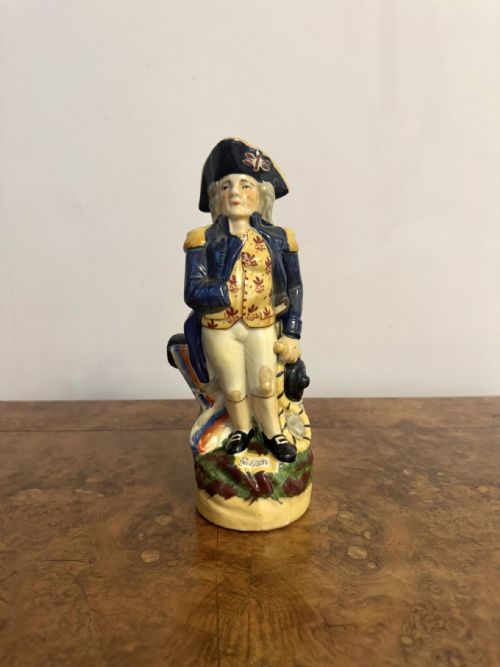
Antique maritime pottery brings practical sea-faring life and naval history directly into the room through durable earthenware jugs, plates, and bowls.
How antique maritime pottery was made
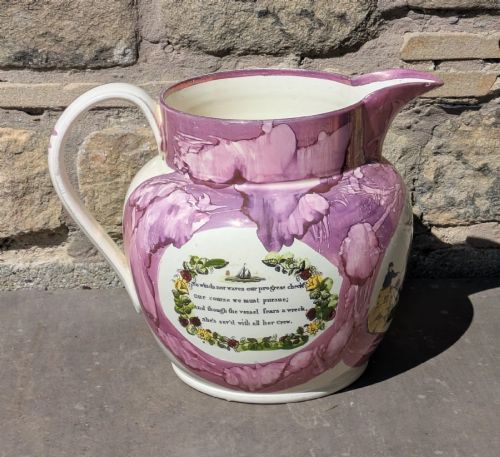
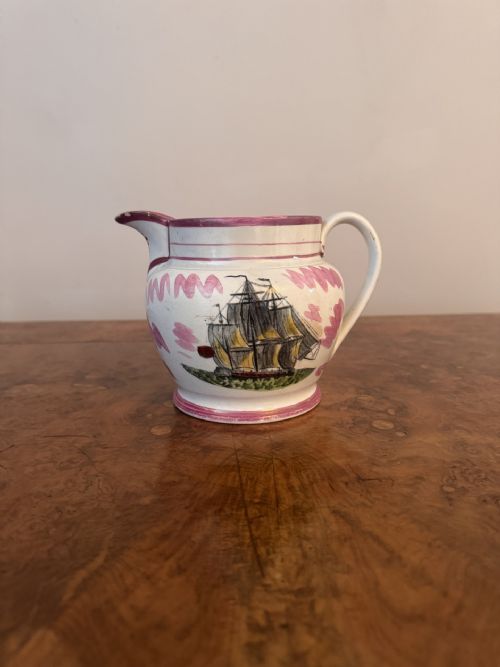
Potters utilised earthenware and ceramic bodies, shaping them into jugs, bowls, and plates before applying glazes and metallic oxides. Surface decoration relied on blue and white printing techniques, hand painting, and metallic glaze applications to create signature pink lustre effects. Kiln firing fixed these pigments and glazes to withstand daily wear in domestic or naval settings.
Regional potteries employed distinct moulding and throwing methods, with Staffordshire, Liverpool, and Doulton Lambeth producing varied vessel forms. Artisans applied ceramic glaze and paint to earthenware surfaces, often incorporating transfer-printed sailing vessels and commemorative inscriptions into the wet or fired clay.
What varies in quality in antique maritime pottery
Quality rests upon the crispness of the transfer printing and the hand-painted detailing of the maritime scenes. Finer examples display cleanly struck tall ships and legible verses, whereas simpler pieces show blurred pigment transfer or uneven glaze pooling.
The complexity of the ceramic form and the richness of the metallic lustre or blue and white pigments separate standard utilitarian ware from superior commemorative presentation pieces. Intact glaze surfaces and well-preserved earthenware bodies without extensive modern restoration indicate higher preservation standards.
Antique Maritime Pottery Retail Price Guide 2026
Typical asking prices for maritime pottery among the pieces listed under this phrase on Sellingantiques today, from the lower quarter to the upper quarter. They describe what is for sale here now, not the wider market.
Listings feature earthenware, ceramic glaze, and metallic oxide materials spanning the Georgian and Victorian periods.
Doulton Lambeth·Liverpool Herculaneum
The Antique Maritime Pottery Glossary
- Lustreware
- Earthenware decorated with a metallic glaze that produces an iridescent sheen. This technique creates the characteristic pink or copper shine seen on nineteenth-century Sunderland jugs.
- Transfer printing
- A method of applying detailed designs to ceramics using an engraved copper plate and thin paper. This technique allowed potteries to reproduce complex sailing ship scenes consistently across multiple plates and jugs.
- Earthenware
- Porous pottery fired at lower temperatures than stoneware or porcelain. It forms the heavy, durable body of most nineteenth-century maritime jugs and bowls.
- Charger
- A large decorative plate designed to be displayed on a wall or dresser rather than used for dining. Maritime chargers often feature large painted or printed sailing vessels.
Antique Maritime Pottery: Frequently Asked Questions
What are antique maritime jugs made from?
These vessels are constructed from traditional earthenware and ceramic bodies, finished with protective glazes.
Potters applied metallic oxides and paint to create the distinctive lustre and coloured surface scenes.
How do I date an old maritime bowl?
Dating relies on stylistic clues, ceramic bodies, and manufacturing techniques recorded across Georgian and Victorian periods.
Inscriptions, naval themes, and specific transfer-printing styles help narrow down the production era.
Where were maritime plates produced?
Production centred on notable pottery regions in Britain, including Staffordshire, Sunderland, and Liverpool.
Dutch and French kilns also contributed tin-glazed earthenware and decorative pieces featuring nautical motifs.
How were sailors arms bowls used?
These large bowls served practical functions in mess halls, taverns, and homes associated with seafaring communities.
They often commemorated voyages, naval officers, or crew camaraderie with verses and depictions of sailing ships.