





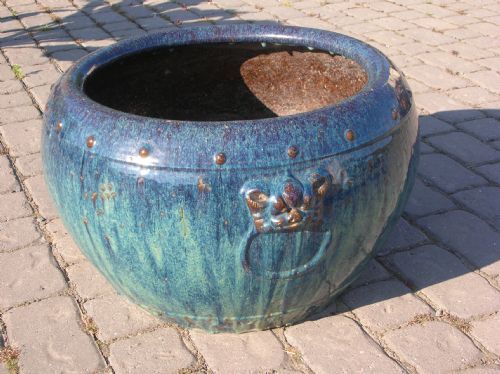


Blue Glaze Ceramic Planter
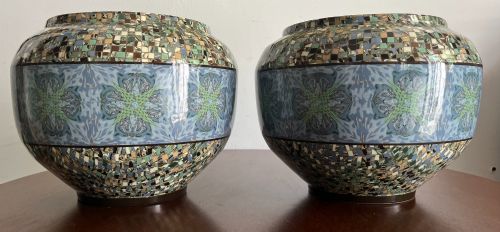
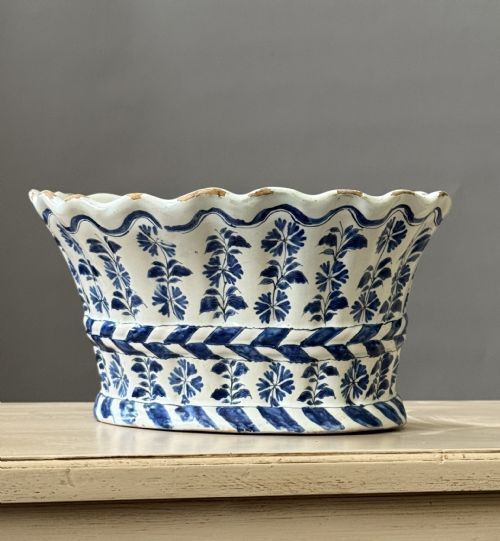
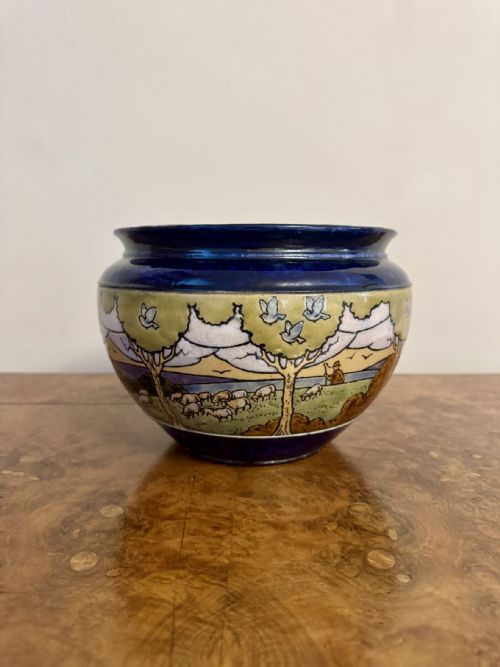
These blue glaze ceramic planter pieces bring depth of colour and planted greenery together through centuries of studio and factory work.
Blue Glaze Ceramic Planter
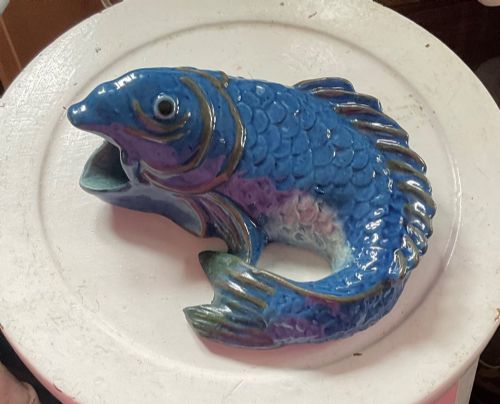
A blue glaze ceramic planter is primarily encountered in forms such as jardinieres, garden urns, bough pots, and wall pockets. The selection ranges from eighteenth-century tin-glazed earthenware and Delftware to Victorian art pottery and later stoneware vessels.
Makers utilised diverse regional traditions, creating English majolica, French faience, Dutch baroque styles, and Chinese Qing Dynasty pieces. Buyers will find both pedestal-supported jardinieres and standalone bowls designed for interior or garden use.
The aesthetic centres on rich cobalt and deep azure washes applied over earthenware, stoneware, or ceramic bodies. These containers served to house indoor palms, floral arrangements, and garden foliage across various historic eras.
Materials and construction
Potters shaped these vessels using earthenware and dense stoneware bodies, often forming them on a wheel or in moulds before firing. Stoneware pieces provided frost-resistant qualities, whilst earthenware bodies suited intricate surface modelling and tin-glazing.
Makers applied liquid tin-glazes, salt glazes, or lustre finishes to achieve the characteristic blue surfaces. Cobalt oxide served as the primary colourant, producing deep cobalt tones under high-temperature kilns.
Blue Glaze Ceramic Planter Retail Price Guide 2026
Typical asking prices for blue glaze ceramic planter among the pieces listed under this phrase on Sellingantiques today, from the lower quarter to the upper quarter. They describe what is for sale here now, not the wider market.
The listings include Victorian art pottery, eighteenth-century Delftware, and nineteenth-century stoneware across English, French, German, and Chinese origins.
Factors of quality
Quality rests in the precision of the throwing or moulding and the depth of the blue glaze. Superior examples display controlled brushwork, even glaze distribution, and crisp relief decoration without kiln distortion.
The distinction between standard commercial output and fine art pottery lies in the complexity of the glaze chemistry and the prominence of the maker. Pieces featuring lustre effects or elaborate slip-raised patterns demonstrate advanced workshop skill.
Royal Doulton·Doulton Burslem·Doulton Lambeth·Clement Massier·Minton·Royal Worcester·George Jones
The Blue Glaze Ceramic Planter Glossary
- Jardiniere
- A large ornamental ceramic pot or stand designed to hold a plant or floral arrangement. These vessels frequently feature heavy potting and footed bases.
- Tin-Glaze
- An opaque white earthenware glaze containing tin oxide, painted with metal oxides before a final firing. This technique underpins traditional Delftware and faience production.
- Slaterware
- A textured ceramic technique developed by Doulton, imitating lace or basketry pressed into the clay body. It often incorporates gilded details alongside blue glazes.
- Bough Pot
- A vessel specifically formed with pierced lids or openings to hold cut branches and flowers. Eighteenth-century examples are typically composed of tin-glazed earthenware.
- Majolica
- A colourful lead-glazed earthenware popular during the Victorian period, known for moulded plant and animal forms. English factories produced large jardinieres in this technique.
Blue Glaze Ceramic Planter: Frequently Asked Questions
What is the difference between a jardiniere and a planter?
A jardiniere typically refers to an ornamental ceramic pot designed to house a potted plant without a direct planting hole in the base. They often sat on matching ceramic stands or pedestals inside Victorian reception rooms.
Planters share a similar function but can encompass a broader range of garden and wall-mounted vessels. The distinction often lies in the formality of the decorative finish rather than the potting structure.
How do I date a blue glaze ceramic planter?
Dating relies on identifying the underlying ceramic body, glaze type, and maker's marks stamped or painted on the base. Eighteenth-century pieces generally show tin-glazed earthenware bodies with hand-painted cobalt designs.
Victorian and later pieces often incorporate salt-glazed stoneware or majolica techniques stamped with factory ciphers. Comparing the form against documented pottery catalogues provides more precise decade attribution.
Can these antique planters be used for live plants?
Many historic vessels lack drainage holes because they functioned primarily as outer decorative cachepots for potted plants. Placing a plastic nursery pot inside prevents moisture damage to the antique ceramic body.
Stoneware and salt-glazed examples tolerate damp conditions better than porous earthenware bodies. Careful watering preserves both the interior glaze and the structural integrity of the antique piece.
How should I display an antique jardiniere?
Jardinieres suit low tables, pedestals, or architectural ledges where the upper rim and side glaze can be viewed easily. Placing them away from high-traffic areas protects the glazed surfaces from accidental impact.
Wall pockets require secure fixings into structural walling to support the weight of the ceramic and soil. Lighting that catches the reflective blue glaze enhances the depth of the historic finish.