



Blue Glass Tableware
These pieces of blue glass tableware bring rich colour to the dining table through Georgian and Victorian condiment sets, sugar baskets and liners.
Blue Glass Tableware
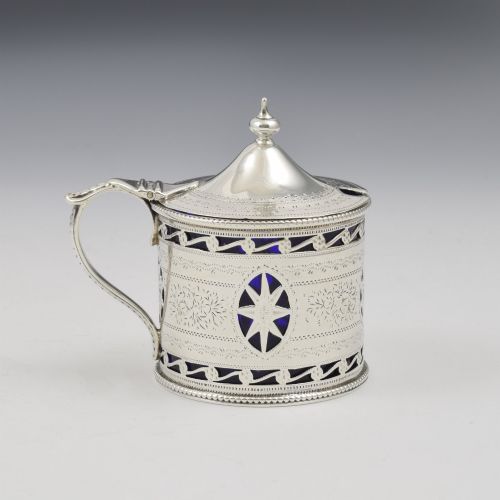
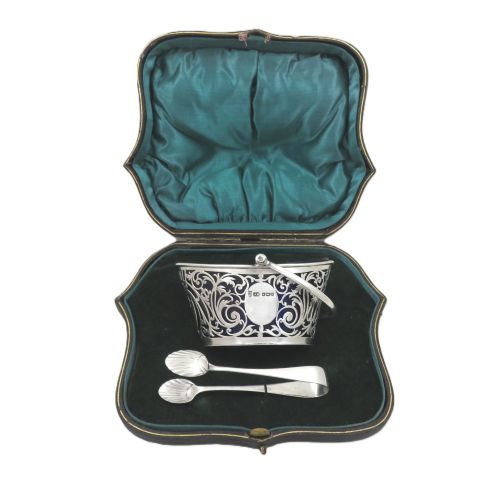
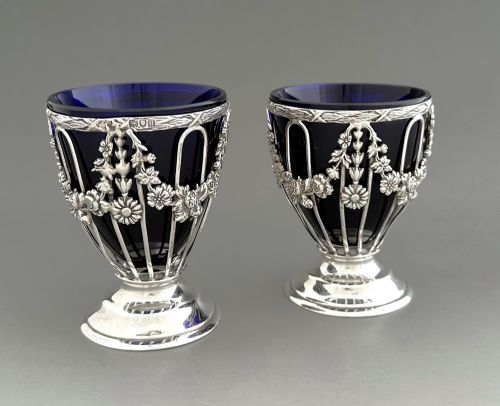
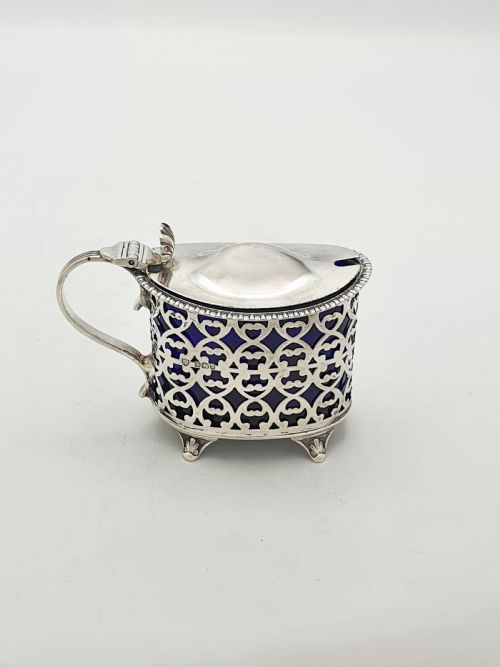
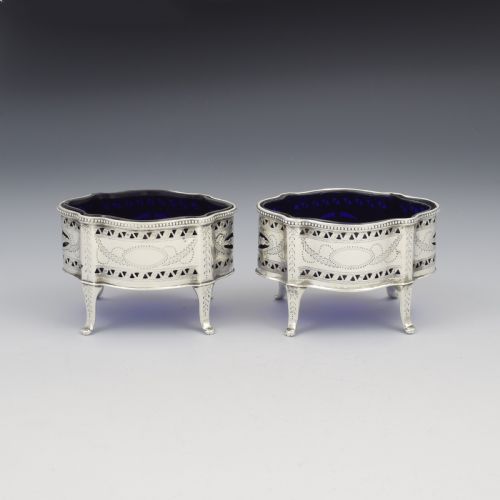
Blue glass tableware encompasses functional dining items from the eighteenth, nineteenth and early twentieth centuries, most frequently appearing as removable liners inside sterling silver or silver plated mustard pots, salt cellars and sugar baskets. These vessels range from hand-painted Bristol blue cream jugs to wrythened glass egg cups and cast sugar bowls designed to sit within pierced or wirework metal frames.
The objects on this page span several eras including Georgian, Victorian, Edwardian and Art Deco periods. Buyers encounter small condiment containers intended for individual place settings alongside larger serving pieces like sugar baskets and cream pails.
Originating largely from English workshops, these items served practical dining functions in wealthy households before evolving into collectible display pieces. The combination of deep blue glass and bright silver creates a high-contrast visual that defined formal dining tables across multiple centuries.
Materials and construction
Makers produced the glass elements using free-blowing, mould-blowing or press-moulding techniques, often incorporating cobalt oxides to achieve rich blue tones. Some early examples feature wrythen optic ribbing or delicate hand-painted decoration applied directly to the surface.
Metal frames utilise sterling silver, silver plate or wirework construction, fabricated through piercing, casting and soldering methods. Craftsmen shaped housings precisely to fit removable glass liners, securing them with hinged lids, handles or fitted velvet cases.
Listings feature sterling silver, silver plate and cobalt blue glass across Victorian, Edwardian, Georgian and Art Deco periods.
Quality factors in blue glass tableware
Quality rests on the crispness of the metalwork, whether pierced, wirework or cast, and the proportional harmony between the glass liner and its metal mount. Superior pieces display intricate hand-chasing, tight joints and hallmarks that confirm maker identity and solid sterling silver composition rather than plating.
The depth and clarity of the blue glass itself separates standard production from finer examples. Wrythen twists, hand-painted details and intact original liners that fit their metal frames without wobble or excessive gap indicate superior manufacturing standards.
Nathan & Hayes·William Neale·Charles Stuart Harris·Rene Lalique
The Blue Glass Tableware Glossary
- Cobalt Glass
- Glass coloured deep blue by the addition of cobalt oxide. This material gained widespread popularity during the Georgian and Victorian periods for tableware liners and decorative vessels.
- Mustard Pot
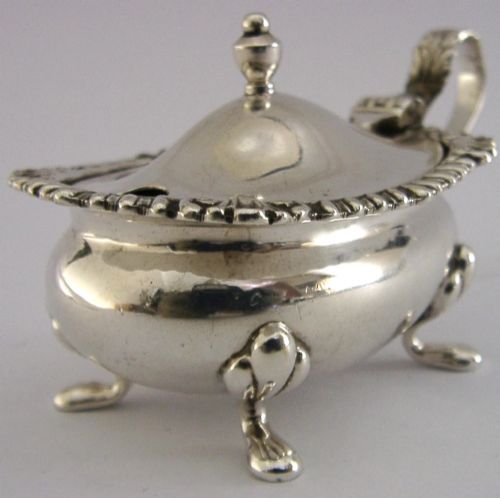
- A small covered jar used for serving prepared mustard at the dining table. These containers frequently featured blue glass liners visible through pierced silver frames.
- Salt Cellar
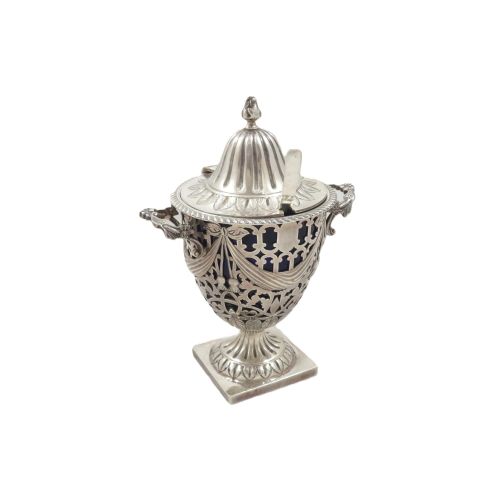
- An open vessel or enclosed container used to hold loose salt for individual or shared dining. Examples on this page often pair sterling silver frames with cobalt blue glass inserts.
- Sugar Basket
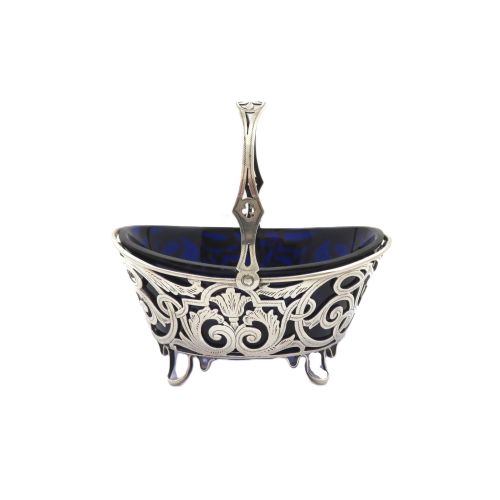
- A footed or handled open basket designed to hold lump or loose sugar on the tea table. They often incorporated swinging handles and fitted blue glass liners.
- Wrythen
- A decorative spiral or twisted pattern blown into the body of glassware. This technique appears on eighteenth-century English bowls and egg cups.
Blue Glass Tableware: Frequently Asked Questions
What is blue glass tableware used for?
These items held condiments, salt, sugar and cream during formal meals across the Georgian, Victorian and Edwardian periods. They served practical functions on dining and tea tables in affluent households.
Today, collectors utilise them as decorative accents or period-correct additions to antique table settings. Smaller pieces like salt cellars and mustard pots function well for display or gentle modern use.
How do I identify Victorian pieces?
Victorian examples often feature heavy sterling silver mounts with pierced designs, cast floral handles or elaborate repoussé work. Maker marks and date letters stamped into the silver provide precise manufacturing years.
Look for stylistic cues such as serpentine rims and cherub motifs. The integration of cobalt blue glass liners within pierced drum or basket frames is typical of this era.
Are the glass liners removable?
Most glass inserts inside mustard pots, sugar baskets and salt cellars lift out independently from their metal frames. This design facilitated easy cleaning and replacement after dining.
When examining a piece, check whether the glass fits snugly within the silver wirework or pierced housing. Original liners often show minor base wear consistent with age and removal.
What is Bristol blue glass?
Bristol blue glass is a distinct deep cobalt tableware material produced in the Bristol area during the late eighteenth and nineteenth centuries. It gained renown for its rich coloration and use in cream jugs, sugar bowls and finger bowls.
Examples often feature hand-painted gilding or enamel decoration applied over the glass surface. They represent some of the most sought-after forms in early table settings.