


English Blue Glass
English antique blue glass encompasses centuries of rich tableware, vessels and decorative objects prized for their striking cobalt and turquoise hues.
English Blue Glass
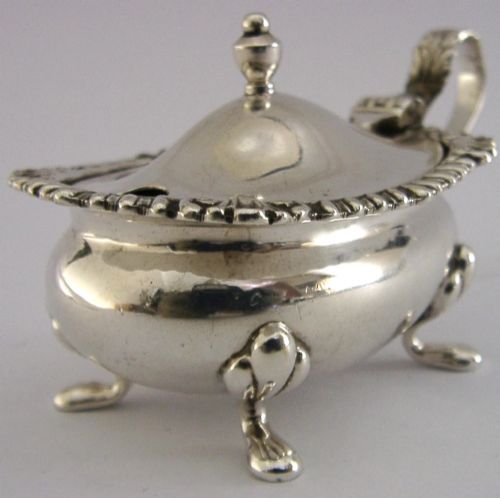
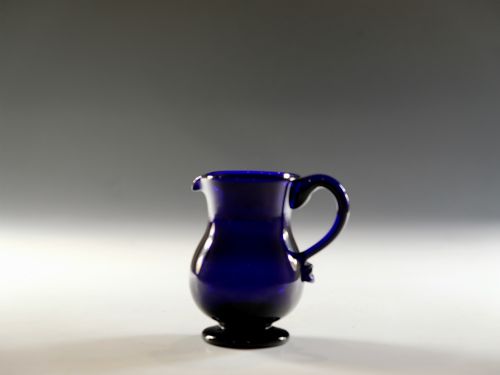
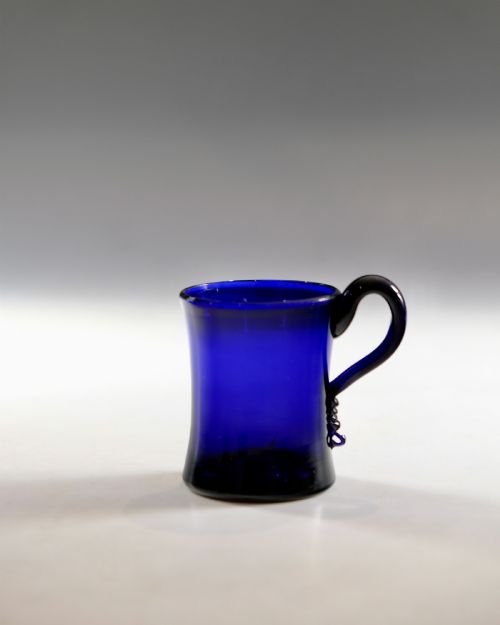
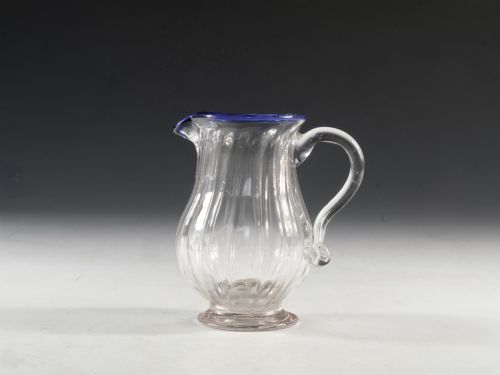
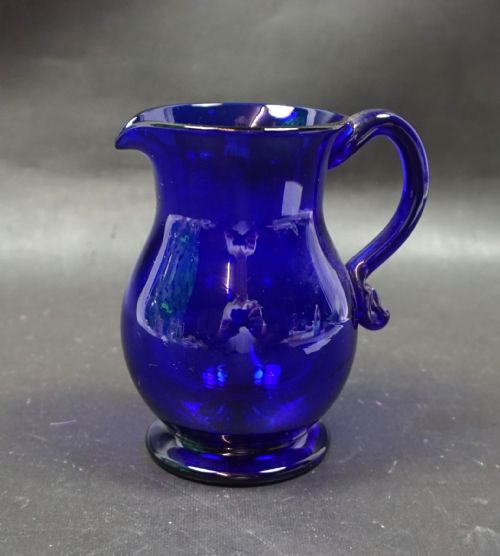
English antique blue glass includes functional tableware and decorative objects spanning the Georgian, Victorian and Edwardian eras. Buyers encounter practical domestic items such as cream jugs, sugar bowls, mustard pots, finger bowls and egg cups alongside decorative vases and oil lamps.
How they were made
Maker methods involve lead glass and cobalt glass formulations shaped through blowing, often seen in wrythen-moulded tableware and decanters. Artisans also utilised cased and satin glass techniques to layer contrasting colours and textures, particularly in Victorian decorative vases.
Metalwork integration defines many pieces, combining glass liners with cast or pierced sterling silver, silver plate, and gilt brass mounts. Enamel decoration and intaglio engraving further embellish selected items, adding tactile surface detail to the finished objects.
Glass rolling pins from Nailsea were traditionally filled with salt or tea and hung by the hearth to bring good luck to the home.
What varies in quality
Quality differences lie in the depth of the glass colour, the precision of the cut or moulded patterns, and the weight of the material. Rich, uniform saturation in cobalt and opaline vessels distinguishes superior examples from paler or unevenly tinted alternatives.
The sophistication of associated metal mounts, such as pierced sterling silver frames or finely chased silver plate, elevates the overall standard of condiment sets and baskets. Intricacy in secondary details, like wrythen twisting or engraved intaglio motifs, marks the upper tier of production.
Elkington and Co·Wedgwood·Broadway and Co
The English Blue Glass Glossary
- Cobalt Glass
- A deep blue glass coloured with cobalt oxide. This intense hue characterises many Georgian and Victorian tablewares.
- Cased Glass
- Glass made from multiple distinct layers of different colours. This technique allows skilled artisans to create contrasting exterior and interior hues.
- Wrythen
- A twisted optical pattern formed while blowing the glass. It creates a spiral decorative effect across jugs, cups and bowls.
- Opaline Glass
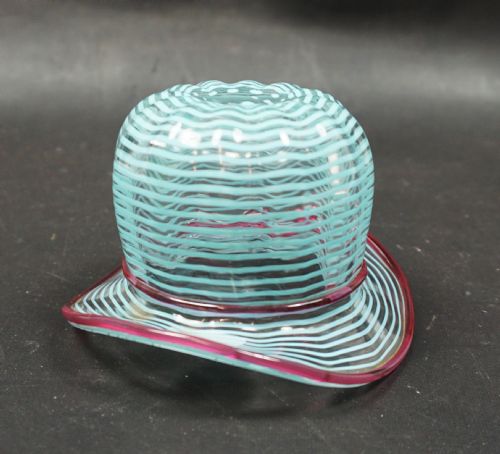
- A semi-opaque glass with a delicate pastel appearance. It was frequently utilised for Victorian decorative liners and vases.
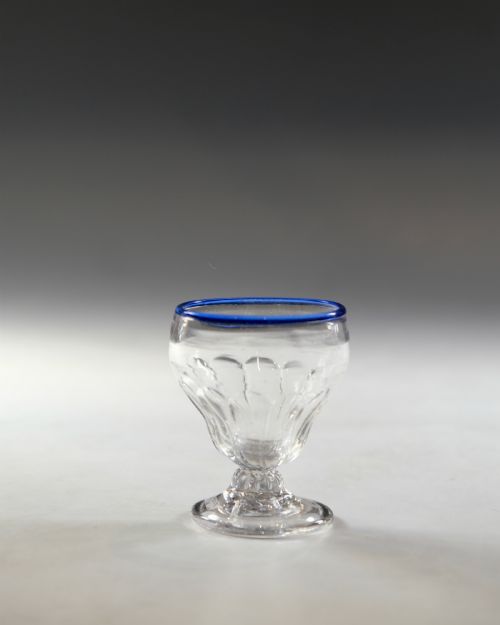
- Bonnet Glass
- A small shallow bowl on a stem or foot, historically used for confectionery. Examples often feature vibrant blue rims or solid bodies.
English Blue Glass: Frequently Asked Questions
What is Bristol blue glass?
Bristol blue glass refers to the deep cobalt glassware historically produced in the Bristol area during the eighteenth and nineteenth centuries.
Collectors often apply the term broadly to rich blue domestic vessels like cream jugs, finger bowls and decanters from the Georgian period.
How were blue glass liners used?
Blue glass liners served as functional inserts for silver and silver-plated mustard pots, sugar baskets, and condiment stands.
They protected the precious metal frames from vinegar and salt corrosion while providing a vibrant visual contrast through pierced metalwork.
How do I identify Georgian blue glass?
Georgian blue glass pieces typically display heavier lead composition, pontil marks on the base, and simpler, functional forms like wrythen jugs and bonnet glasses.
Handling the pieces reveals the tactile depth and minor imperfections characteristic of early hand-blown manufacturing techniques.