



Blue Gilded Teacup
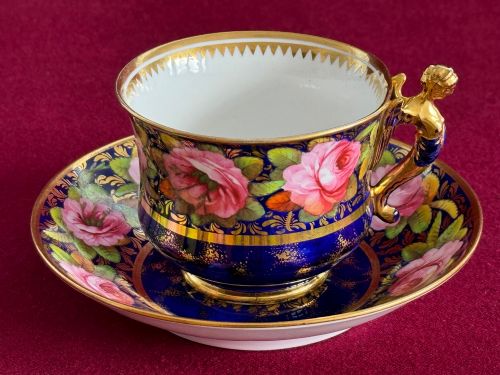
A blue gilded teacup brings cabinet-level artistry to the table, pairing rich cobalt grounds with refined gold leaf.
Blue Gilded Teacup
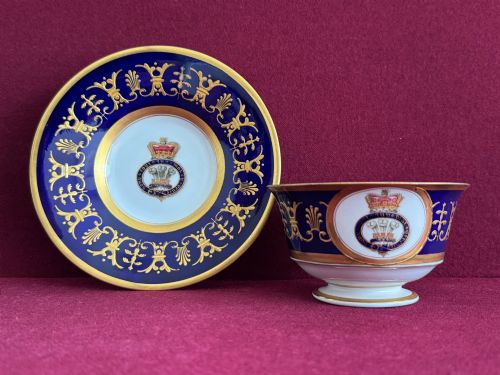
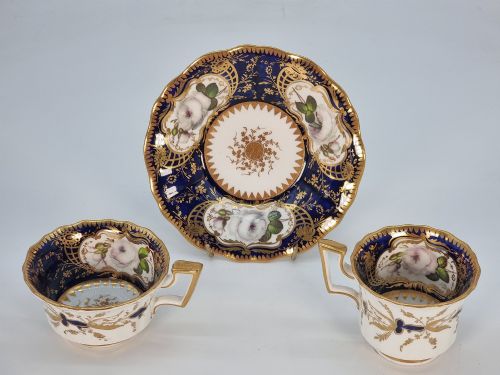
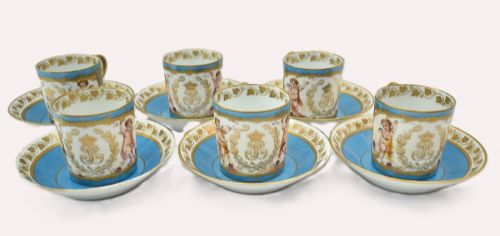
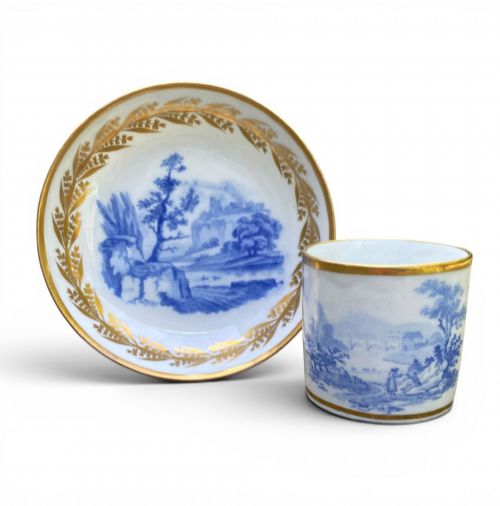
A blue gilded teacup encompasses delicate teacups and saucers, coffee cans, tea bowls, and trios from periods spanning the eighteenth century through to the early twentieth century. These drinking vessels showcase deep cobalt grounds combined with metallic enrichment, appearing across English and continental factories.
The pieces listed on this page run from Georgian tea bowls and Regency cabinet trios to Victorian services and Bohemian tea sets. Most examples combine a rich blue glaze with hand-applied gilding, appearing as individual cups and saucers or larger sets.
Materials and production methods
Manufacture relies on hard-paste porcelain, soft-paste porcelain, and bone china, providing a smooth white ground for cobalt decoration and enamel work. Potters shaped these bodies on the wheel or in moulds before firing and glazing.
Gilding is applied using gold leaf or gold gilt, often hand-applied and burnished to catch the light against the blue backdrop. Enamel colours frequently supplement the metallic highlights in floral and geometric patterns.
Blue Gilded Teacup Retail Price Guide 2026
Typical asking prices for blue gilded teacup among the pieces listed under this phrase on Sellingantiques today, from the lower quarter to the upper quarter. They describe what is for sale here now, not the wider market.
Materials recorded across the inventory include bone china, soft-paste porcelain, enamel, and multiple forms of gold gilding.
Distinguishing quality across periods
Quality rests on the precision of the hand-painting, the crispness of the porcelain moulding, and the depth of the cobalt blue ground. Superior pieces feature meticulous enamel work and finely chased gilding that remains intact across handle and rim.
Factory origin and decorator skill also dictate standing, with marked pieces from notable porcelain works demonstrating superior ceramic bodies and sophisticated palette control compared to standard commercial wares.
Spode·Barr and Barr·Minton·H and R Daniel·New Hall·Coalport·Sevres·Worcester·Moser·Royal Crown Derby
The Blue Gilded Teacup Glossary
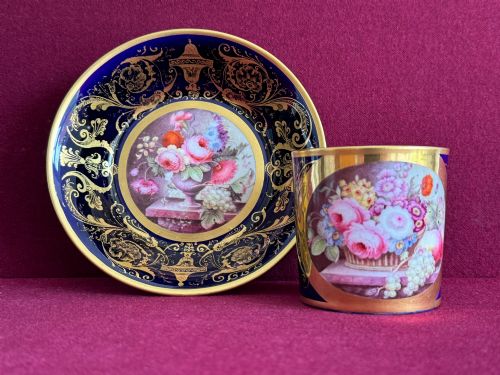
- Coffee Can
- A straight-sided cylindrical cup designed for drinking strong coffee, popular during the Georgian and Regency periods. These vessels usually lack handles and sit alongside matching saucers.
- Tea Bowl
- A handleless drinking vessel used before the widespread adoption of handled cups, common in eighteenth-century porcelain tea wares. They require careful holding and pair with shallow saucers.
- Trio
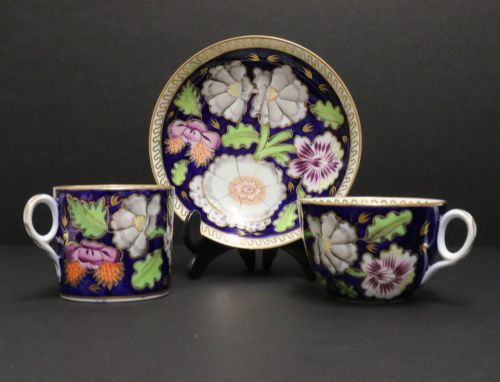
- A matched set consisting of a teacup, a coffee cup or tea bowl, and a saucer. These combined groupings formed part of larger breakfast and afternoon tea services.
- Soft-Paste Porcelain
- An artificial ceramic paste fired at lower temperatures than hard-paste porcelain, producing a warm, creamy body with a soft glaze. It characterises many early English pieces.
- Guilloche
- An architectural pattern of intersecting curved bands, often used as a border decoration on porcelain. On finer wares, these geometric lines are rendered in enamel and gold.
Blue Gilded Teacup: Frequently Asked Questions
Can I use these cups for daily tea?
While these cups were originally functional items, historical porcelain requires careful handling due to its age. Using them occasionally for special occasions is possible if handled with mindfulness.
Thermal shock from boiling water can crack fragile eighteenth-century or Regency bodies, so warming the cup gradually is advised. Most collectors prefer to keep cabinet pieces for display or gentle use.
What is the difference between a tea bowl and a teacup?
Tea bowls are handleless vessels modelled on Chinese prototypes, used throughout the eighteenth century for drinking hot tea. Drinkers held them with both hands or pinched the rim.
Teacups with applied handles emerged as European manufacturing evolved, offering a more comfortable grip. Both forms frequently appear alongside matching saucers in early ceramic services.
How do I date a porcelain teacup?
Dating relies on examining the shape of the handle, the style of the base rim, and any factory marks hidden underneath. Georgian and Regency pieces often feature distinct foot rings and delicate, ear-shaped handles.
Comparing the paste texture and pattern style against known factory timelines helps narrow the decade of production. Hand-painted botanical or geometric motifs also point to specific artistic periods.