

Cobalt and Gold China
Cobalt and gold china brings together deep blue glaze and rich metallic lustre on porcelain, creating striking contrast that draws the eye in any room.
Cobalt and Gold China
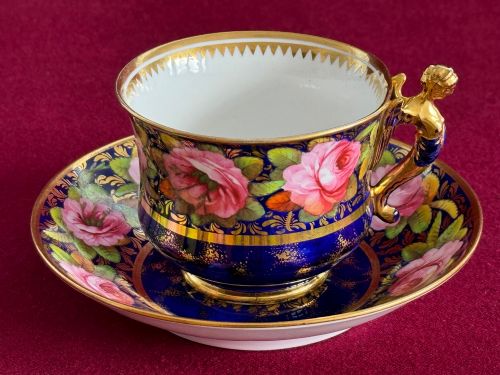
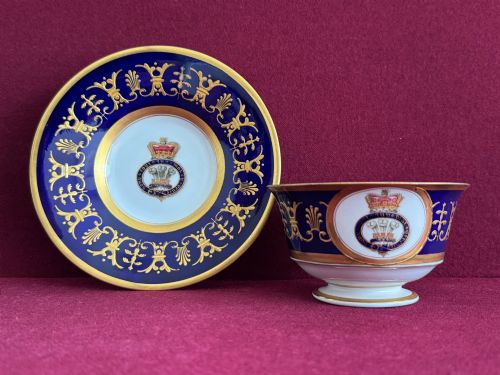
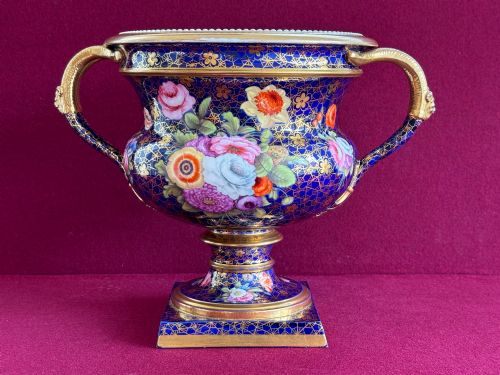
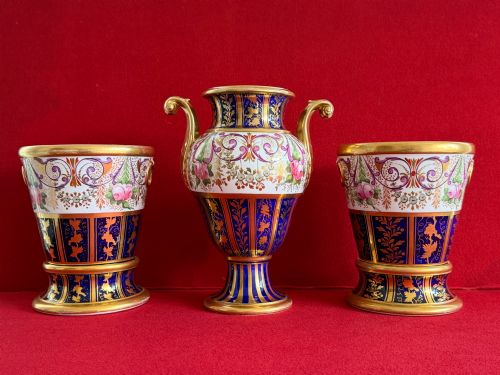
Cobalt and gold china covers an array of decorative and utilitarian forms spanning the Regency, Victorian, and Edwardian eras through the 1930s. Pieces range from grand cabinet plates and decorative vases to complete dessert services and tea sets originating from English and European factories.
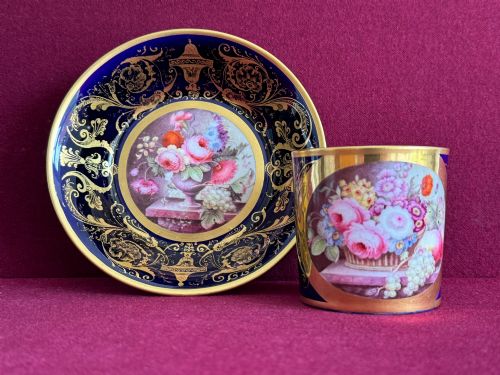
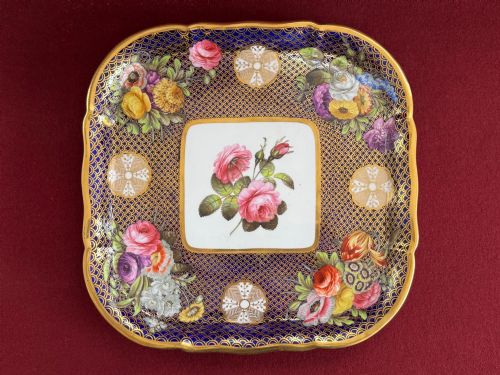
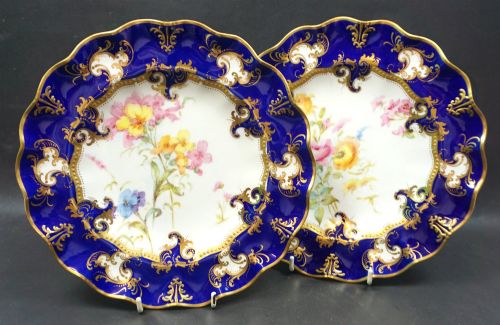
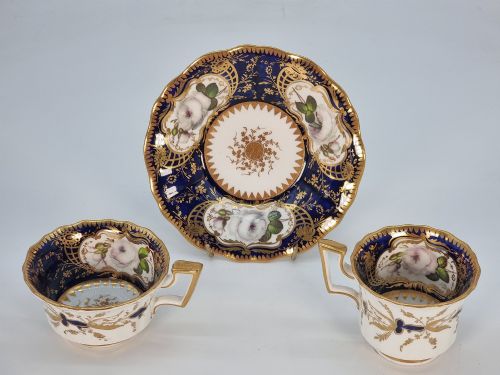
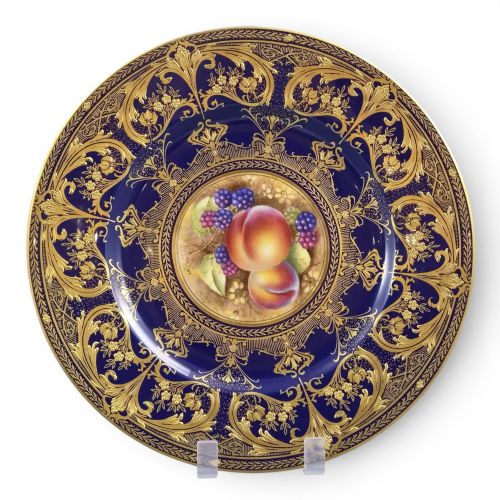
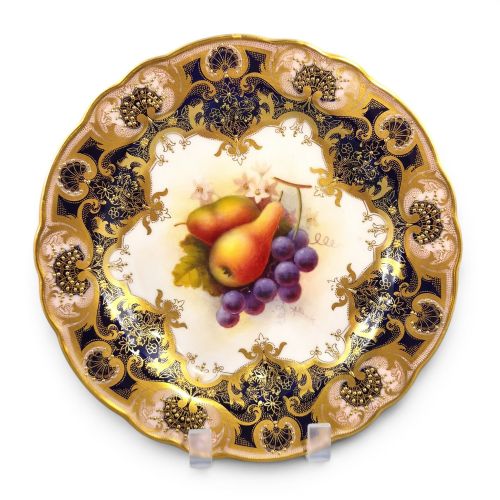
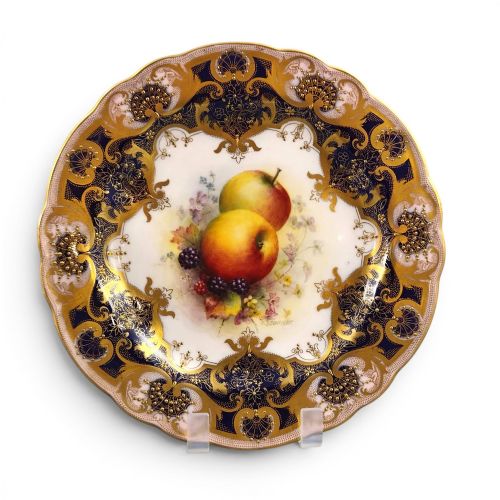
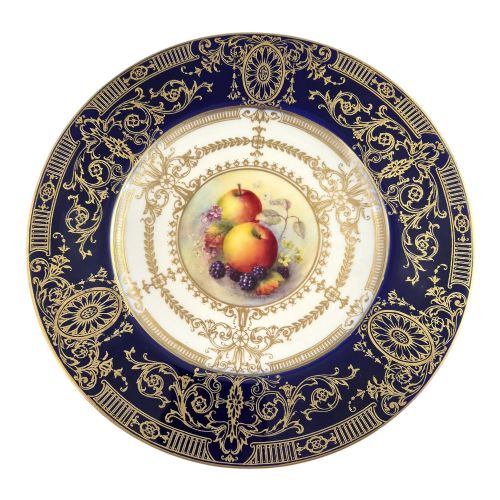
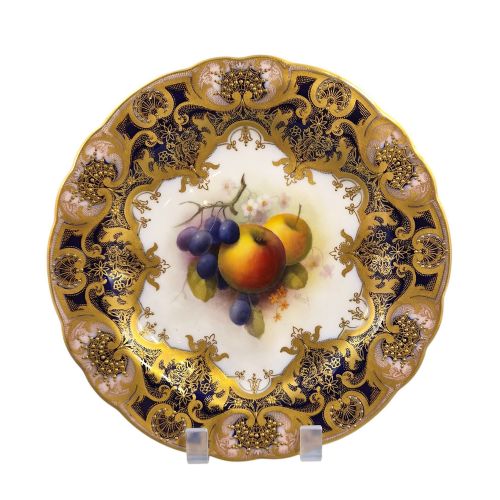
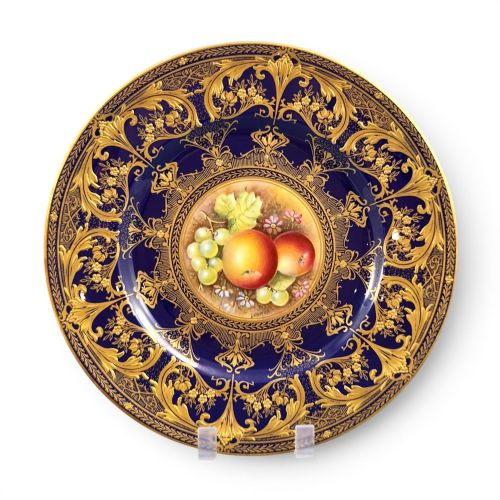
The most common examples encountered on this page are cabinet plates and tea wares from major English potteries like Royal Worcester, Coalport, and Royal Crown Derby. These items combine deep cobalt grounds with lavish gilding, often featuring hand-painted floral, fruit, or botanical motifs.
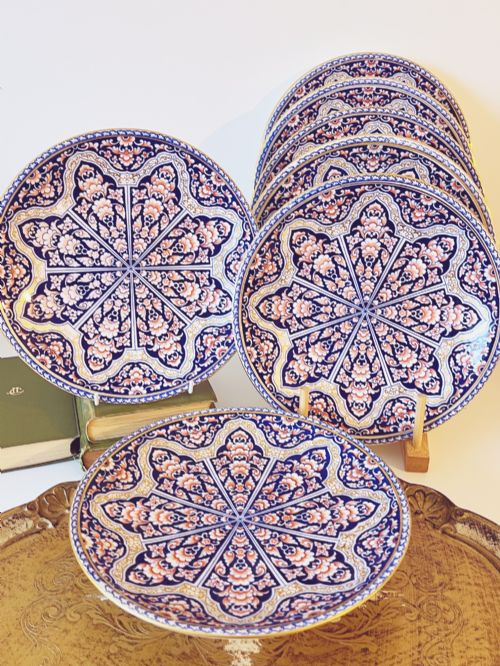
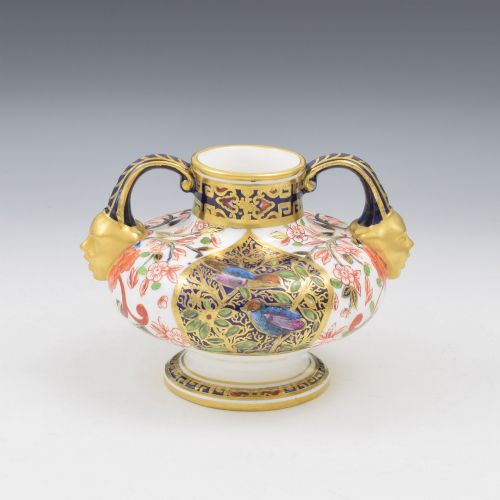
The selection extends from early nineteenth-century Regency and Georgian porcelain to mid-twentieth-century productions. Collectors encounter everything from individual cabinet cups and saucers to large serving dishes and decorative ewers.
Materials and technique
Makers utilised fine porcelain, bone china, and ironstone as the foundation for these wares, applying a stable cobalt oxide pigment beneath the glaze to achieve the characteristic deep blue ground. This mineral pigment withstood high kiln temperatures without losing its intensity.
Guilding and gold leaf were applied by hand over the fired glaze or enamel, then returned to the kiln for a final fixing. Artisans frequently employed tooled gilding and enamel painting to create intricate borders and central pictorial scenes.
Cobalt and Gold China Retail Price Guide 2026
Typical asking prices for cobalt and gold china among the pieces listed under this phrase on Sellingantiques today, from the lower quarter to the upper quarter. They describe what is for sale here now, not the wider market.
Listings feature porcelain, bone china, and ironstone decorated with cobalt and gold across Regency, Victorian, Edwardian, and Art Deco periods.
Variations in quality
The distinction between standard production and top-tier execution lies in the precision of the hand-painting and the depth of the gilding. Master artists signed their painted fruit and botanical panels, setting individual cabinet plates apart from factory-decorated wares.
The weight and purity of the gold leaf used for tooling also signal quality, alongside the crispness of the porcelain moulding and the uniformity of the cobalt ground without pooling or clouding.
Royal Crown Derby·Royal Worcester·Coalport·Royal Doulton·Doulton Burslem·Spode·Flight Barr and Barr·Meissen·Minton·New Hall·Ridgway·Royal Vienna
The Cobalt and Gold China Glossary
- Cabinet plate
- A decorative plate intended for display in a cabinet rather than for dining use. These often feature elaborate hand-painted scenes and heavy gilding.
- Gilding
- The application of gold leaf or gold powder to the ceramic surface. Tooled gilding involves engraving the gold to catch the light.
- Cobalt blue
- A deep, stable blue pigment derived from cobalt salts used beneath the glaze. It remains vibrant even after high-temperature firing.
- Bone china
- A type of soft-paste porcelain containing bone ash, developed in England to increase strength and translucency. It forms the base of many nineteenth-century tea sets.
- Ironstone
- A heavy, durable type of earthenware patented in the nineteenth century. It provides a sturdy body for mugs, jugs, and serving dishes.
Cobalt and Gold China: Frequently Asked Questions
How do I date cobalt and gold china?
Dating relies on factory backstamps, impressed marks, and stylistic clues from the Regency, Victorian, or Edwardian periods. Pattern numbers and handwritten artist signatures also help narrow down the year of manufacture.
Many English factories used specific date cyphers or pattern codes underneath the glaze. Comparing these marks with known factory records provides a reliable production window.
Can I use these plates for dining?
Most antique cabinet plates and tea wares are intended for display rather than daily use. The delicate nature of hand-painted enamels and raised gold leaf means they require careful handling.
Hand washing in tepid water with mild soap is essential if they are used. Dishwashers and microwaves will quickly damage the historical gilding and enamel work.
What is the difference between porcelain and ironstone?
Porcelain is vitrified, translucent, and fine-grained, often ringing when tapped lightly. Ironstone is a dense, opaque earthenware designed to be robust and heavy for everyday service.
While both accept cobalt grounds and gilding successfully, porcelain was typically reserved for fine cabinet plates and tea services. Ironstone suited larger mugs, jugs, and utility wares.
Why are some pieces signed by artists?
Specialist painters employed by factories like Royal Worcester signed their fruit, floral, or bird panels to denote exceptional skill. These individual artist signatures elevate the status of a cabinet plate.
Signed pieces represent the pinnacle of nineteenth and twentieth-century ceramic artistry. Collectors actively seek out known hands such as Richard Sebright or Albert Shuck.