





Blue Framed Seascape Painting
When seeking a blue framed seascape painting, collectors discover works capturing coastal light and maritime movement across the nineteenth and twentieth centuries.
Blue Framed Seascape Painting
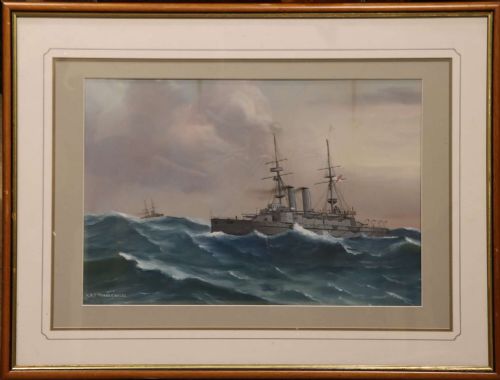
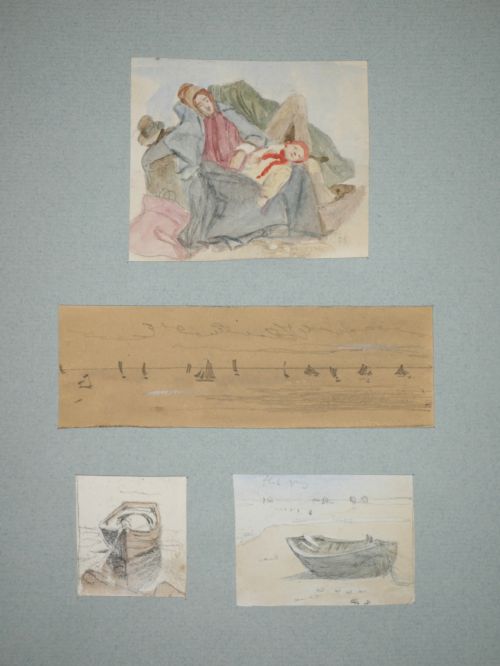
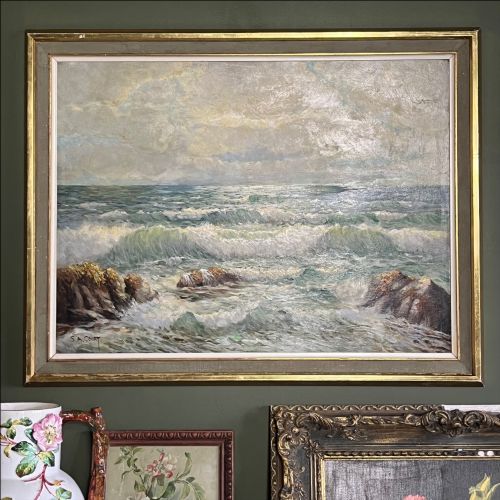
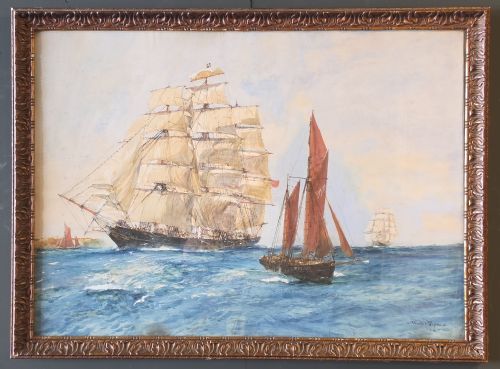
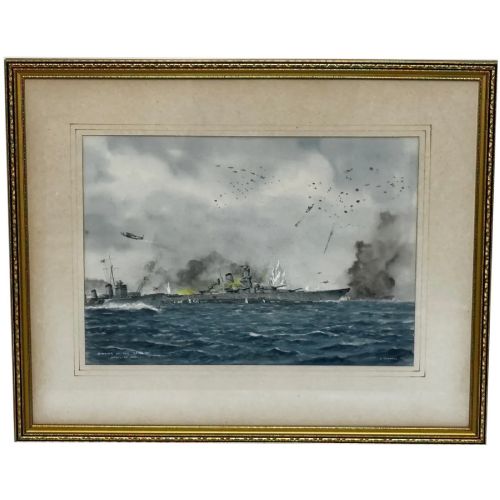
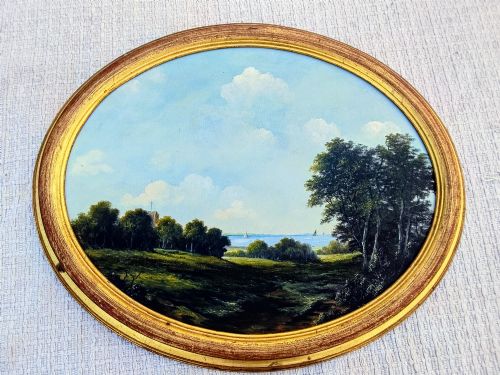
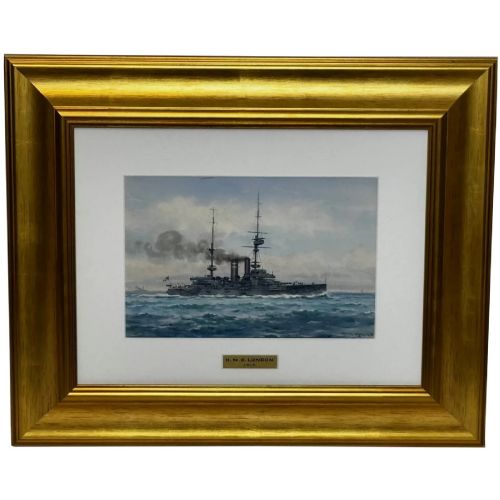
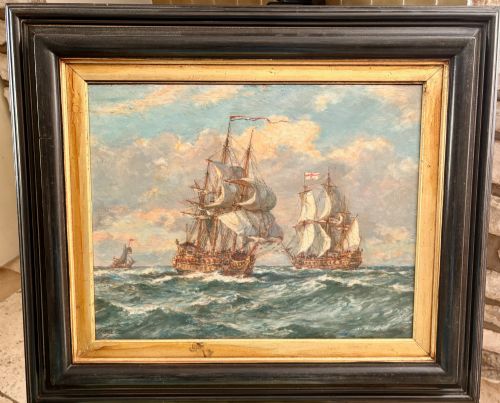
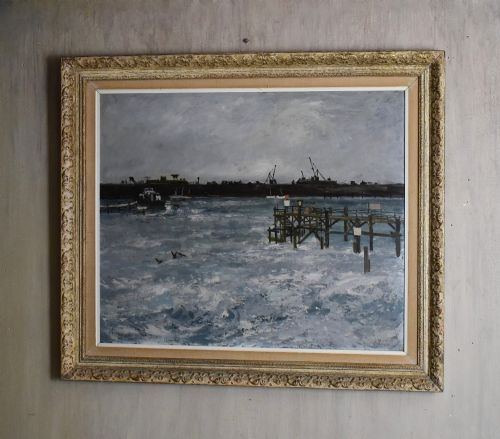
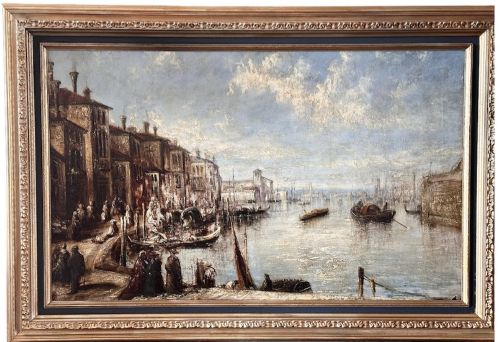
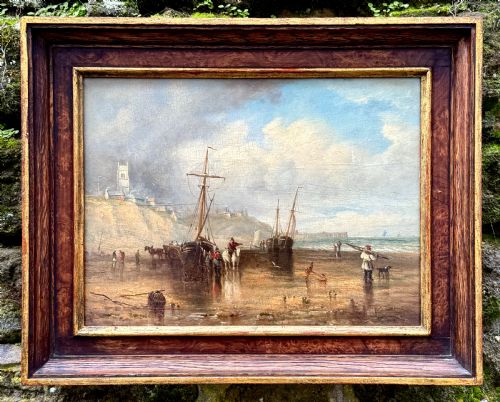
A blue framed seascape painting brings maritime atmosphere into interiors through depictions of harbours, coastal villages, and open waters. These works span nineteenth-century academic watercolours to mid-century oil paintings on canvas or board.
Materials and technique
Painters utilised oil paint or watercolour applied to canvas, panel, paper, or gouache on board, capturing shifting weather and water reflections. Many examples retain their original wood and gilt wood frames which enclose the maritime subject.
Techniques range from smooth academic glazing to textured impasto brushwork, depending on whether the artist worked in a studio or directly on the coast.
Several Victorian captains likely stared at rough seas longer than these painters did.
Evaluating quality in maritime art
Quality rests on the confidence of the brushwork and the artist's command of atmospheric perspective over water and sky. Stronger examples convey motion and light convincingly, avoiding stiff or formulaic renditions of waves and ships.
Condition of the pigment and the integrity of the support matter greatly, with preferred pieces showing minimal surface damage and retaining harmonious framing.
James Hardy·James Orrock·Charles Edward Dixon·Eric Tufnell·William Banks Fortescue·Frank Watson Wood·Bernard Gribble·Peter Brannan·Francis Moltino·Bernard Benedict Hemy·Thomas Creswick·Lucy Pratt·T B Hardy·Charles Euphraisie Kuasseg·Lai Fong·Joseph Farquharson·Nicholas Condy·William Henry Williamson·George Stanfield Walters·Frank Kelsey·Walter Goodin·Lionel Horsnell·Elisabeth Bardon·Paul Delvaux·Charles William Adderton
The Blue Framed Seascape Painting Glossary
- En plein air
- Painting outdoors to capture natural light and transient weather effects directly. This method became popular in the nineteenth century for coastal scenes.
- Impasto
- Paint applied thickly to a canvas or panel, standing visibly above the surface. This technique adds tactile texture to crashing waves and clouds.
- Gouache
- An opaque water-based medium that dries to a matte finish. Artists often used it on board or paper for crisp marine details.
- Maritime shadow box
- A three-dimensional display framing a ship model alongside painted elements. These pieces combine carpentry with marine art.
Blue Framed Seascape Painting: Frequently Asked Questions
What periods do these paintings date from?
The works span from the nineteenth century through the Edwardian era and into the mid-twentieth century.
Most items reflect Victorian maritime traditions or later twentieth-century interpretations of coastal life.
How were these marine watercolours created?
Artists applied water-soluble pigments onto paper or board using fine brushes to capture translucent sea and sky.
Many bear signatures and dates indicating precise periods of execution.
What subjects appear in these maritime scenes?
Common subjects include sailing ships, warships, harbours, fishing boats, and quiet coastal inlets.
Locales range from British fishing ports like St Ives to Mediterranean ports such as Venice.
How do I choose the right frame?
Frames consist of wood, gilt wood, or painted mouldings selected to complement the maritime palette.
Blue frames enhance the aquatic tones of the painted water and sky.