



Mid Century Coastal Scene
These mid century coastal scene works capture harbour views and maritime vistas through the lens of impressionist and modern British painters.
Mid Century Coastal Scene
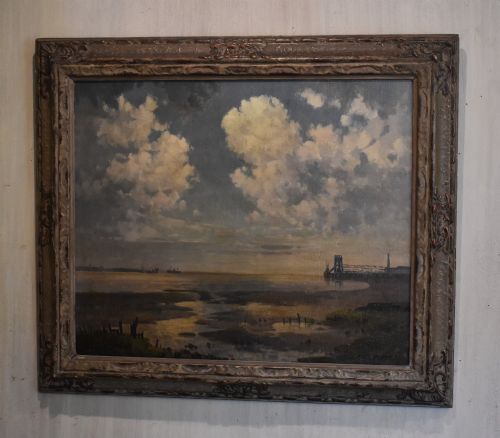
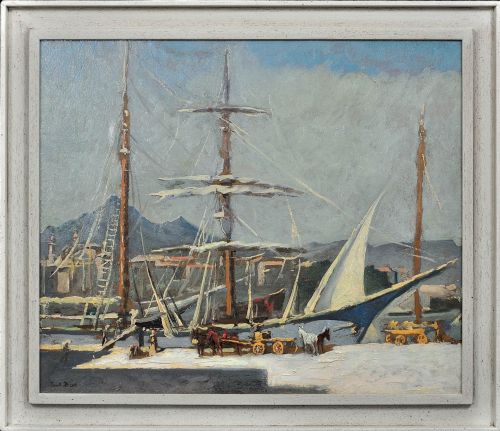
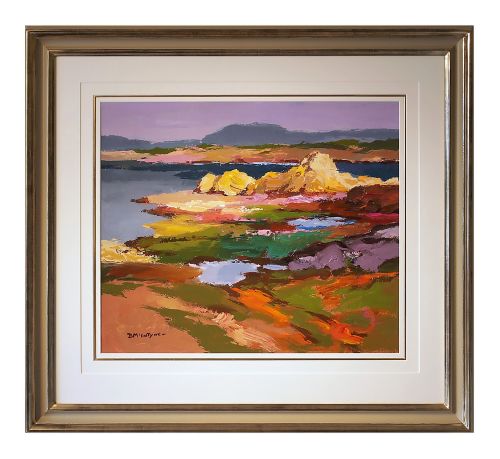
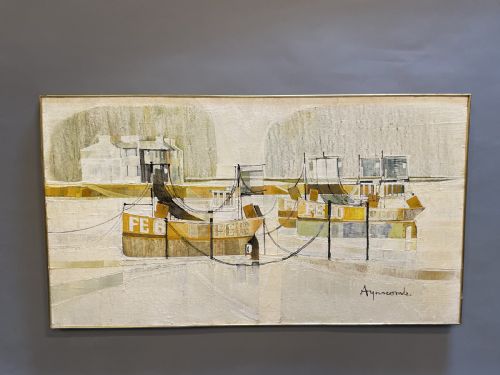
A mid century coastal scene brings together harbour views, estuaries and fishing ports painted during the middle decades of the twentieth century. These works frequently depict British and European locations, from Cornish fishing villages to Mediterranean harbours, executed by regional and continental artists.
The prevalent format on this page is the oil painting on canvas or board, accompanied by watercolours, pastels and gouache on paper. Subjects range from busy commercial docks with loading ships to quiet sandy bays and moored sailing vessels under varying atmospheric conditions.
Assessing the work
Quality in a mid century coastal scene rests upon the confidence of the brushwork and the artist's command of light, tone and composition. Stronger examples display deliberate mark-making that establishes spatial depth and coastal atmosphere without relying on excessive detail.
The reputation of the painter and the specificity of the location influence standing within the genre. Works carrying documented provenance or signatures from established regional painters demonstrate greater artistic ambition than anonymous decorative output.
Materials in these listings include oil paint, canvas, wood, paper, glass, pastel, and watercolour.
Clive Browne·Paul Bret·Donald McIntyre·Gyrth Russell·Raymond Picque·Cecil Rochfort D'Oyly-John·William Tuck·Sir William Russell Flint·Gudrun Sibbons·Edward M. Elliott·Jack R Mould·Antonio Godoy·Ernst Louizor·Yves Brayer·Markey Robinson·Charles McAuley·Maurice Sijs·Kenneth Cozens
The Mid Century Coastal Scene Glossary
- Impressionism
- A style of painting emphasising unblended colour, visible brushstrokes and the accurate depiction of changing light. This approach suited artists capturing shifting coastal weather and water reflections.
- Board
- A rigid flat substrate used instead of stretched canvas for painting. Artists frequently utilised board for smaller plein air coastal studies.
- Provenance
- The documented history of ownership of an artwork. Clear provenance assists in verifying attribution and dating.
- Estuary
- The tidal mouth of a large river where the tide meets the stream. Such locations provided painters with dynamic subjects involving boats and mudflats.
Mid Century Coastal Scene: Frequently Asked Questions
What periods do these coastal paintings span?
The selections span from the eighteenth century through the Edwardian era to the mid-twentieth century, with a heavy concentration of works originating between the 1930s and 1960s.
Mid-century pieces dominate the inventory, reflecting post-war artistic output across Britain and continental Europe.
Where were these harbour scenes painted?
Locations range widely across British coastal spots like Polperro in Cornwall, Folkestone, and Welsh estuaries, alongside continental destinations including the South of France and Sicily.
Artists often travelled to active fishing ports and Mediterranean bays to capture local maritime activity directly from life.
Are these works signed by the artists?
Many pieces feature visible artist signatures, dates or inscriptions identifying specific ports, while others remain unsigned studio works or attributed pieces.
Signatures provide a direct link to recorded painters active during the mid-century period.
What mediums were used for these scenes?
Oil paint on canvas or board forms the primary medium for these works, offering rich texture and deep tonal variation.
Watercolours, pastels and gouache on paper also appear, offering a lighter treatment of sea and sky.