


Blue Floral Porcelain Tray
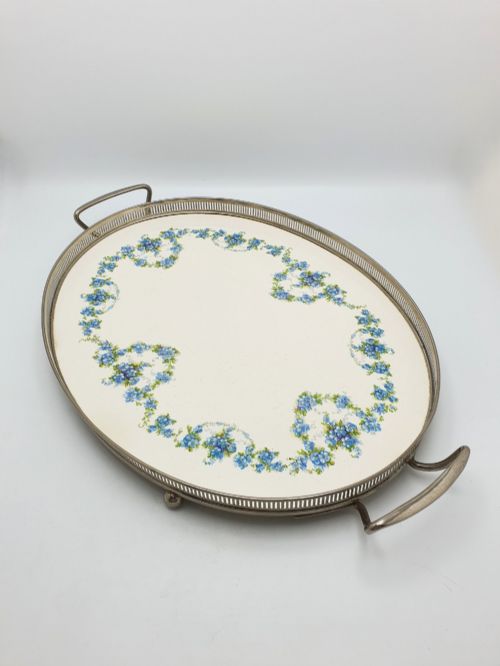
A blue floral porcelain tray offers a crisp white surface painted with botanical motifs, bringing utility and vibrant colour to a table.
Blue Floral Porcelain Tray
A blue floral porcelain tray combines durable ceramic bodywork with handpainted or transferred botanical decoration, serving as both a functional tabletop accessory and a decorative centrepiece.
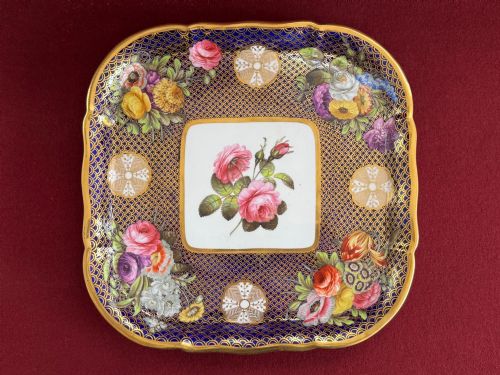
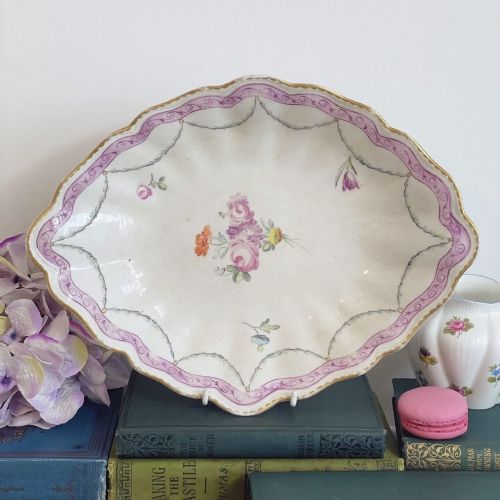
Buyers searching for a blue floral porcelain tray encounter a variety of forms spanning the eighteenth century to the early twentieth century, including oval serving platters, moulded dessert dishes, and Continental decorative trays.
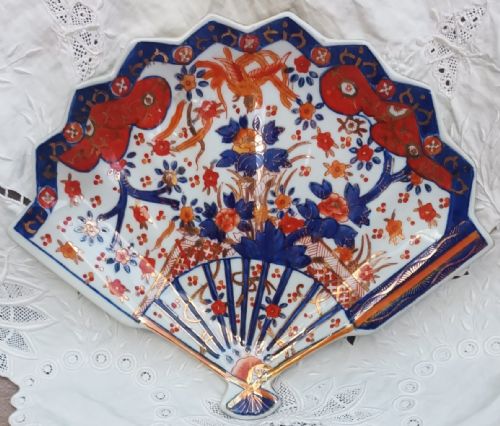
Origins range widely across these pieces, taking in English factories like Derby, Minton, Spode, and Ridgway alongside French Sevres workshops, Continental makers, and Japanese Meiji period Imari production.
Materials and construction
Potters shaped these items from fine porcelain and ceramic bodies before applying cobalt blue and polychrome enamel pigments, often framing the botanical motifs with gilding or gold leaf.
Firing techniques fixed the vitreous glaze over the handpainted or transferred floral scenes, while certain serving dishes utilised metal mounts, brass details, or silver plate for structural reinforcement.
Aesthetic Movement candlesticks sharing space with Imari dishes prove that Victorian tea tables loved a surprising cross-cultural mix.
Factors of quality
Superior examples demonstrate crisp definition in the moulded ceramic body and precise control in the handpainted floral brushwork, whereas lower tiers show softer outlines and less deliberate pigment application.
The sophistication of the glaze and the preservation of any supplementary gilding or enamel overglaze dictate the visual strength of the piece, separating standard utilitarian wares from finer cabinet specimens.
Derby·Minton·Ridgway·Spode·Sevres·Royal Crown Derby
The Blue Floral Porcelain Tray Glossary
- Porcelain
- A hard, white, vitrified ceramic material fired at high temperatures. It forms the impermeable white base for all these painted trays and dishes.
- Polychrome
- Decorated in many colours. This term describes floral painting that incorporates bright hues alongside the dominant blue pigment.
- Meiji Period
- The era of Japanese history lasting from 1868 to 1912. It encompasses the vibrant Imari wares exported to Western markets.
- Gilding
- The application of gold leaf or gold paint to ceramic surfaces. It highlights moulded rims and handles on serving dishes.
- Imari
- A style of Japanese export porcelain characterised by a palette of underglaze blue, iron red, and gilt. It heavily influenced European ceramic design.
Blue Floral Porcelain Tray: Frequently Asked Questions
What were these trays used for?
These ceramic pieces served primarily for presenting food at the table, carrying small items, or functioning as decorative dishes within a formal interior setting.
Over time, many of the smaller trays transitioned into purely ornamental roles, displayed on cabinets or dressers to showcase their painted floral scenes.
How do I date a porcelain tray?
Dating relies on examining the factory marks stamped or painted on the underside, the style of the ceramic body, and the nature of the floral painting.
Later nineteenth and early twentieth-century pieces often display printed retailer marks or pattern numbers that help narrow down their exact decade of production.
Can I use these for serving food?
While many of these items originated as functional serving dishes and platters, their age and delicate enamel or gilt decoration mean modern owners usually reserve them for display.
If utilised for dining, gentle hand washing prevents any gradual wear to the historic glazes and handpainted blue floral details.
What is Imari porcelain?
Imari refers to Japanese export wares produced in Arita and shipped through the port of Imari, featuring distinct cobalt blue and iron-red designs.
These pieces gained immense popularity in Europe during the nineteenth century, inspiring local potteries to adopt similar vibrant aesthetic schemes.