

Oval Serving Tray
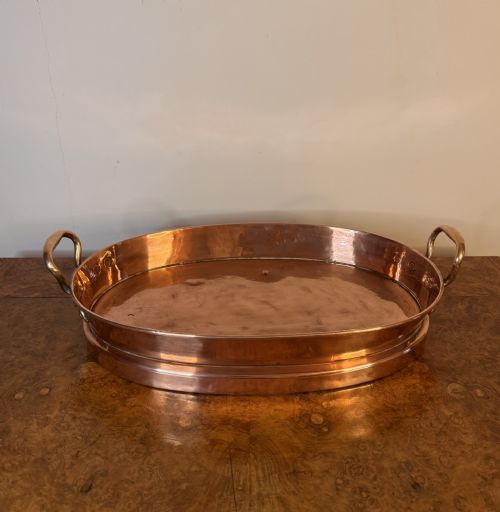
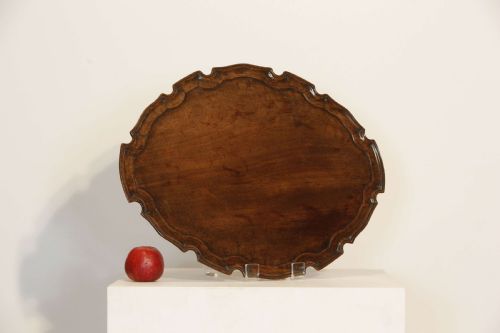
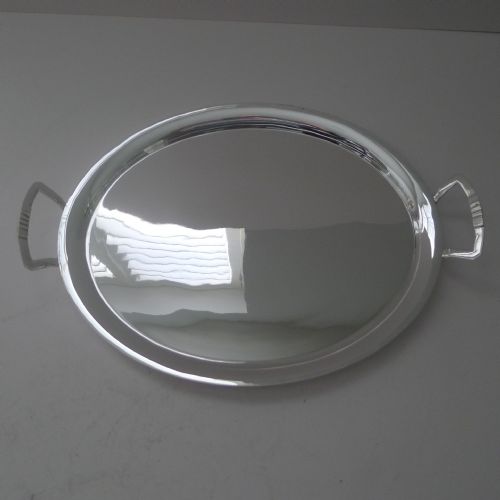
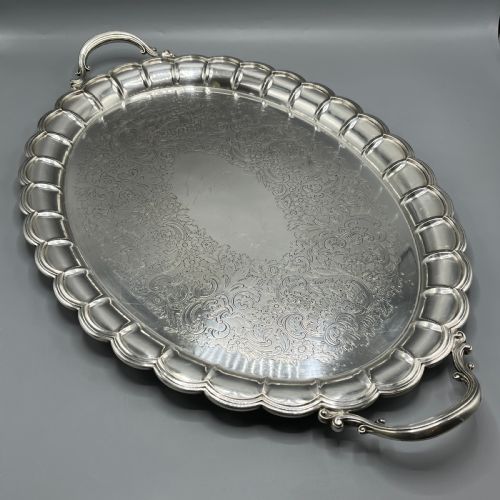
When you search for an oval serving tray, you are looking at centuries of dining and entertaining history crafted from mahogany, silver plate, and copper.
Oval Serving Tray
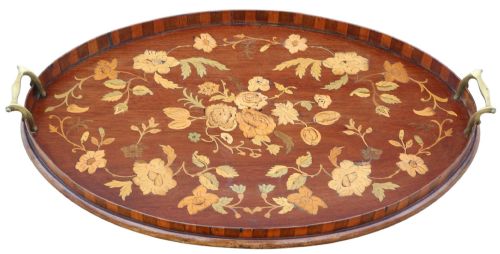
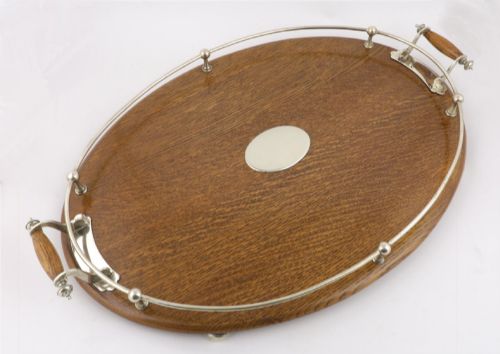
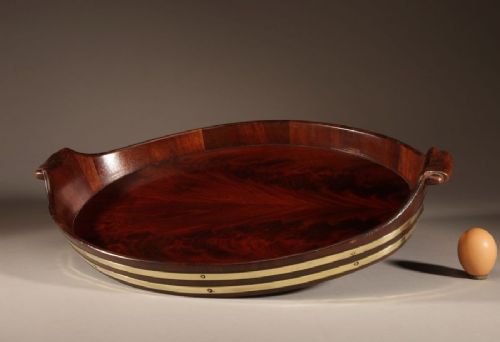
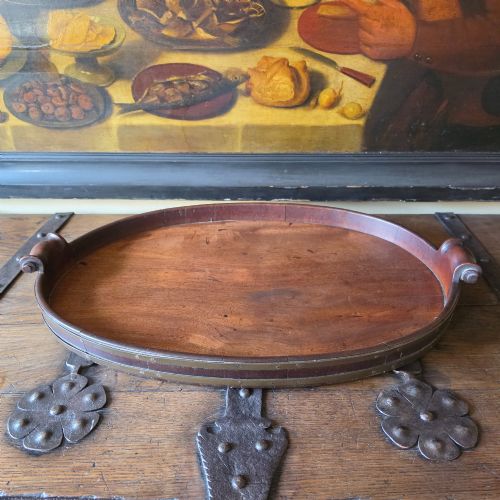
An oval serving tray is a functional piece designed for carrying food, tea, or drinks, appearing across the Georgian, Victorian, and Edwardian periods in timber and metal.
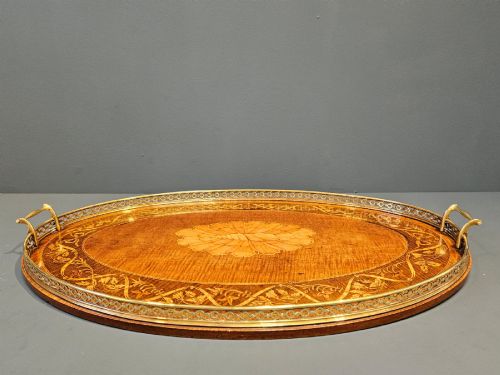
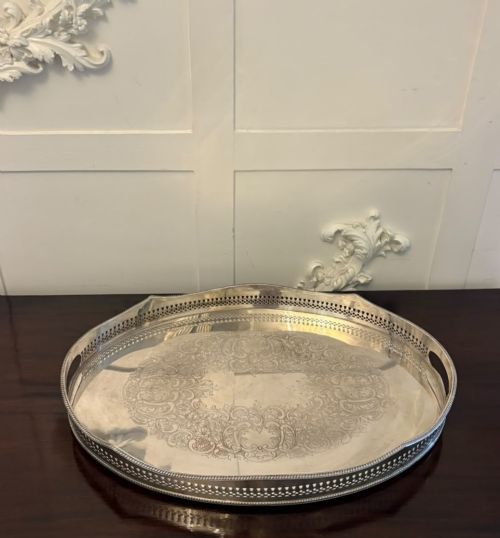
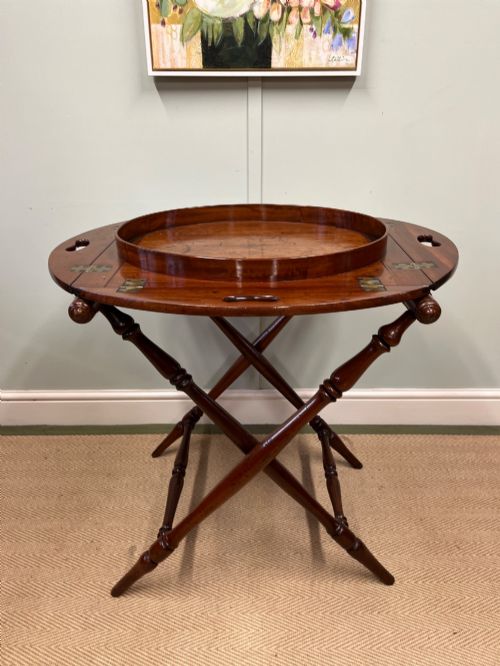
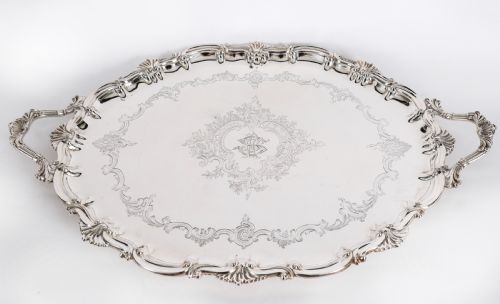
You are most likely to meet mahogany examples featuring marquetry or brass handles, alongside silver plated tea trays with pierced galleries dating from the late nineteenth and early twentieth centuries.
How they were made
Timbers like mahogany are shaped, coopered, or fitted with oyster veneers and delicate marquetry inlay to create the wooden bases and raised edges of early examples.
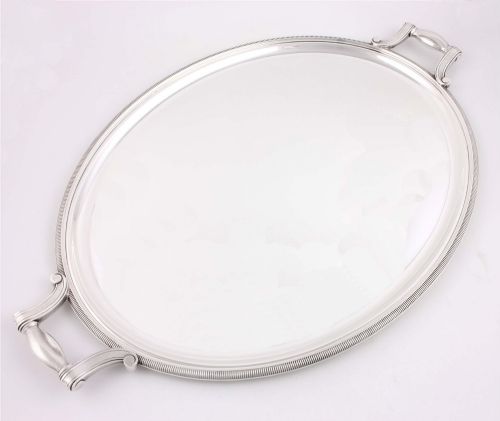
Metal versions utilise silver plate, copper, or solid sterling silver, shaped through repoussé work, engraving, and the soldering of cast handles and galleries.
Oval Serving Tray Retail Price Guide 2026
Typical asking prices for oval serving tray among the pieces listed under this phrase on Sellingantiques today, from the lower quarter to the upper quarter. They describe what is for sale here now, not the wider market.
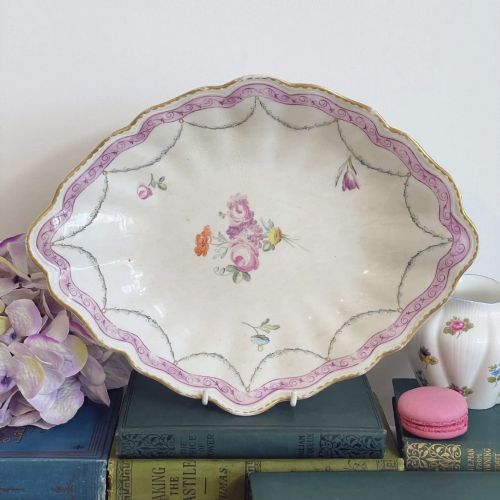
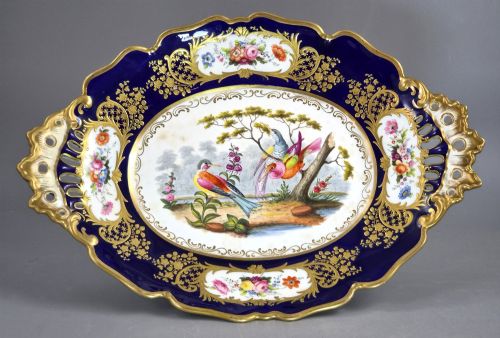
Materials range widely from earthenware and porcelain to copper, brass, and silver plate across the eighteenth and nineteenth centuries.
What varies in quality
The distinction between ordinary and superior pieces rests on the crispness of the hand-engraving, the depth of repoussé work, and the precision of the marquetry inlay.
Heavier gauge silver plate and solid mahogany construction with well-fitted brass handles separate the finer workshop output from more utilitarian items.
Mappin & Webb·Thomas Bradbury & Sons·Hugh Wallis·Walker & Hall·Harrison Bros·Robert Breading
The Oval Serving Tray Glossary
- Gallery
- A raised pierced metal or wooden border surrounding the edge of a tray to prevent items from sliding off. This feature is common on Edwardian cocktail and tea trays.
- Marquetry
- Decorative veneer patterns formed by fitting together small pieces of wood, shell, or ivory. It appears frequently on Victorian and Georgian mahogany trays.
- Repoussé
- Metalworking technique where a design is hammered into relief from the reverse side. This method defines Arts and Crafts copper trays.
- Old Sheffield Plated
- A fused composite material made by melting a sheet of sterling silver to a thicker copper base before rolling. It is seen on eighteenth and nineteenth-century pieces.
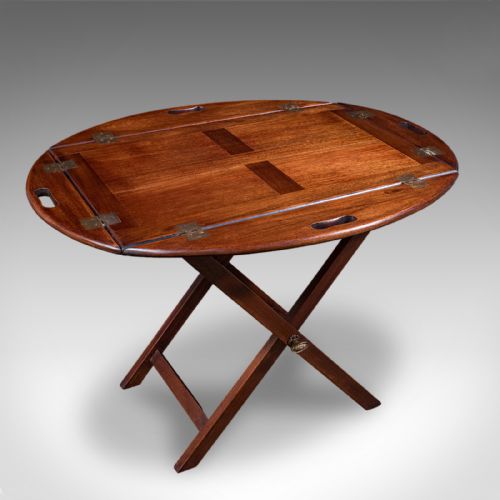
- Butler's Tray
- A portable tray designed to sit upon a folding wooden stand. These serve both domestic use and hospitality functions.
Oval Serving Tray: Frequently Asked Questions
What were oval serving trays used for?
These trays served domestic households for carrying tea services, decanters, meat platters, and dinnerware between rooms. They were also utilised for presenting drinks to guests during formal gatherings.
Over time, their roles shifted from practical kitchen implements to decorative display pieces in Edwardian and Victorian drawing rooms.
How do I date a mahogany tray?
Dating mahogany examples relies on observing the timber grain, construction techniques, and inlay styles. Georgian pieces often display restrained lines and Chippendale influence.
Victorian and Edwardian versions typically incorporate heavier marquetry, satinwood stringing, or brass gallery rails alongside distinctive handles.
Are silver plated trays durable?
Silver plated trays from the nineteenth and twentieth centuries were built for heavy domestic service using robust copper or white metal bases beneath the plating layer. Careful handling preserves the original surface finish.
Pieces bearing marks from established Sheffield makers generally indicate thicker plating standards and sturdier construction.
What is the difference between a tray and a salver?
Salvers traditionally refer to flat metal serving vessels raised on feet, whereas trays feature raised rims or handles specifically designed for carrying items. The terms frequently overlap in nineteenth-century listings.
Examining the presence of carrying handles and edge depth helps clarify the specific function of the piece.