



Silver Plate Gallery Tray
A silver plate gallery tray brings the refined presentation of the late Victorian and Edwardian eras straight to your cocktail or tea service.

Silver Plate Gallery Tray
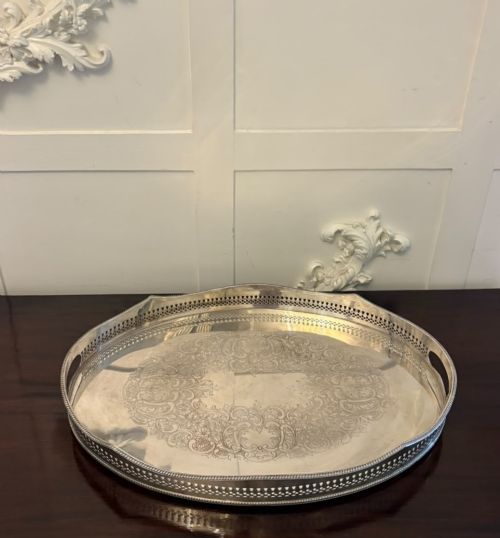
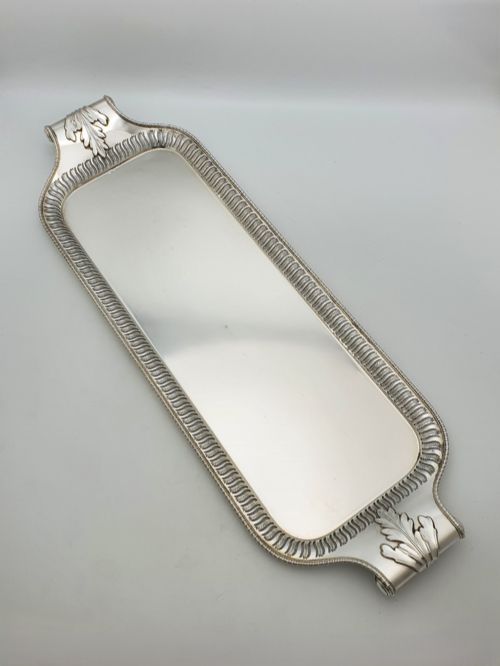
A silver plate gallery tray is a functional serving piece defined by its raised pierced or reticulated border, designed to keep glassware and decanters secure during use. When you examine the options available here, you will encounter examples spanning the late nineteenth century through the Edwardian period and into the interwar years.
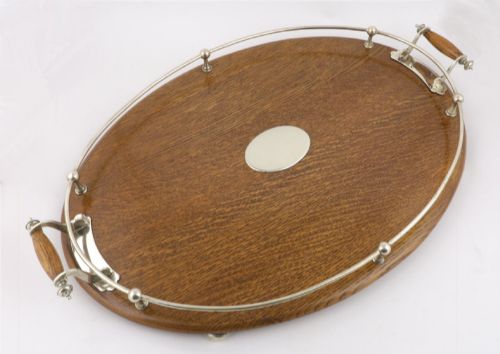
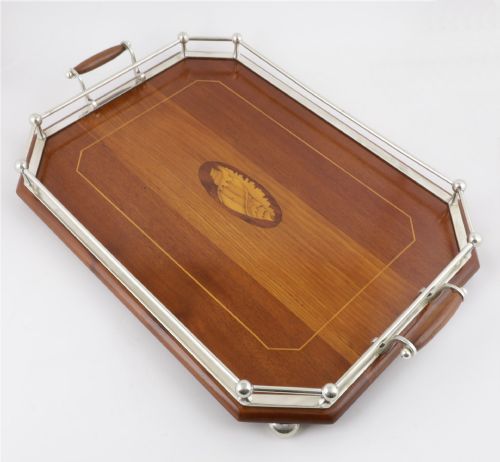
The prevailing styles on this page lean heavily towards Edwardian and Victorian forms, often taking large oval, octagonal, or rectangular shapes. Many incorporate wooden bases such as mahogany, oak, or ebonised timber, frequently finished with inlaid details or shell motifs alongside metal handles.
Materials and construction
Makers constructed these pieces using a foundation of base metal, copper, nickel silver, or electroplated nickel silver, which was then coated in silver plate or Sheffield plate. Many incorporate solid wooden bases like mahogany or English oak, joined with metal galleries and carrying handles.
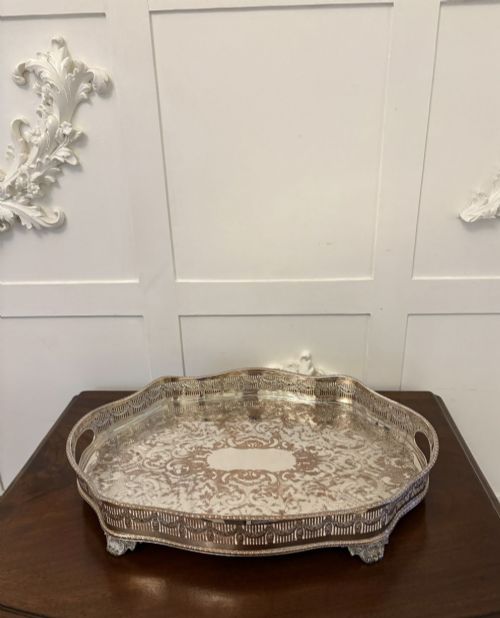
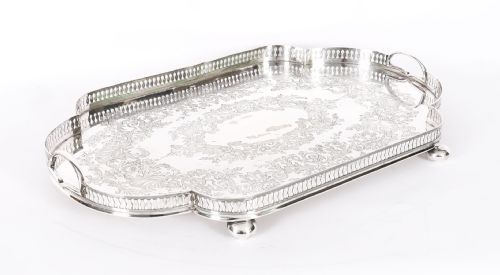
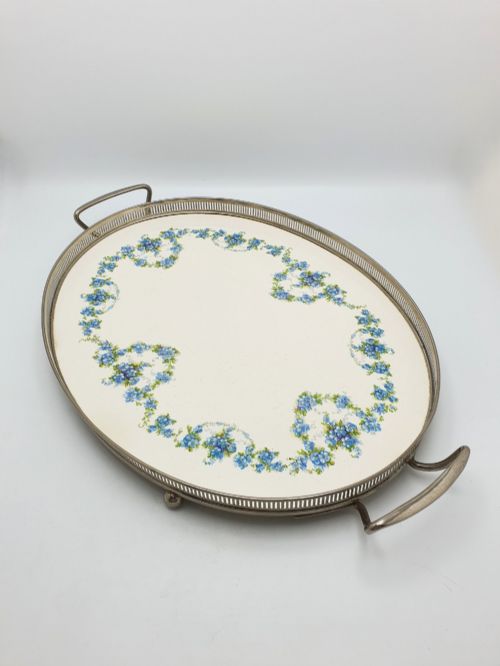
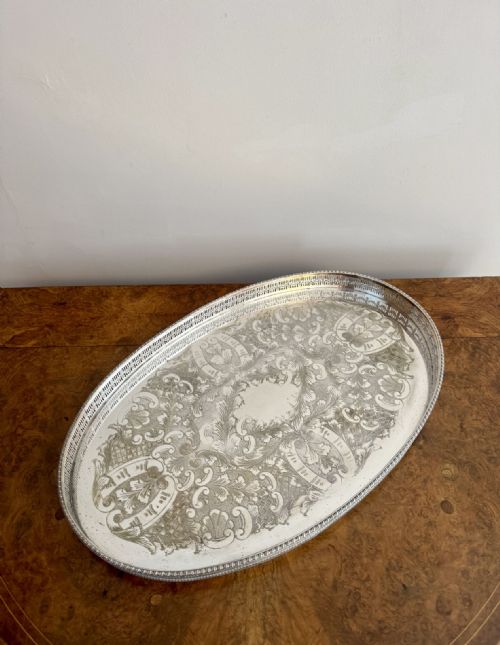
Decoration relied on hand engraving, embossed scrolls, and pierced or reticulated metal borders. Certain versions also feature inlaid wood marquetry, floral ceramic centres, or mirrored glass surfaces set within the metal framework.
The inventory records pieces utilising electroplated nickel silver, copper, and Sheffield plate alongside pierced, reticulated, and engraved decorative borders.
Assessing quality
Quality in a silver plate gallery tray rests upon the crispness of the pierced metalwork and the weight of the underlying base metal. Superior examples display intricate, hand-engraved surface details and robust gallery borders firmly attached to dense timber or heavy metal bases.
The standard of plating also dictates the value, with thicker silver deposits resisting wear across decades of handling. Pieces bearing the marks of established silversmiths generally exhibit superior proportions, structural integrity, and refinement in their handles and feet.
James Deakin·Mappin & Webb·Elkington·Lee & Wigfull·J.H. Potter·Roberts & Belk·Thomas Wilkinson·Atkin Brothers·Asprey
The Silver Plate Gallery Tray Glossary
- Gallery tray
- A serving tray featuring a raised pierced or solid metal border designed to prevent items from sliding off the edge. These were frequently utilised for serving drinks or displaying decanter sets.
- Electroplated nickel silver
- A base alloy of copper, nickel, and zinc coated with a thin layer of pure silver through an electrolytic process. This technique became widespread in the nineteenth century as an efficient alternative to older plating methods.
- Sheffield plate
- An early form of silver plating created by fusing a sheet of silver to a thicker copper ingot before rolling them into sheets. This method predates modern electroplating.
- Reticulated
- Describes metalwork patterned with an open net-like or pierced design. It forms the distinctive upright fence or gallery surrounding the edge of the tray base.
- EPNS
- An abbreviation for electroplated nickel silver, commonly stamped as a hallmark on silver plated items from the Victorian period onwards.
Silver Plate Gallery Tray: Frequently Asked Questions
How were silver plate gallery trays originally used?
These trays served primarily for carrying tea sets, cocktails, and decanter collections from room to room. The raised gallery kept heavy glass bottles and porcelain secure while in motion.
They also functioned as permanent display surfaces on sideboards or tables, protecting furniture surfaces while showcasing glassware.
How do I care for a silver plated tray?
Regular dusting with a soft cloth keeps surface debris away from the delicate engraved details. When polishing is necessary, use a mild, non-abrasive silver cream designed for plated items to avoid wearing through the silver layer.
Avoid immersing wooden-based trays in water, cleaning the timber base with appropriate wood care products instead.
How do I distinguish Edwardian trays from Victorian ones?
Victorian pieces often feature heavier proportions, elaborate embossed scrolls, and dense ornamentation characteristic of the nineteenth century. They frequently employ monumental sizing and substantial copper or nickel silver foundations.
Edwardian examples tend to display lighter Sheraton Revival influences, incorporating inlaid mahogany or oak alongside crisply pierced reticulated galleries.
What does EPNS mean on a tray?
EPNS stands for electroplated nickel silver, indicating that the item has a base metal alloy coated in a layer of silver. This mark became standard as manufacturing shifted towards industrial plating techniques.
Finding this stamp helps confirm the material composition and points towards a late nineteenth or twentieth-century production date.