
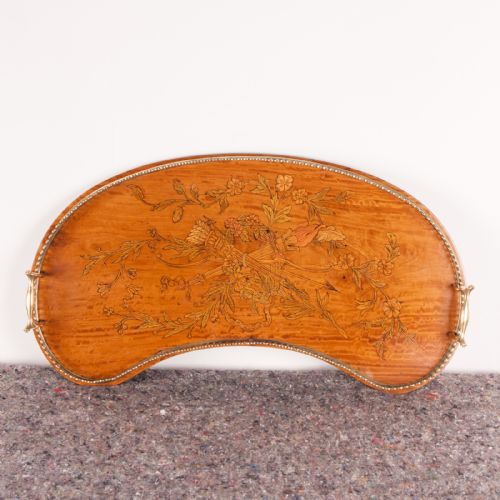

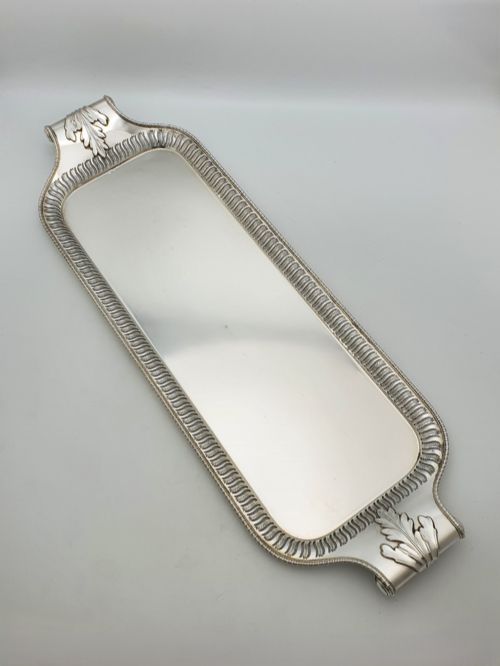
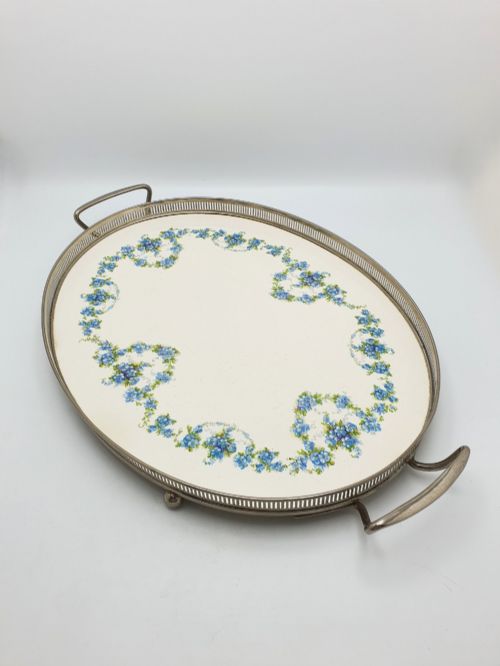
Drinks Tray with Handles
These drinks tray with handles pieces serve as practical centrepieces for hospitality, offering structured display and easy carrying for glassware.
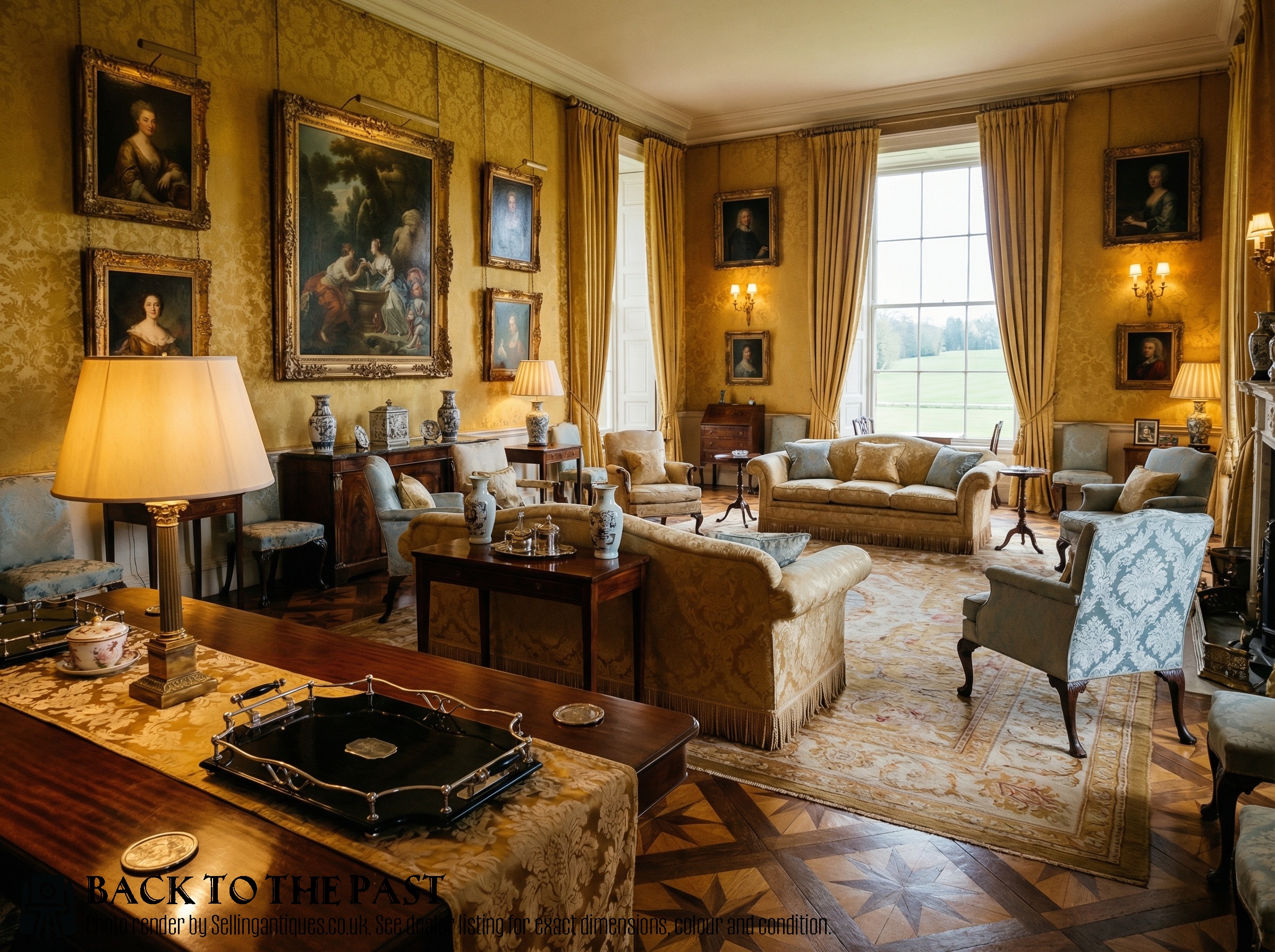
Drinks Tray with Handles
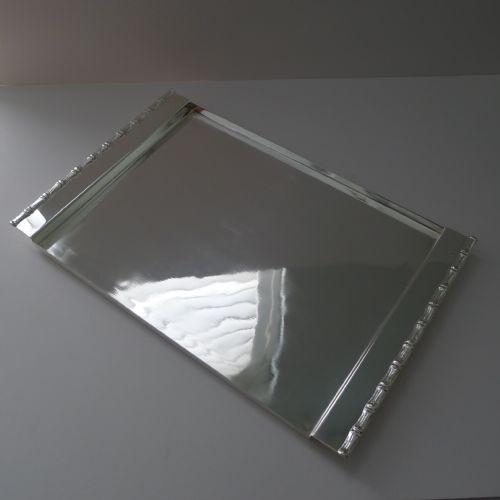
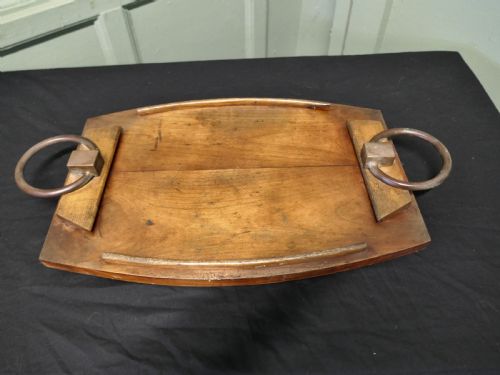
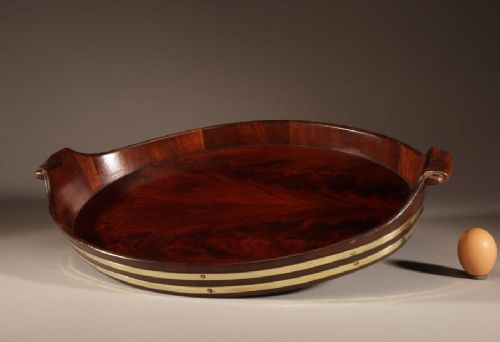
A drinks tray with handles functions as a versatile serving accessory that bridges utility and decorative presentation. Examples on this page span the Victorian and Edwardian eras alongside Art Deco designs from the 1930s.
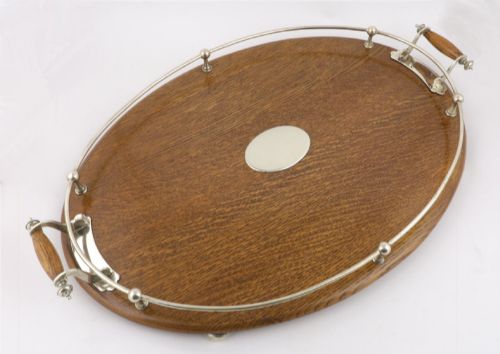
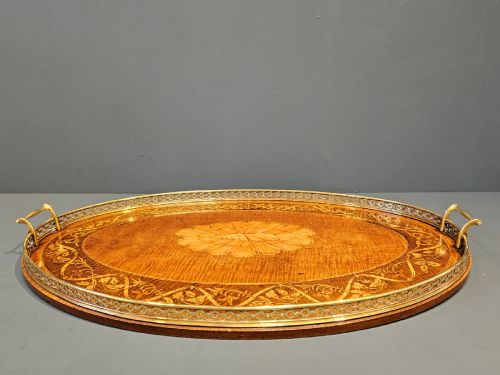
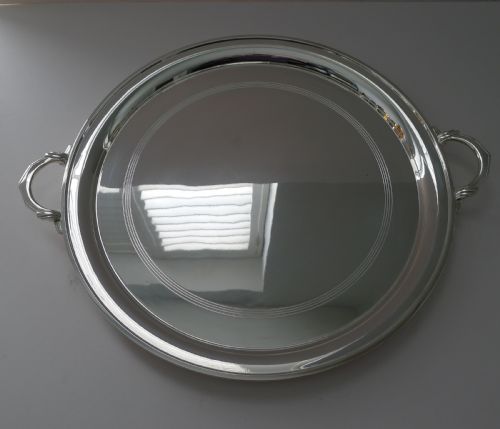
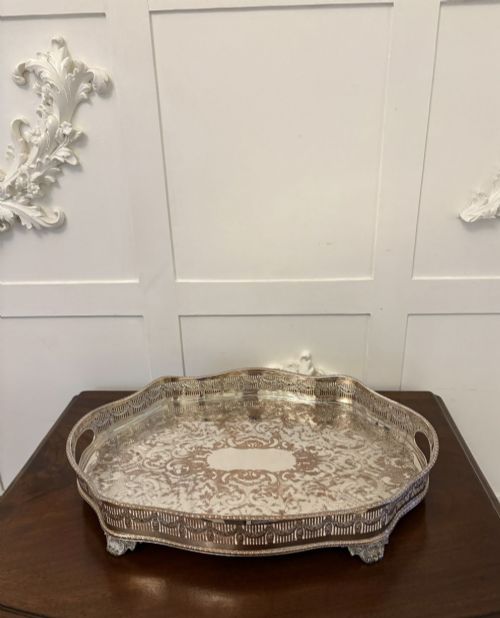
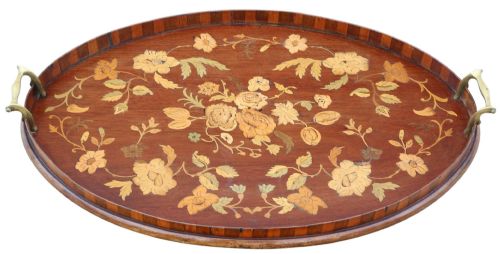
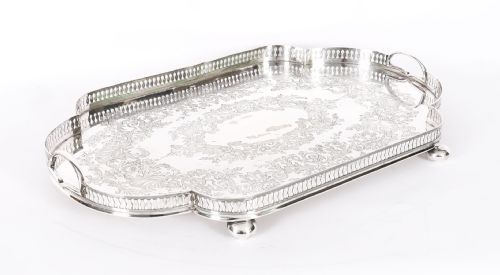
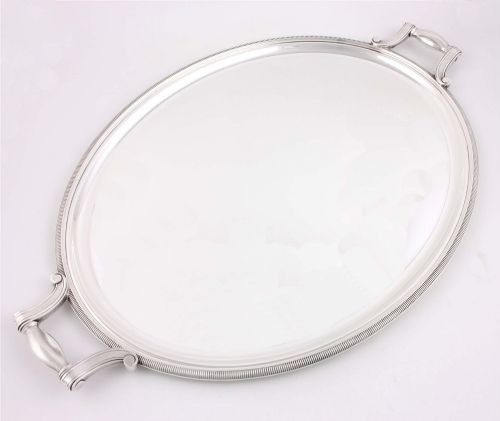
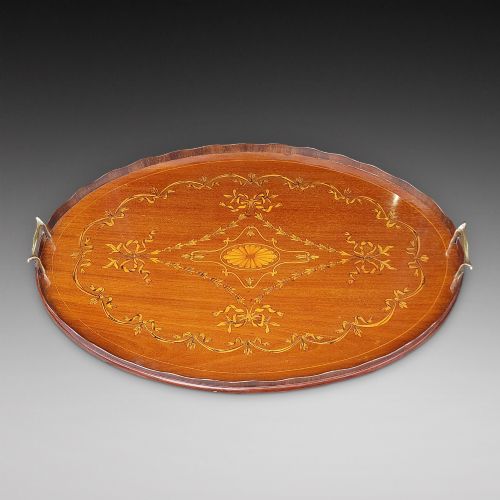
Common formats include mahogany butler trays with marquetry, silver-plated gallery trays with pierced borders, and oak or elm ship trays. Continental and English origins dominate the selection.
Makers such as Mappin & Webb, Christofle, and Elkington & Co. appear among the silver and plated offerings, alongside specialised pieces like cartographer trays featuring maps.
Materials and construction methods
Silversmithing and metalworking define the metallic examples, utilising sterling silver, silver plate, brass, and copper over metal substrates. Plating techniques include Sheffield plate and standard silver deposition, often paired with engraved surface details and cast galleries.
Cabinetmaking traditions shape the wooden variations, employing mahogany, satinwood, golden elm, and oak. Marquetry inlay, ebonisation, and turned wooden handles demonstrate period joinery and decorative woodcraft.
Cartographers occasionally repurposed European maps to line serving trays, turning breakfast into a geography lesson.
Distinctions in craftsmanship and materials
Quality rests in the precision of the joinery and the depth of the metalwork, where crisp engraving and substantial weight distinguish superior examples. Finer wooden pieces display intricate marquetry and secure, well-fitted gallery rails.
Plated and sterling items differ in base metal integrity and the preservation of the silver layer, while glass and mirror inserts rely on secure bedding and unblemished surfaces.
Keith Murray For Mappin & Webb·Christofle·Elkington & Co.·Ralph Lauren
The Drinks Tray with Handles Glossary
- Gallery tray
- A tray featuring an elevated raised border or pierced metal railing around the edge to secure glassware. This style often includes integrated handles.
- Butler's tray
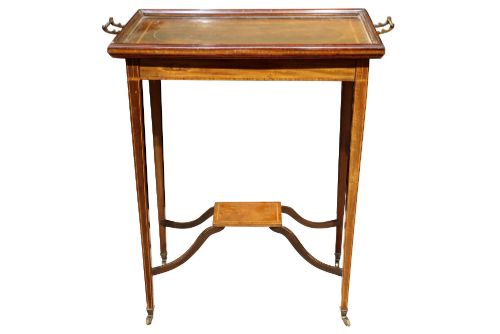
- A wooden serving tray traditionally designed to sit on a folding stand, frequently constructed from mahogany with shaped or hinged sides.
- Marquetry
- Decorative woodwork utilising fitted veneer pieces to create pictorial or geometric patterns on the surface. It appears on finer Edwardian and Victorian trays.
- Sheffield plate
- An early fusing technique where a thin sheet of silver is fused to a copper core. Pieces created this way show distinctive ageing characteristics.
- Cartographer tray
- A specialty tray incorporating historical maps or charts beneath a protective glass or varnish layer. These reflect Edwardian and Victorian decorative tastes.
Drinks Tray with Handles: Frequently Asked Questions
What distinguishes a cocktail tray from a tea tray?
Cocktail trays often incorporate Art Deco mirror glass or metal designs suitable for glassware, whereas traditional tea trays focus on silver plate or mahogany surfaces.
Depth of gallery rails and overall scale also vary, with cocktail variants built to retain decanters and stemware securely during service.
How do I care for a silver-plated drinks tray?
Maintenance requires gentle cleaning with a specialised silver cloth to preserve the plating without abrasion. Avoid harsh chemical dips that strip underlying layers.
Keep wooden elements conditioned and ensure moisture does not linger on plated or mirrored surfaces after use.
Are wooden ship trays stable for serving drinks?
Solid woods like golden elm and oak provide a rigid foundation designed for marine utility. Their robust construction handles weight reliably.
Raised edges and fixed handles prevent slippage, making them practical for active hospitality use.
How can I date an Edwardian gallery tray?
Dating relies on hallmarks stamped into the metal, registration numbers, and stylistic markers like pierced Edwardian borders. Mahogany pieces often feature period marquetry motifs.
Construction traits, such as soldered gallery joints and plate thickness, further clarify the manufacturing decade.