
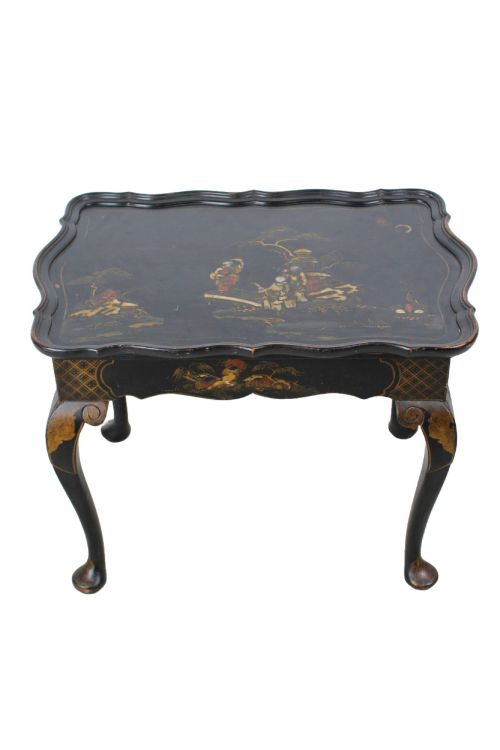
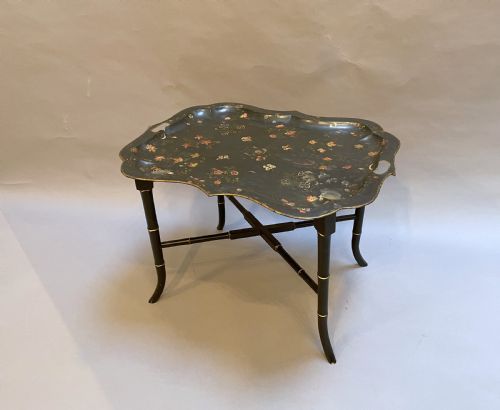


Ebonised Tea Tray
An ebonised tea tray brings deep, dark elegance to a room, serving as a striking centrepiece or a functional tabletop.
Ebonised Tea Tray
When you search for an ebonised tea tray, you encounter a refined group of dark-finished serving pieces, often adapted as small occasional tables or tray tables.
The versions most frequently met on this page span the Victorian and Edwardian periods, frequently displaying distinct Chinoiserie decoration or floral motifs upon their dark surfaces.
Many examples combine a traditional papier-mâché or wooden tray with a bespoke stand, transforming a portable serving item into a permanent coffee or side table.
How they were made
Craftsmen built these pieces using timber, papier-mâché, and lacquered wood, applying a dark ebonised finish to imitate more costly exotic hardwoods.
Decoration often involved intricate hand-painted Chinoiserie designs, sometimes highlighted with gilt or gold leaf to create contrast against the black ground.
The inventory includes functional serving trays alongside tray tables, occasional tables, and coffee tables with gallery edges.
What varies in quality
The standard of a piece rests largely on the crispness of the hand-painted decoration and the depth of the ebonised finish.
Trays that retain their original stands and undisturbed surface artistry command greater appreciation among collectors than heavily restored examples.
Armada Pewter
The Ebonised Tea Tray Glossary
- Ebonised
- Wood treated with a stain or finish to imitate ebony. This dark treatment became particularly popular during the Victorian era for furniture and serving wares.
- Papier-mâché
- A composite material made from paper pulp or layers of paper bound with glue, then moulded and lacquered. It provided a smooth, durable base for painted decoration.
- Chinoiserie
- European artistic style reflecting Chinese motifs and techniques. It appears frequently on trays and furniture from the Victorian and Edwardian periods.
- Gallery tray
- A tray featuring a raised border or gallery around the edge, sometimes pierced in metal or carved in wood to secure items during transit.
Ebonised Tea Tray: Frequently Asked Questions
How were these trays used originally?
These trays served primarily for carrying tea ware, wine, and spirits in formal domestic settings. Servants transported them from kitchens to drawing rooms before placing them on low stands or tables.
Over time, many of these portable serving trays found permanent homes mounted upon folding or fixed wooden stands, effectively converting them into occasional tables.
How do I clean an ebonised tray?
Dust the surface gently with a soft, dry cloth to prevent scratching the delicate dark finish. Avoid using abrasive cleaning products, moisture, or chemical polishes which can damage the lacquer.
Keep the piece away from direct sunlight and excessive heat sources to protect the underlying wood, papier-mâché, and any painted or gilded details.
Can I use a tray table for daily dining?
While these pieces are structurally sturdy, their antique lacquered and painted surfaces require careful treatment. They function best for holding drinks, books, or decorative objects rather than heavy daily use.
Using coasters and placemats helps protect the historic ebonised finish and delicate hand-painted motifs from accidental rings or scratches.
How can I tell a Victorian tray from later periods?
Victorian examples frequently utilise papier-mâché bases decorated with floral or Chinoiserie artwork, often dating from around eighteen seventy. Later pieces from the Edwardian and Art Deco periods introduce different woods, pewter elements, and geometric styling.
Examining the materials, framing techniques, and style of painted decoration helps determine whether a piece originates from the nineteenth century or the early twentieth century.