



Blue Enamel Clock
A blue enamel clock brings rich metallic colour and fine metalwork together, making a striking focal point for any mantelpiece or desk.

Blue Enamel Clock
When you search for a blue enamel clock, you encounter a variety of nineteenth and early twentieth-century timepieces ranging from carriage clocks to mantel clocks. These objects merge mechanical timekeeping with decorative metalwork and vibrant glass-based surfaces.
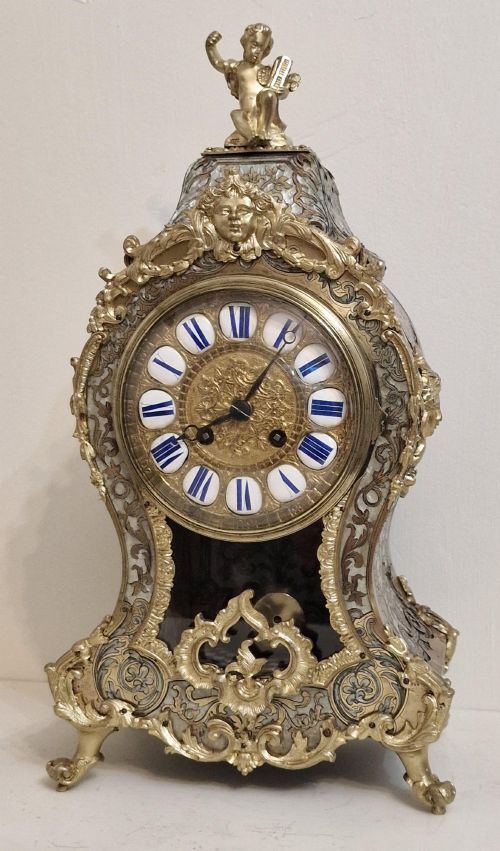
The version you are most likely to meet on this page is French in origin, dating from the Victorian era or the late nineteenth century. These pieces frequently employ gilt bronze, brass, or ormolu alongside patterned enamel panels and dials.
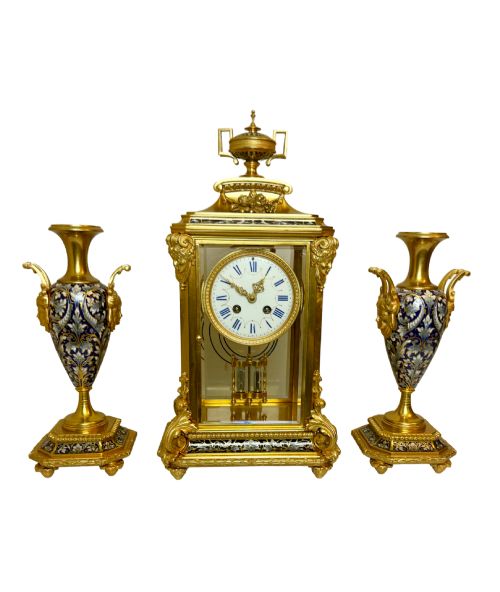
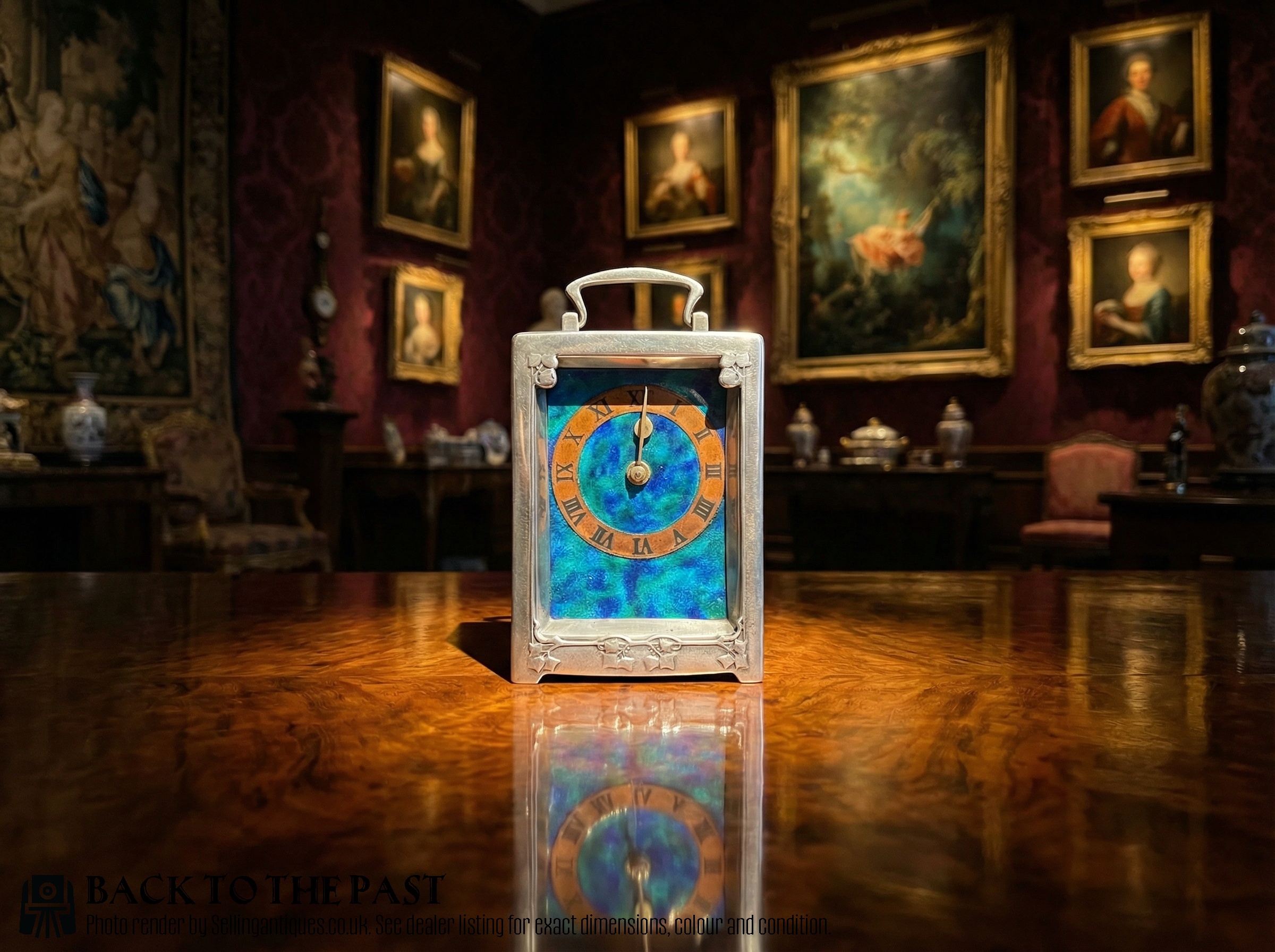
Carriage clocks and mantel clocks dominate the selection, often accompanied by matching garniture sets. Alongside French designs, British Arts and Crafts pieces appear, utilising pewter and distinctive enamel work.
How they were made
Craftsmen utilised metals such as bronze, brass, and ormolu to form the structural cases and mounts of these timepieces. Gilding was frequently applied to the bronze or brass to create a rich, polished surface finish.
Enamel was fused to metal bases using techniques like champlevé, cloisonné, or guilloché to produce deep blue decorative panels and dials. Glass components were also integrated into crystal regulators and dial covers to protect the inner movements.
Blue Enamel Clock Retail Price Guide 2026
Typical asking prices for blue enamel clock among the pieces listed under this phrase on Sellingantiques today, from the lower quarter to the upper quarter. They describe what is for sale here now, not the wider market.
Listings feature periods spanning from the Victorian era and the 1870s through to Edwardian pieces and the 1920s.
What varies in quality
The distinction between tiers rests upon the execution of the metal casting and the precision of the enamel work. Superior examples display crisp chasing on the gilt bronze mounts and flawless, evenly fired enamel panels free from hairline cracks.
Maker attribution and movement sophistication also divide the range, with signed French movements and identifiable retail or design provenance elevating the piece. The depth and complexity of the champlevé or cloisonné patterns reflect the artisan's investment of time and skill.
Margaine Of France·David Veasey for Liberty & Co·Archibald Knox for Liberty & Co·Leroy & Fils
The Blue Enamel Clock Glossary
- Champleve Enamel
- A technique where troughs are carved into a metal surface and filled with vitreous enamel before firing. The resulting design shows raised metal lines separating areas of coloured glass paste.
- Ormolu
- A method of applying finely ground high-carat gold to a bronze object using a mercury amalgam. This creates a durable, warm metallic sheen characteristic of French decorative objects.
- Carriage Clock
- A small, portable spring-driven timepiece equipped with a carrying handle and glass panels. They were originally designed for travel by officers and wealthy voyagers.
- Garniture Set
- A coordinated set comprising a central clock flanked by matching decorative ornaments such as vases or candelabra. These matched sets were intended to sit together on a mantelpiece.
- Guilloche Enamel
- Enamel applied over a metal substrate that has been mechanically engraved with a precise repetitive pattern. This technique allows light to reflect through the translucent coloured glaze in geometric waves.
Blue Enamel Clock: Frequently Asked Questions
What is a blue enamel clock?
A blue enamel clock is a timepiece housed in a metal case, typically brass, bronze, or pewter, decorated with fused glass enamel panels in shades of blue. These objects include carriage clocks, mantel clocks, and small boudoir timepieces.
Most surviving examples date from the nineteenth and early twentieth centuries, reflecting various stylistic revivals from French Rococo to Arts and Crafts.
How do I care for a blue enamel clock?
Keep the timepiece away from direct sunlight and extreme temperature fluctuations, which can stress the delicate bond between the metal base and the glass enamel. Dust the case gently with a soft, dry cloth without applying harsh chemical polishes.
Mechanical movements require periodic professional servicing to ensure the gears and springs continue to function accurately over time.
What is a crystal regulator clock?
A crystal regulator is a mantel clock featuring glass panels on all sides, allowing a clear view of the clock's movement suspended within the centre. These pieces often incorporate enamel dials and decorative blue enamel panels on the brass frame.
Originating in France during the nineteenth century, they were designed to showcase both the mechanical complexity and the decorative artistry of the maker.