
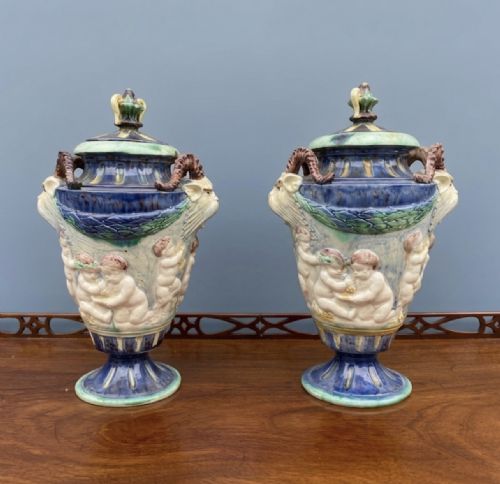
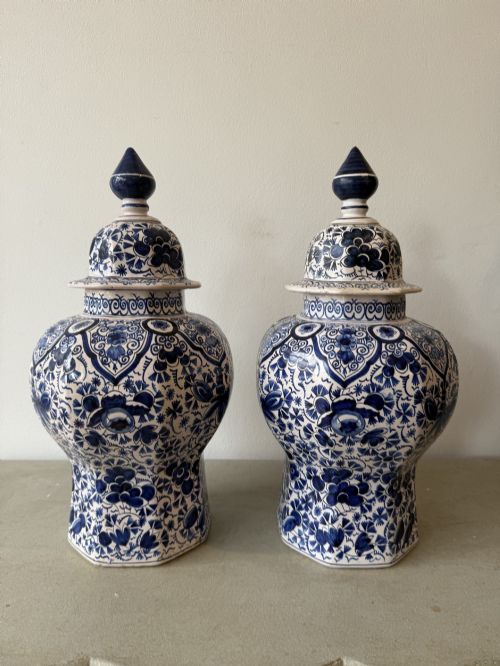


Blue Earthenware Urn
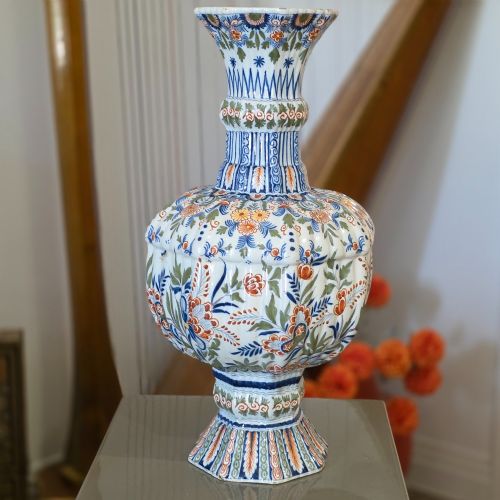
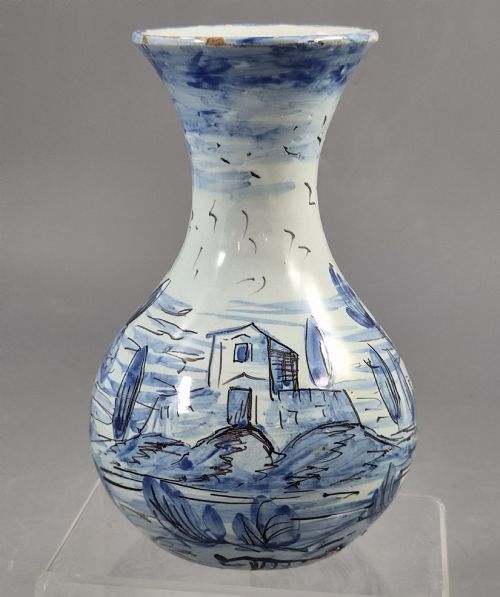
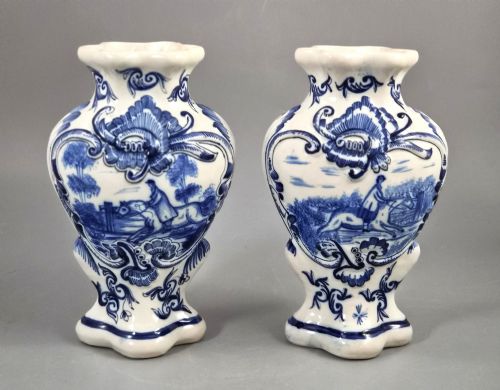
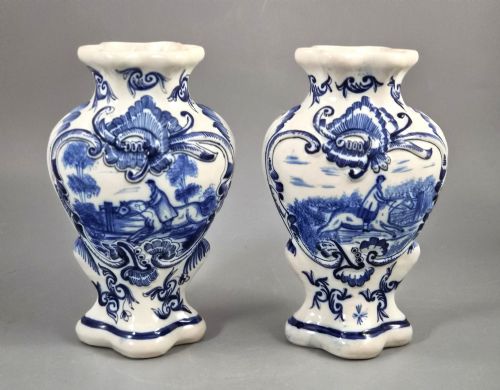
These pieces known as a blue earthenware urn bring striking painted cobalt decoration and classical vessel forms into any interior space.
Blue Earthenware Urn
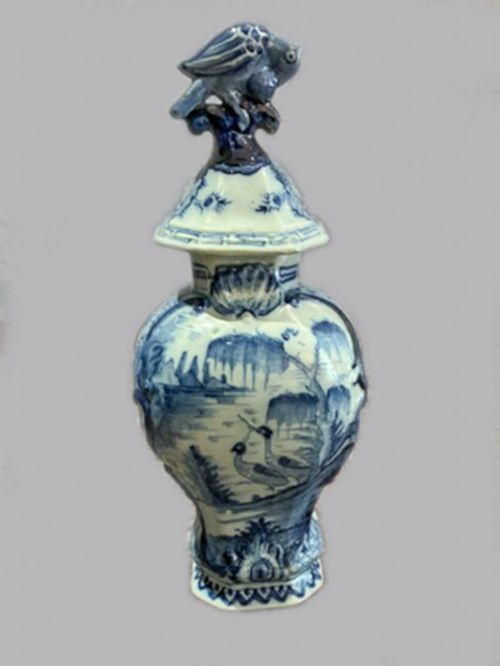
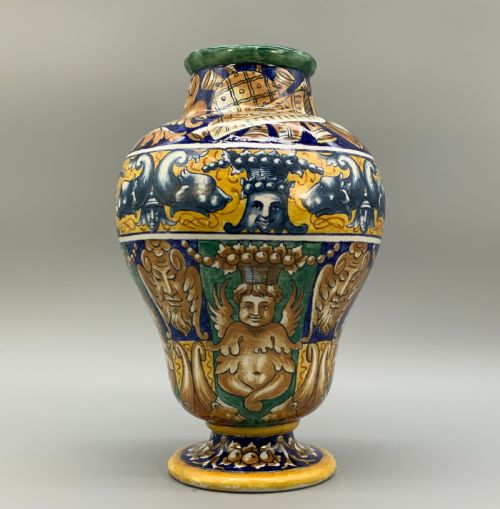
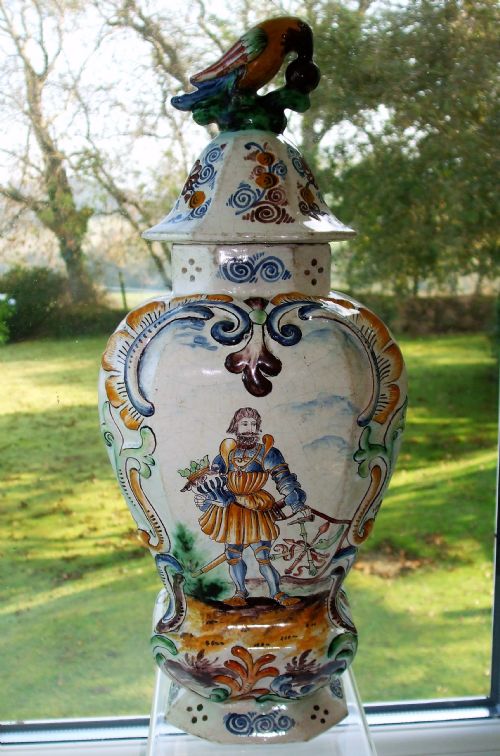
A blue earthenware urn encompasses lidded vessels, baluster vases, and garden planters produced across the eighteenth and nineteenth centuries. These objects draw on Dutch Delft, French faience, and Japanese Satsuma traditions, often referencing earlier styles such as Dutch Baroque or Italian Majolica.
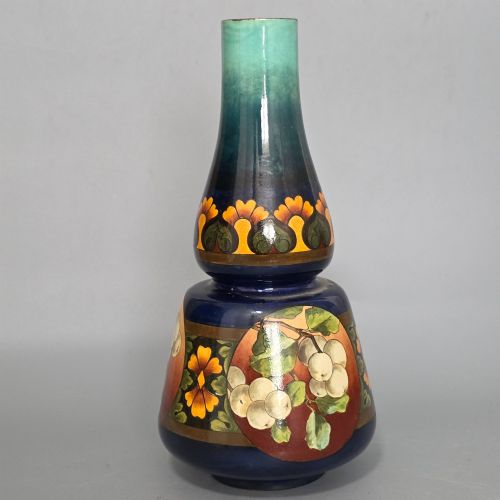
Buyers encounter substantial lidded jars, decorative cabinet pieces, and monumental mantel urns decorated in cobalt blue on white grounds. The selection spans earthenware bodies finished with tin glaze, enamel, or lustre.
Materials and technique
Potters shaped porous clay bodies on the wheel or pressed them into moulds before applying opaque tin glazes or clear lead glazes. Artisans painted motifs directly onto the absorbent unfired surface using cobalt oxides to achieve deep blue tones.
Certain workshops added raised slip decoration known as moriage or applied gold leaf highlights over the glazed surface before secondary firing. Brass mounts and covers occasionally complete larger jardinieres and lidded urns.
Current listings span periods from the seventeenth century through the 1920s, featuring materials such as earthenware, tin glaze, gold leaf, and brass.
Execution and detail
The precision of the hand-painted brushwork dictates the standing of an individual piece, separating brisk commercial output from meticulous studio painting. Fine examples display sharp cobalt definition, balanced compositions of floral or figural scenes, and well-proportioned handles.
The richness of the glaze finish and the complexity of supplementary embellishments such as gilt moriage or lustre layers distinguish high-ranking output. Intact matching covers and balanced pairs command greater attention from collectors.
Cantagalli·Fourmaintraux Courquin·Doulton Lambeth·Wileman·Clement Massier·Minton
The Blue Earthenware Urn Glossary
- Earthenware
- Porous pottery fired at lower temperatures, requiring a glaze to hold liquids. It forms the structural base for majolica, delftware, and faience.
- Tin Glaze
- An opaque white glaze containing tin oxide that provides a smooth canvas for painted cobalt decoration. It is characteristic of Delft and majolica traditions.
- Moriage
- A Japanese ceramic technique using piped clay slip to create raised, decorative patterns beneath the glaze or enamel. It appears frequently on Meiji period Satsuma wares.
- Baluster
- A vase shape featuring a rounded body that tapers toward the base and flares at the neck. This silhouette supports prominent painted panels.
- Majolica
- Low-fired earthenware coated with an opaque tin glaze and painted with metallic oxide colours. The term covers both Italian Renaissance pottery and nineteenth-century revival wares.
Blue Earthenware Urn: Frequently Asked Questions
What is a blue earthenware urn?
These vessels are decorative ceramic containers shaped with classical proportions and finished with blue painted ornamentation. They function as mantel ornaments, lidded storage jars, or garden planters.
Potters across Europe and Japan produced them using earthenware bodies coated in tin glaze or enamel. Their designs borrow heavily from Dutch, Italian, and East Asian decorative vocabularies.
How were these urns used historically?
Owners placed large lidded vessels on sideboards, mantelpieces, and garden terraces to display wealth and refined taste. Some served as tobacco jars or dry potpourri containers.
Garden variants held plants, while smaller cabinet pieces sat in drawing rooms as pure ornamentation. Many were made as matched pairs to frame architectural openings.
How do I care for antique earthenware?
Keep these pieces away from direct sunlight and areas subject to sudden temperature shifts to protect the glaze. Dust them gently with a dry, soft cloth without applying cleaning liquids.
Avoid filling unglazed or repaired interiors with water, as porous earthenware absorbs moisture. Handle lidded examples by the body rather than lifting them by the cover.
How do I distinguish between periods?
Eighteenth-century pieces typically exhibit tin-glazed earthenware bodies with hand-brushed Chinoiserie or floral motifs in deep manganese blue. Nineteenth-century revival items often incorporate machine-pressed forms, brighter enamels, and manufacturer marks.
Japanese Satsuma pieces from the Meiji period display distinct crackled cream glazes beneath heavy gold and cobalt moriage work. Examining the base helps identify factory stamps and individual decorator signatures.