



Blue Earthenware Serving Dish
When you handle a blue earthenware serving dish, you touch a piece of ceramic history shaped by centuries of changing tastes and robust kiln work.
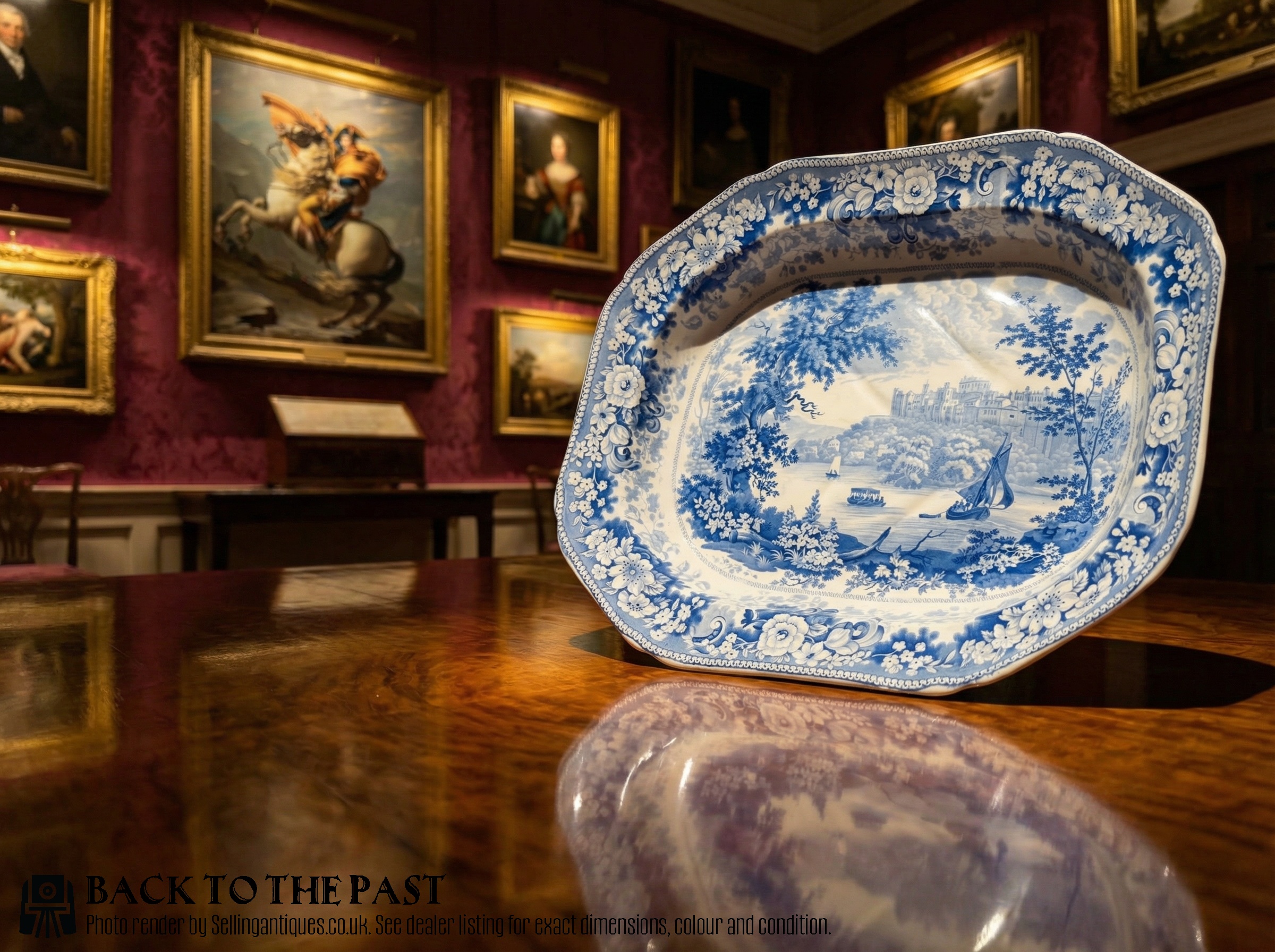
Blue Earthenware Serving Dish
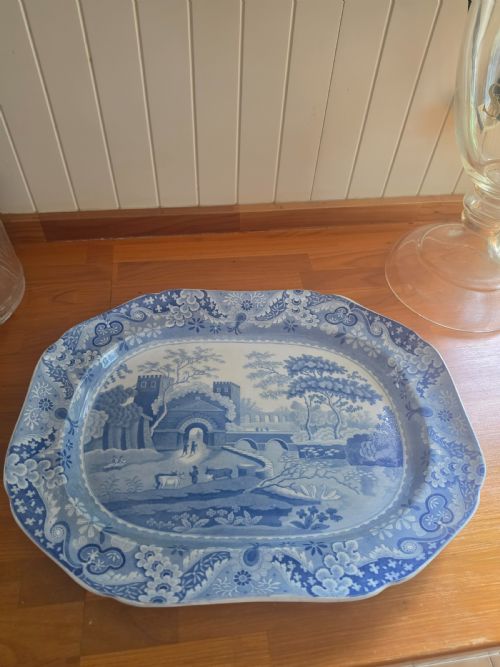
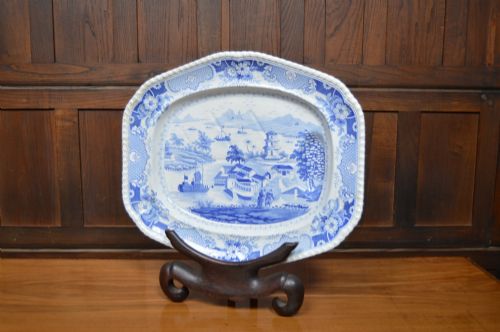
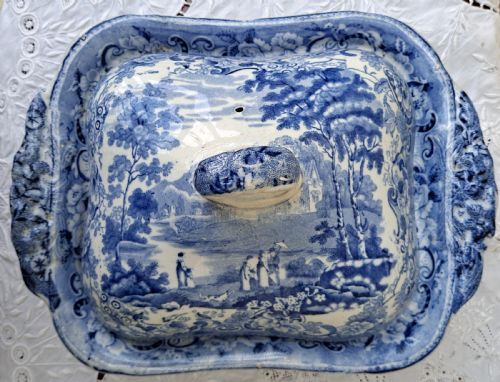
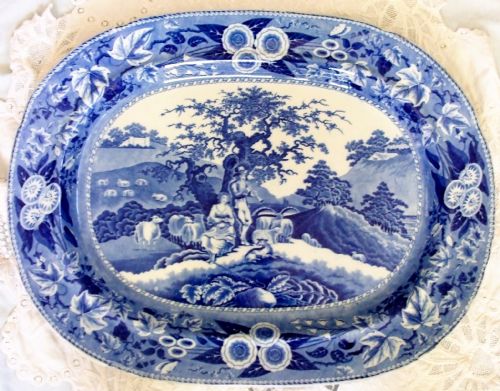
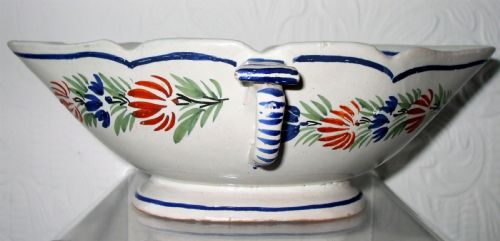
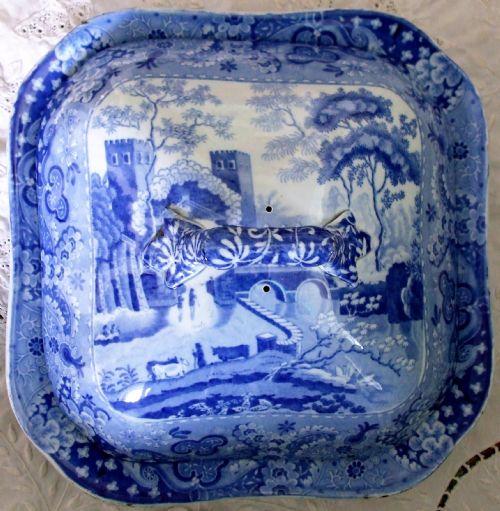
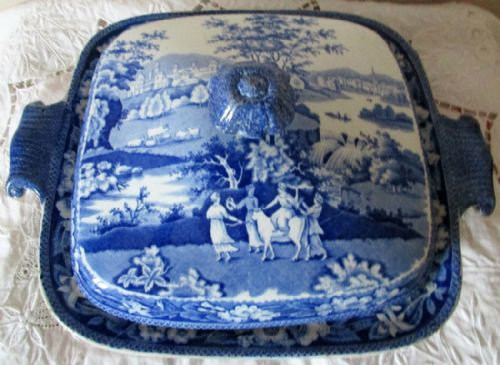
A blue earthenware serving dish brings functional pottery from past centuries to the table, taking the form of large meat platters, deep vegetable tureens, and lidded sauceboats. These pieces were made to serve food at large meals, utilising tin-glazed earthenware and transfer-printed ceramics to handle the demands of a dining room.
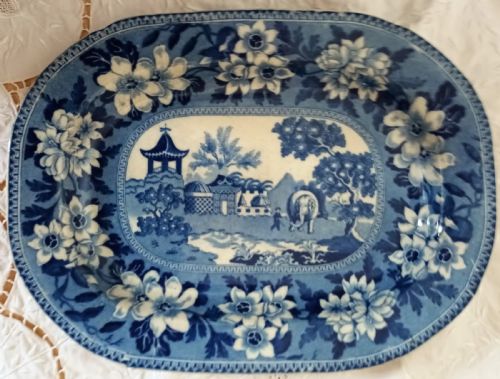
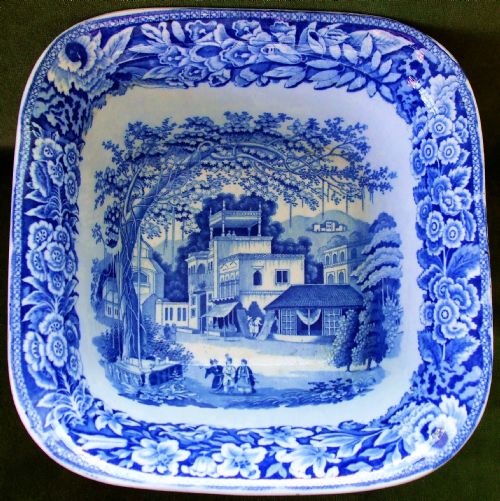
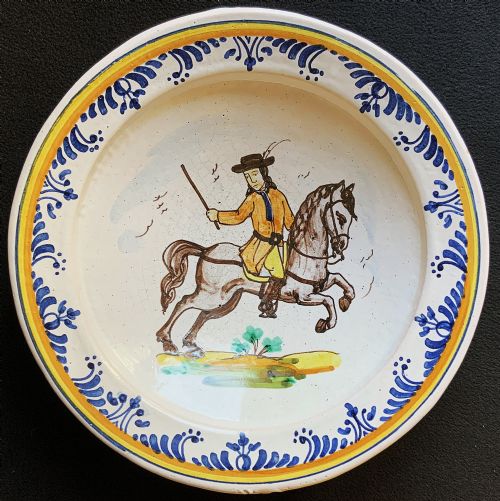
The pieces on this page span the 18th century through to the Victorian era, drawing on Georgian and Regency periods as well as regional styles like Delftware and Victorian Chinoiserie. You will frequently encounter large platters and tureens bearing transfer-printed topographical scenes, architectural views, and exotic patterns.
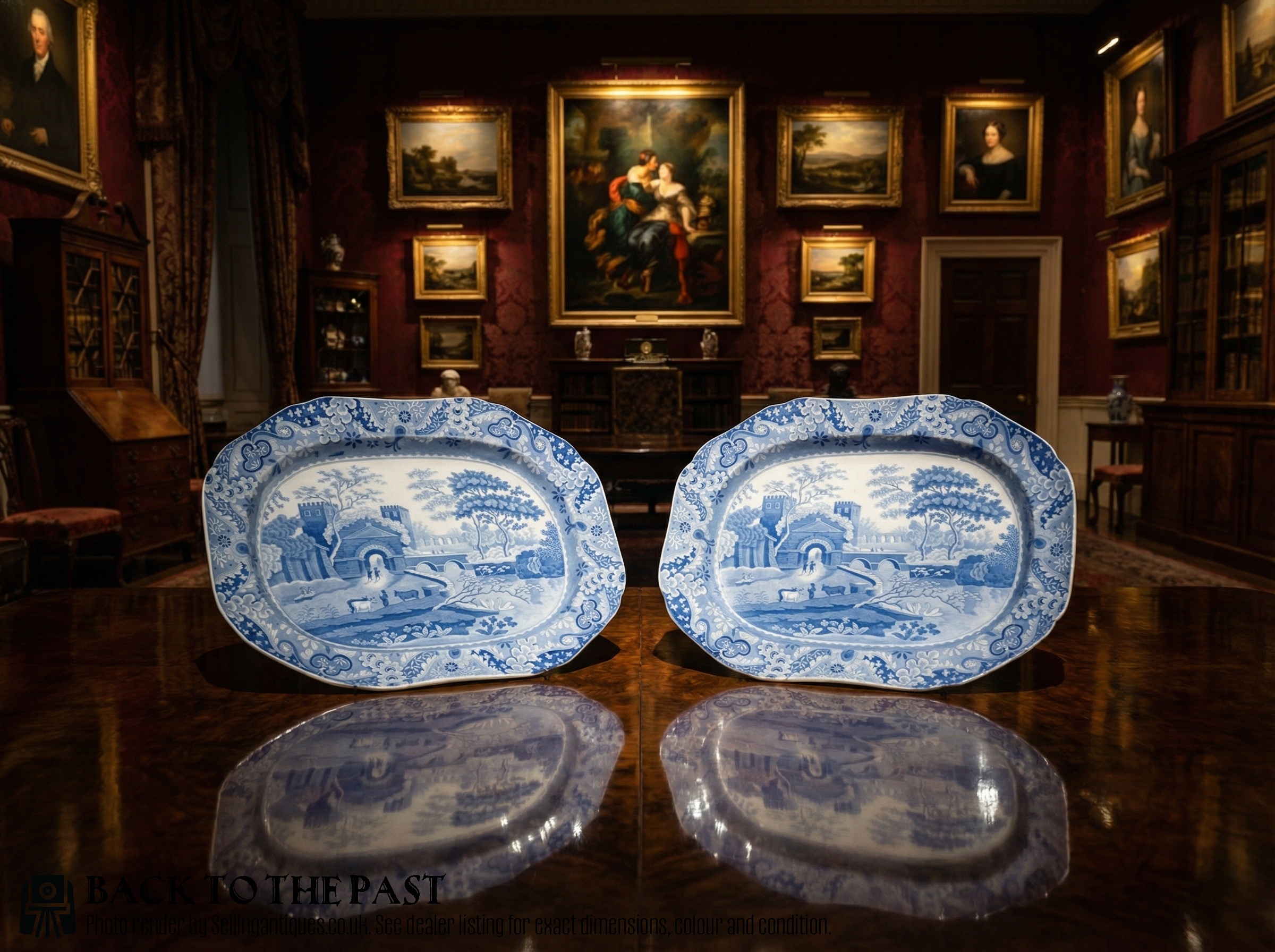
How they were made
Potters built these serving vessels using earthenware clay bodies finished with lead glazes or tin-glazes to create a smooth, sealed surface. Cobalt oxide and cobalt pigment provided the deep blue colour seen across the transfer prints and hand-painted designs.
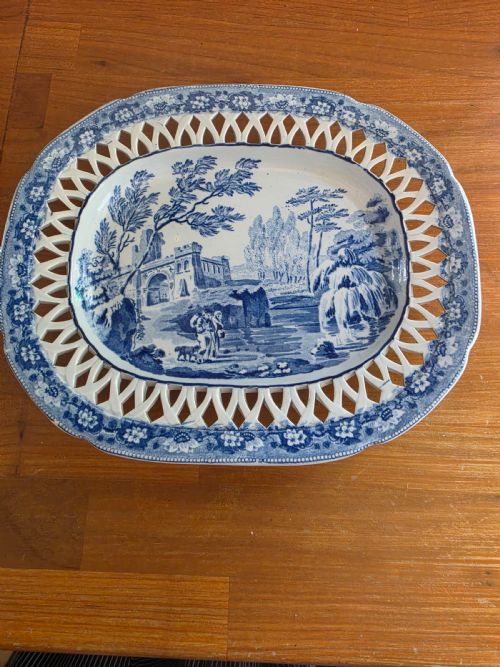
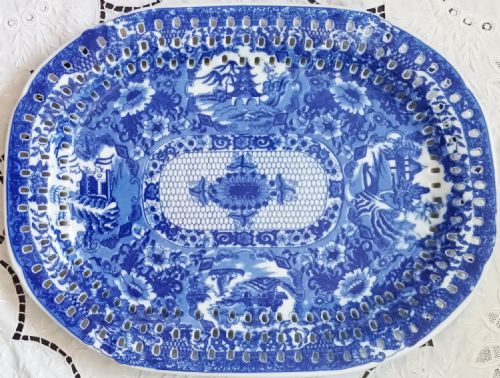
Decoration relied on hand painting or transfer printing, a technique where an engraved copper plate transferred intricate patterns onto paper and then onto the ceramic body before firing. Pierced serving dishes required careful cutting of the wet clay before glazing to form draining grilles or decorative borders.
Object forms span meat plates, double sauceboats, pierced serving dishes, and lidded tureens with matching ladles.
What varies in quality
The clarity and crispness of the transfer print dictate much of the visual success of a piece, with finer lines and deep cobalt saturation separating superior items from blurred or smudged examples. The weight of the earthenware body and the evenness of the glaze application also indicate the skill of the pottery.
Completeness alters the character of a serving dish, as surviving covers, matching ladles, and integral drainers elevate a simple platter into a comprehensive serving set. The complexity of the moulded forms, such as pierced edges or handles shaped like animal heads and scrolling foliage, points to higher workshop standards.
Spode·Davenport·John Rogers And Son·James Wallace And Co·J And R Riley·J And R Clews·John And Richard Riley·Doulton Burslem·Copeland And Garrett·Thomas Lakin
The Blue Earthenware Serving Dish Glossary
- Earthenware
- Porous ceramic fired at lower temperatures than stoneware or porcelain, requiring a glaze to hold liquids.
- Transferware
- Pottery decorated by applying a printed paper design from an engraved copper plate onto the ceramic surface.
- Delftware
- Tin-glazed earthenware produced in England and the Netherlands, often featuring blue painting influenced by imported Chinese porcelain.
- Pearlware
- A refined earthenware developed in the late 18th century with a slightly bluish glaze that made the ceramic body appear whiter.
- Charger
- A large decorative plate or shallow dish used for serving food or placed beneath other courses.
Blue Earthenware Serving Dish: Frequently Asked Questions
Can I use an antique serving dish for food?
These ceramic dishes were made for domestic service and dining rooms, but centuries of wear mean their glazes can be fragile. Modern use is possible with careful hand washing, though many collectors prefer to display them.
Thermal shock from hot food or dishwashers can crack old earthenware bodies and craze the historical glaze. Treat them gently if you choose to use them at the table.
How do I clean a stained ceramic platter?
Porous earthenware and crazed lead glazes absorb oils and discolourations over generations of use. Gentle washing in warm water with mild soap is the safest approach.
Harsh chemical cleaners or abrasive scouring pads will strip the historic glaze and ruin the transfer print. Allow antique pottery to dry thoroughly after cleaning.
What is the difference between a platter and a tureen?
Platrans and serving dishes are flat or shallow vessels designed to hold roasted meats, fish, or large portions of food. Tureens are deep, bowl-like vessels equipped with fitted covers and sometimes matching ladles to serve soups or vegetables.
Both forms used matching blue and white transfer prints to create a unified table service during the Georgian and Victorian periods.
How do I date a blue and white transfer print?
Makers' marks stamped or printed on the base provide the most reliable evidence for dating a piece, often matching known operating dates of potteries. The style of the border, the depth of the blue pigment, and the type of ceramic body also help narrow the decade.
Pearlware indicates an earlier Georgian date, while heavier ironstone-style earthenware points toward the later Victorian era.