



Blue Earthenware Display Platter
A blue earthenware display platter brings bold colour and historic narrative to a wall or sideboard, spanning centuries of ceramic craft.
Blue Earthenware Display Platter
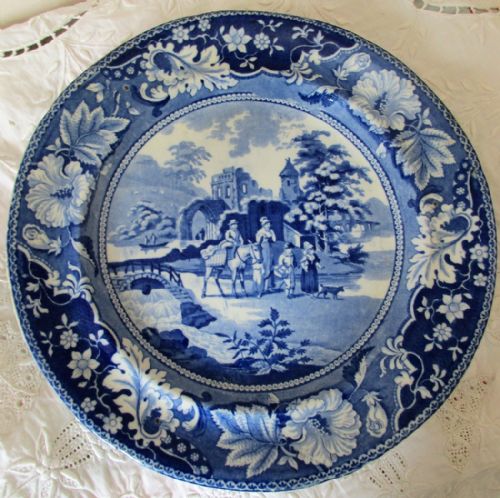
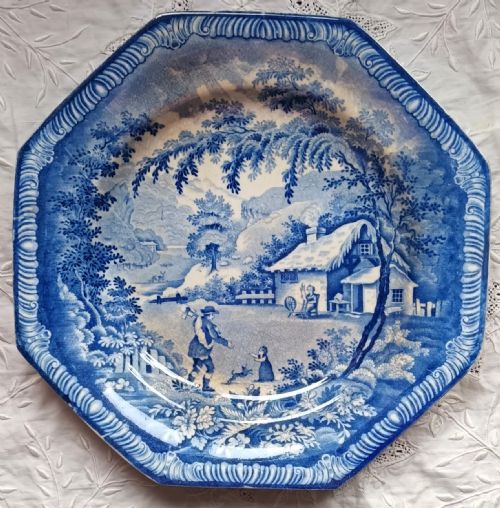
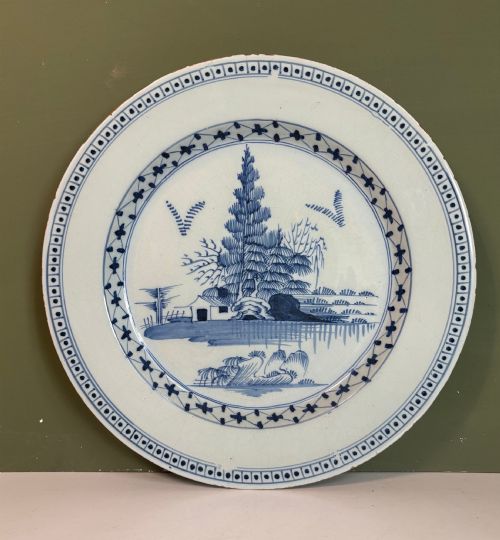
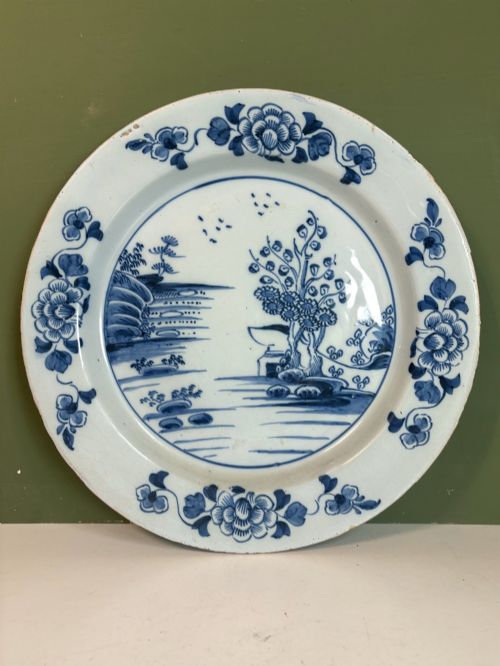
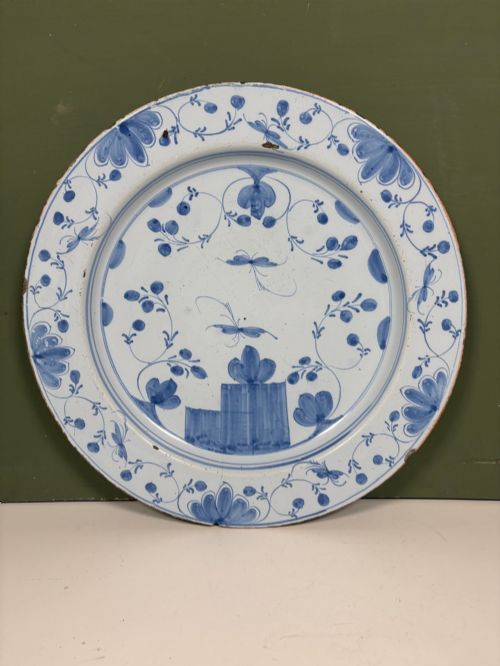
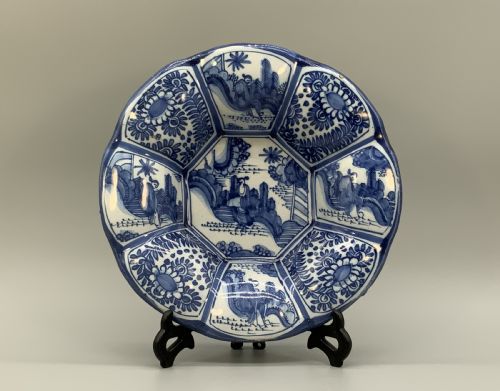
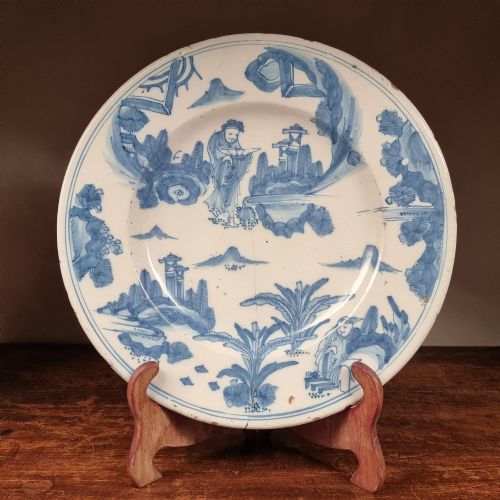
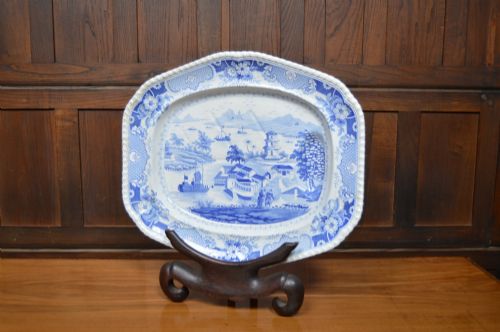
A blue earthenware display platter most frequently appears on this page as a large charger or decorative plate originating from Dutch and English potteries. These pieces span from the seventeenth century through the nineteenth century, encompassing Georgian, Victorian, and Delftware traditions.
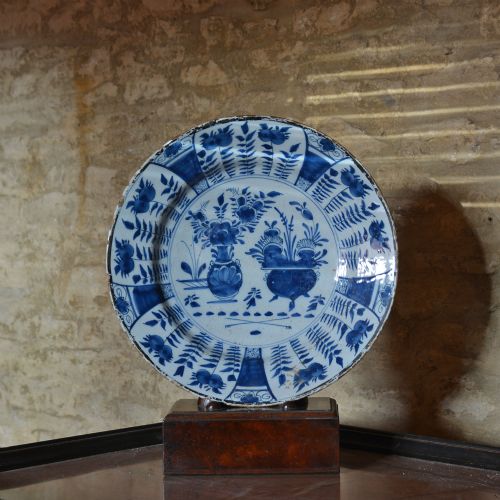
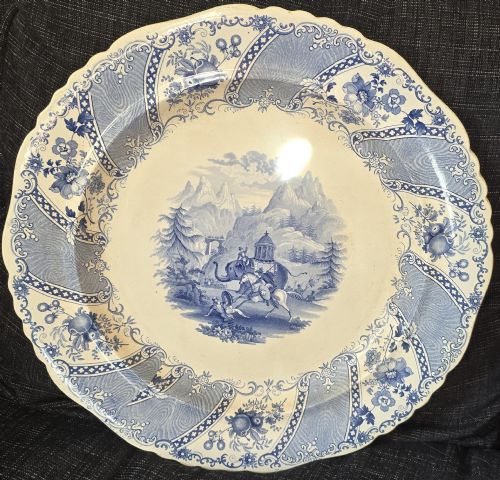
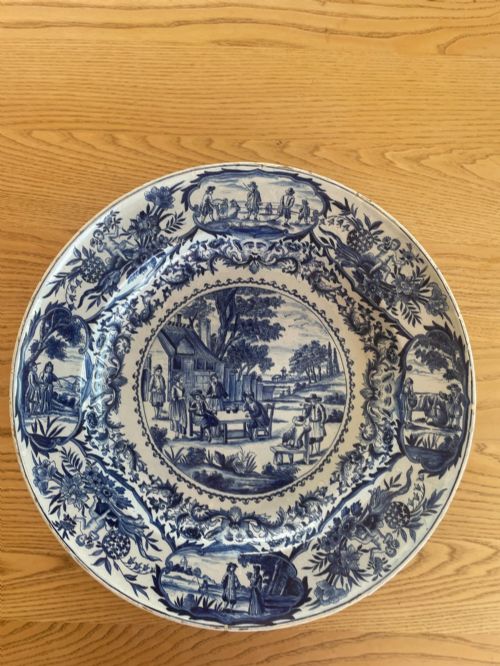
The forms range from deep wall chargers with Chinoiserie or transfer-printed historical scenes to lobed dishes and polychrome serving platters. Buyers will encounter substantial tin-glazed earthenware and transfer-ware plates designed primarily for visual impact rather than daily dining.
How they were made
Potters shaped these vessels from earthenware clay before coating them in a tin glaze or applying cobalt pigment to create the characteristic blue and white surface. Many nineteenth-century examples utilise transfer-printing techniques to transfer detailed pictorial copperplate engravings onto the ceramic body.
Earlier pieces rely on hand-painted cobalt oxide and polychrome pigments applied directly onto the absorbent tin glaze before firing. Artisans often finished these chargers with broad rims intended to frame the central narrative or floral motif.
Blue Earthenware Display Platter Retail Price Guide 2026
Typical asking prices for blue earthenware display platter among the pieces listed under this phrase on Sellingantiques today, from the lower quarter to the upper quarter. They describe what is for sale here now, not the wider market.
Listings span earthenware, tin glaze, and cobalt pigment across periods ranging from the seventeenth century to the Victorian era.
What varies in quality
The distinction between ordinary and exceptional pieces rests upon the crispness of the cobalt decoration and the ambition of the pictorial subject matter. Finely painted Dutch Delft and sharp transfer-printed Staffordshire views exhibit superior control of line and depth of tone compared to simpler utility wares.
Surface preservation and glaze stability also define the upper tier of these platters. Pieces retaining a luminous tin glaze with minimal disruption to the painted or printed surface command greater attention from collectors.
Brameld and Company·William Smith and Company·J W R·Minton
The Blue Earthenware Display Platter Glossary
- Charger
- A large decorative plate intended for display on a wall or dresser rather than routine table service. These substantial vessels often feature prominent central scenes.
- Tin Glaze
- An opaque white ceramic glaze containing tin oxide that provides a smooth surface for painting in blue or polychrome pigments. It forms the defining skin of traditional Delftware.
- Transfer Ware
- Pottery decorated by pulling an engraved copperplate print off tissue paper and transferring the ink onto an unglazed or biscuit-fired ceramic body. This technique allowed intricate topographical and narrative designs.
- Chinoiserie
- European decorative motifs inspired by Chinese art and porcelain, frequently featuring pagodas, figures, and landscapes. This style heavily influences seventeenth and eighteenth-century blue and white ceramics.
- Polychrome
- Decoration employing multiple colours alongside the standard cobalt blue, often seen on eighteenth-century English and Dutch chargers.
Blue Earthenware Display Platter: Frequently Asked Questions
What is the difference between Delftware and transferware?
Delftware relies on hand-painted cobalt or polychrome pigments applied directly onto an opaque tin glaze during the seventeenth and eighteenth centuries. The brushwork carries individual artistic variation.
Transferware emerged later, using engraved copperplates to print intricate repeating patterns mechanically onto the earthenware. This allowed highly detailed historical and topographical scenes to reach a broader market.
Can these antique chargers still hold food?
Tin-glazed earthenware and early transfer-ware plates are porous and prone to crazing after centuries of ageing. Historic glazes from these periods may also contain materials unsuitable for modern culinary use.
These platters are best appreciated as decorative objects or wall art rather than functional tableware for serving meals.
How do I distinguish eighteenth-century pieces from nineteenth-century ones?
Eighteenth-century examples typically feature hand-painted tin glazes with softer cobalt tones and occasional polychrome accents. The ceramic bodies often show the distinct weight and potting characteristics of earlier hand-thrown earthenware.
Nineteenth-century pieces frequently display industrial transfer-printing, crisper Staffordshire bodies, or distinct factory marks on the reverse. These later plates capture the Victorian appetite for narrative scenes and historical subjects.