



Staffordshire Blue Transferware China
Staffordshire blue transferware china delivers deep cobalt scenes onto earthenware and pearlware, offering collectors rich historical narratives and robust service forms.
Staffordshire Blue Transferware China
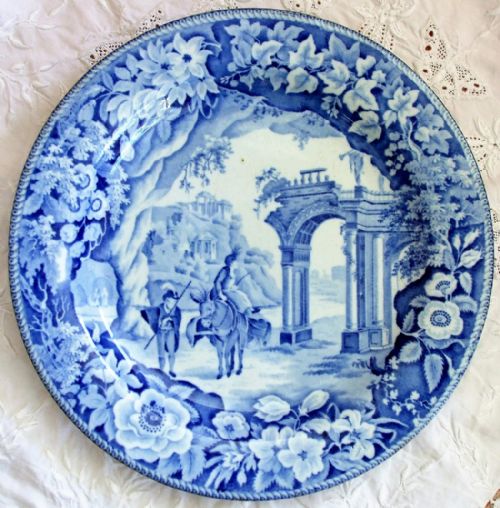
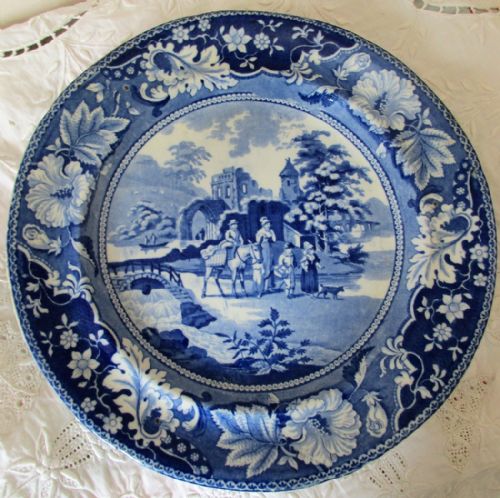
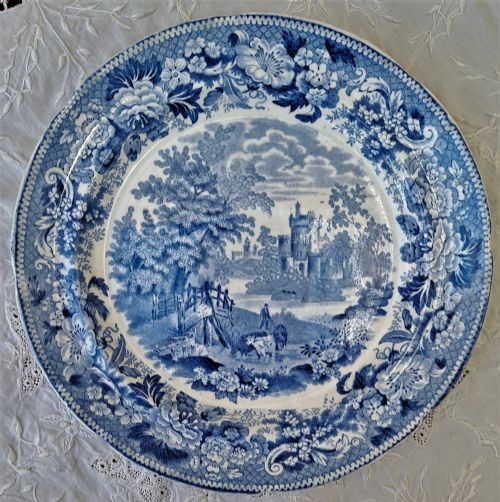
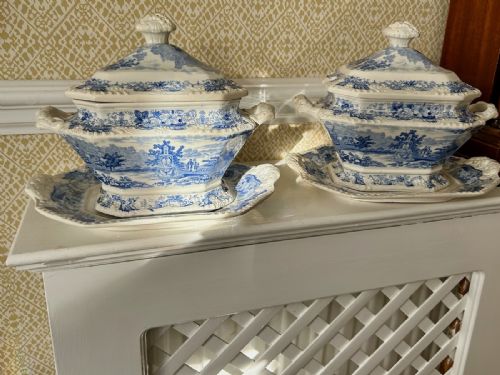
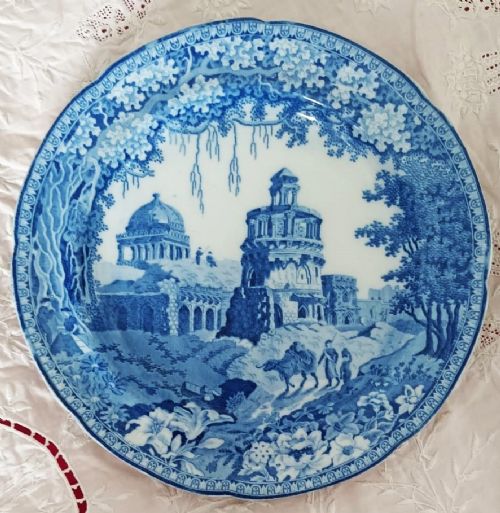
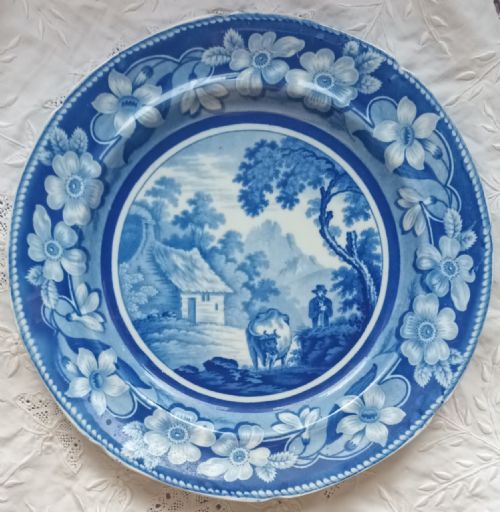
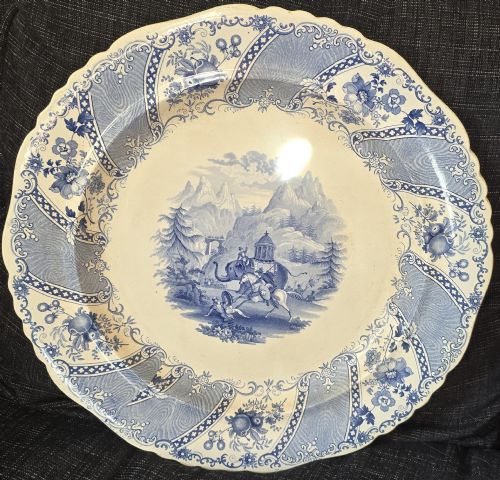
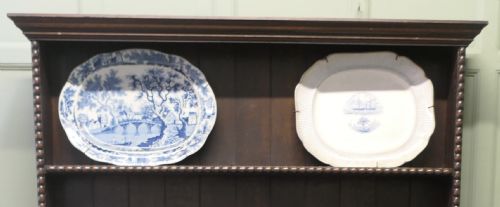
Staffordshire blue transferware china comprises earthenware, pearlware, and ironstone objects decorated with printed cobalt designs spanning the nineteenth century. These domestic items include decorative plates, serving platters, sauce tureens, and child sets featuring landscapes and classical ruins.
The objects stem predominantly from Georgian and Victorian periods, showcasing patterns such as Romantic Ruins, Hexham Abbey, and botanical themes. Buyers encounter plates and meat platters most frequently, alongside specialised vessels like vegetable tureens and draining trays.
Makers from the region utilised distinct named patterns to capture contemporary tastes for exotic scenery, pastoral life, and architectural monuments. These ceramic forms served practical dining functions while displaying detailed printed imagery.
How They Were Made
Potters shaped earthenware, pearlware, and ironstone bodies before applying cobalt oxide designs via engraved copper plates and tissue paper. This transfer print adhered to the ceramic surface prior to glazing and firing in kilns.
Glaze treatments including lead glaze and ceramic glaze sealed the porous clay bodies beneath smooth glass layers. Artisans then subjected the wares to high temperatures to fuse the blue pigment permanently into the finish.
Staffordshire Blue Transferware China Retail Price Guide 2026
Typical asking prices for staffordshire blue transferware china among the pieces listed under this phrase on Sellingantiques today, from the lower quarter to the upper quarter. They describe what is for sale here now, not the wider market.
Miniature tea sets and child-sized services allowed nineteenth-century children to practise hosting elaborate social gatherings using tiny ceramic plates.
What Varies in Quality
Print clarity separates superior pieces from standard examples, where sharp lines define architectural details and foliage without blurring. The richness of the cobalt hue and depth of the glaze also influence the visual impact of the pattern.
The complexity of the ceramic form, such as moulded sauce tureens with animal covers or large meat platters with reservoirs, indicates higher manufacturing skill. Well-preserved body integrity without excessive firing warping elevates the standing of individual items.
James and Ralph Clews·Zacharia Boyle·John Rogers and Son·William Smith and Co·Elkin and Newbon·William Adams·Brameld and Co·John Davenport·James Wallace and Co
The Staffordshire Blue Transferware China Glossary
- Transferware
- Ceramic pottery decorated by transferring a printed design from an engraved copper plate onto the clay surface using tissue paper. This technique enabled factories to produce intricate pictorial scenes with consistent detail across multiple items.
- Pearlware
- A refined earthenware developed with a bluish-white glaze that sat over a lightly vitrified body to mimic Chinese porcelain. It dates chiefly from the late eighteenth and early nineteenth centuries.
- Ironstone
- A heavy, durable ceramic material patented for its strength and resistance to chipping. It provided a dense white body for large serving platters and meat dishes.
- Flow blue
- A style of Staffordshire pottery where cobalt blue pigment intentionally bled into the surrounding white glaze during firing. This created a hazy, atmospheric effect popular during the mid-nineteenth century.
- Sauce tureen
- A small covered serving vessel designed for holding gravies and sauces at the dining table. They frequently accompanied large meat platters on matching stands.
Staffordshire Blue Transferware China: Frequently Asked Questions
How do I date Staffordshire blue transferware?
Dating relies on ceramic body composition, pottery marks, and stylistic clues within the printed patterns. Pearlware bodies and specific neoclassical motifs typically point toward earlier decades, while heavier ironstone pieces align with later Victorian production.
Makers' stamps on the reverse provide definitive clues when recorded in historical registry archives. Combined analysis of shape and blue pigment tone helps narrow down the decade of manufacture.
What is the difference between earthenware and ironstone?
Earthenware is a porous, lower-fired ceramic body that forms the base for much early nineteenth-century transferware. It feels lighter and requires a complete glaze barrier to remain watertight.
Ironstone is a denser, heavier ceramic compound formulated to withstand heavy daily use. It resists chipping better than standard earthenware and forms the sturdy structure behind large meat platters.
How were sauce tureens used at the table?
Sauce tureens held warm gravies, melted butter, or meat juices accompanying large roast joints. They sat upon matching ceramic stands to protect dining linens from drips.
Matching ladles often completed the service set, allowing diners to spoon sauces onto meat platters. These small vessels mirrored the decorative borders found on larger dinner services.
Can I display these plates on walls?
Plates and chargers with pictorial scenes suit wall display when mounted using properly padded, non-damaging hangers. Ensuring the mounting hardware distributes weight evenly protects the rim and glaze.
Rotating displayed pieces prevents uneven exposure to light and atmospheric dust in domestic rooms. Platters and small dishes make striking focal points in traditional dining spaces.
What caused the blue colour to blur?
Flow blue pieces were deliberately exposed to volatile vapours inside the kiln to make the cobalt pigment bleed into the white glaze. This chemical reaction was controlled by potters to achieve an atmospheric, soft-focus appearance.
Unintended blurring on standard transferware usually stems from shifting paper during the printing stage or kiln temperature fluctuations. Collectors value both intentional flow effects and crisp, high-definition prints.