





Blue Earthenware Display Dish
A blue earthenware display dish brings hand-painted cobalt and tin glazes into a room, offering centuries of ceramic artistry for your walls and surfaces.
Blue Earthenware Display Dish
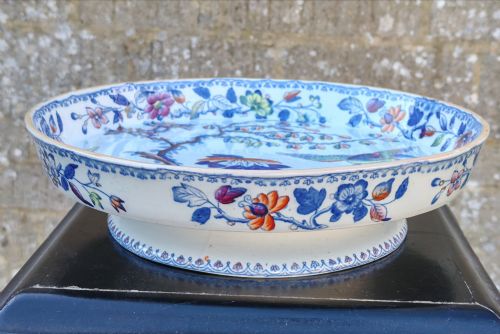
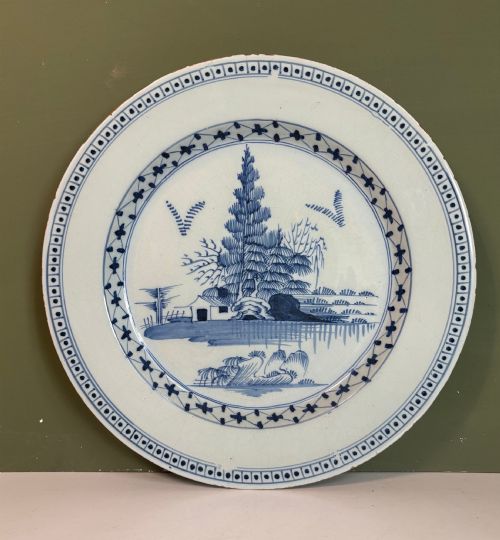
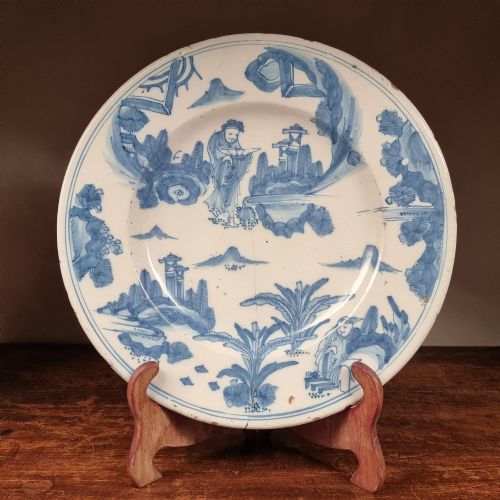
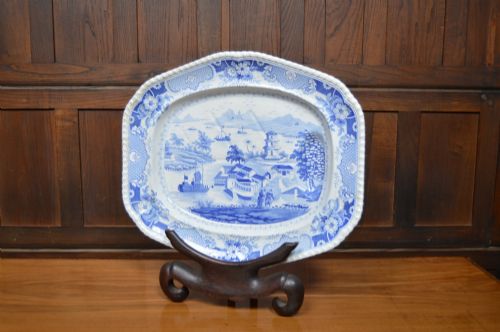
A blue earthenware display dish is a broad-rimmed charger, plate or platter intended primarily for exhibition rather than everyday dining. You will encounter large chargers and plates spanning from the seventeenth century through the nineteenth century, with Dutch and English origins dominating.
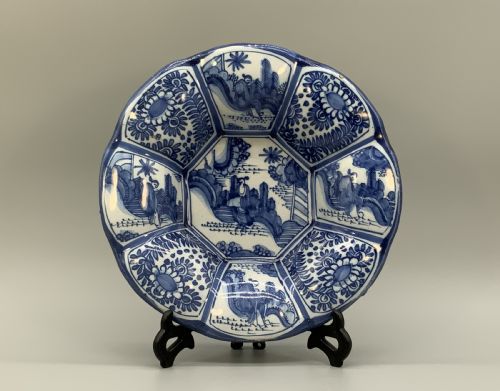
The forms range from deep chargers and lobed dishes to serving platters and wall plates. Many pieces draw direct inspiration from Chinese porcelain styles or feature European floral and architectural motifs.
Dating primarily from the eighteenth and seventeenth centuries, these items often display tin-glazed surfaces or transfer-printed decoration on porous clay bodies. The inventory here captures substantial chargers alongside smaller decorative plates.
Materials and construction methods
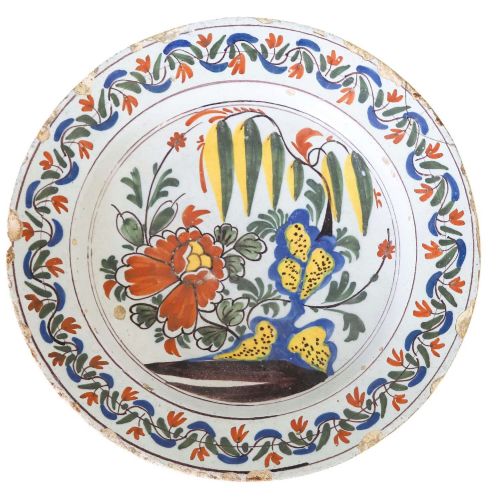
Potters shaped ordinary clay into earthenware bodies, which were then coated in a tin-opacified glaze to provide a smooth, white surface for painting. Cobalt pigment was applied directly onto the raw glaze to create deep blue designs before firing.
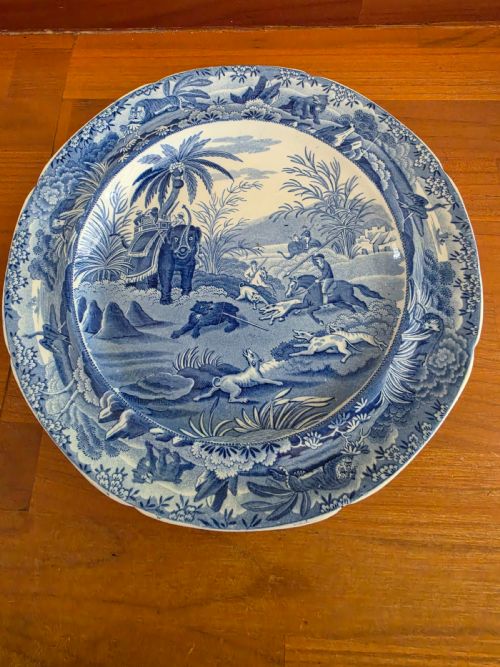
Alternative pieces utilise transfer-printing techniques, where engraved copper plates transferred intricate blue designs onto the ceramic body. Polychrome variants incorporated additional mineral pigments alongside the cobalt to introduce green, yellow or red highlights.
Blue Earthenware Display Dish Retail Price Guide 2026
Typical asking prices for blue earthenware display dish among the pieces listed under this phrase on Sellingantiques today, from the lower quarter to the upper quarter. They describe what is for sale here now, not the wider market.
A solitary plate records the grim nineteenth-century title 'Death of the Bear', offering a surprisingly dramatic narrative for a domestic wall.
Judging the quality of these ceramics
Quality rests in the crispness of the hand-painted brushwork and the depth of the cobalt pigment against the tin glaze. Early pieces with fluid, confident Chinese-inspired brushstrokes demonstrate superior artistic control compared to mechanical or hurried decoration.
The stability of the glaze and the circularity of the fired clay body distinguish finer chargers from distorted wares. Smooth, even glaze coverage without excessive pitting marks the work of skilled kilns.
J.W.R.·Spode·William Adams
The Blue Earthenware Display Dish Glossary
- Charger
- A large decorative plate traditionally used for display on a sideboard or wall rather than for serving food at the table.
- Tin Glaze
- An opaque white ceramic glaze containing tin oxide, which creates a smooth background for painted blue or polychrome designs.
- Kraak Style
- A decorative aesthetic originating from late Ming Chinese porcelain, featuring panels of floral and animal motifs arranged around a central scene.
- Transferware
- Pottery decorated by pressing a paper transfer printed from an engraved copper plate onto the clay surface.
Blue Earthenware Display Dish: Frequently Asked Questions
How were blue earthenware display dishes used historically?
These large chargers and plates were designed to be showcased on sideboards, dressers, or hung directly on walls to display wealth and artistic taste.
Because tin-glazed earthenware chips easily, owners typically reserved them for visual presentation rather than daily dining use.
How do I distinguish English delft from Dutch delft?
English delftware often uses a slightly warmer pinkish or buff clay body visible beneath chips in the glaze, alongside distinct local floral interpretations.
Dutch delft pieces, particularly from centres like Delft, frequently exhibit crisp tin glazes and faithful adaptations of Chinese Kraak or transitional painting styles.
What is tin-glazed earthenware?
Tin-glazed earthenware is a porous ceramic body coated in a lead glaze made opaque by the addition of tin oxide.
This white surface provides an absorbent canvas for painters to apply cobalt pigments before the final kiln firing.
How do I safely hang a heavy antique charger?
Select a spring-loaded brass wall hanger with rubber-coated prongs that distribute pressure evenly across the rim of the dish.
Ensure the mounting hardware is secured directly into wall studs, given the considerable weight of seventeenth and eighteenth-century earthenware chargers.