

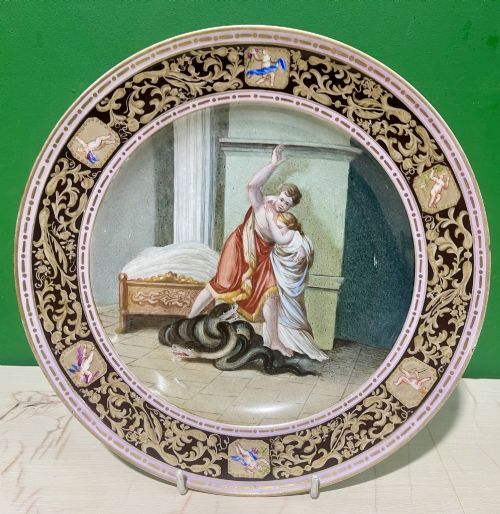



Classical Scene Plate
A classical scene plate brings history and mythology to porcelain and tin-glazed earthenware, offering cabinet display pieces painted with mythological figures.
Classical Scene Plate
A classical scene plate displays painted subjects drawn from mythology, history, and classical antiquity, frequently rendered on porcelain and tin-glazed earthenware. These works serve primarily as decorative chargers, cabinet plates, and platters rather than functional tableware.
The selections available here span the nineteenth century, Georgian, and Edwardian periods, displaying styles from Neoclassical and Renaissance Revival to Victorian and Edwardian design. Forms range from large chargers to cabinet plates and ribbon dishes.
Makers and decorators utilised well-known classical narratives, depicting figures such as Venus, Caesar, and Aurora. Such porcelain and earthenware surfaces transformed standard tableware shapes into miniature canvases for narrative art.
Materials and methods
Makers utilised fine porcelain and tin-glazed earthenware as the primary ceramic bodies for these pieces, applying cobalt blue grounds and hand-painted narratives. Surfaces often received rich gilding, gold leaf, and silver-gilt accents to frame the central painted subjects.
Decoration relied upon precise enamel painting techniques executed by skilled hands, sometimes featuring signed artwork and intricate giltwood elements on associated frames. Firing methods achieved deep cobalt colours and stable metallic finishes that survive across the nineteenth century and earlier eras.
Classical Scene Plate Retail Price Guide 2026
Typical asking prices for classical scene plate among the pieces listed under this phrase on Sellingantiques today, from the lower quarter to the upper quarter. They describe what is for sale here now, not the wider market.
Some cabinet plates depict Roman emperors standing in contemplation, proving that even antiquity enjoyed a quiet moment at the graveside.
Quality factors
The fineness of the painted narrative separates standard production from exceptional work, particularly where figures possess expressive detail and historical accuracy. Painted subjects signed by identified artists command greater attention than unsigned or generic transfer-printed alternatives.
The quality of the ceramic body and the application of gilding and cobalt blue ground dictate the overall visual depth. Pieces that integrate rich gold leaf with balanced neoclassical compositions demonstrate superior workshop execution.
The Classical Scene Plate Glossary
- Cabinet plate
- A decorative ceramic plate intended for display in a cabinet or on a wall rather than for dining use. These items frequently feature elaborate hand-painted scenes and gilt borders.
- Charger
- A large decorative plate or platter used historically for display or service at grand tables. In later periods, they functioned predominantly as ornamental artworks.
- Gilding
- The application of gold leaf or powdered gold onto the surface of porcelain, metal, or wood. It provides reflective metallic highlights that frame the painted centre.
- Istoriato
- A style of tin-glazed earthenware decoration featuring narrative historical, biblical, or mythological scenes painted across the entire surface. This technique flourished in Italian maiolica production.
- Neoclassical
- An artistic style drawing inspiration from the classical art and culture of ancient Greece and Rome. It emphasises symmetry, proportion, and mythological subjects.
Classical Scene Plate: Frequently Asked Questions
What is a classical scene plate?
A classical scene plate is a decorative ceramic or metal piece painted with figures and narratives from mythology or ancient history. They were produced primarily for display rather than table service.
Such items appear across nineteenth-century and Georgian manufacturing, utilising porcelain, tin-glazed earthenware, and silver-gilt with hand-painted detail and gilding.
How were these plates displayed?
These pieces were typically exhibited in glass-fronted cabinets, on sideboards, or mounted on walls using specialised hanging hardware. Their intricate painted narratives required prominent placement to be appreciated.
Larger chargers and platters served as focal points in formal rooms, complementing neoclassical and Victorian interiors.
How do I identify the period?
Period identification relies on examining the ceramic body, backstamps, painting style, and framing techniques. Nineteenth-century examples often feature cobalt blue grounds and detailed mythological figures.
Georgian and Edwardian pieces exhibit distinct stylistic traits associated with Neoclassical Revival and Victorian aesthetics, alongside specific manufacturing marks where present.
Are these plates meant for dining?
These items are designed exclusively for decorative display rather than daily dining or food service. The delicate enamel painting and extensive gilding are vulnerable to cutlery marks and frequent washing.
Owners preserve their condition by keeping them in display cabinets or on secure wall mounts away from heavy use.