





Blue Coastal Watercolour
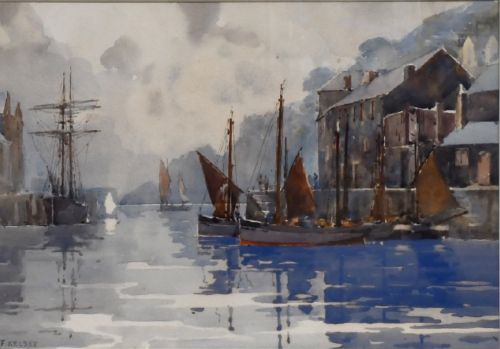
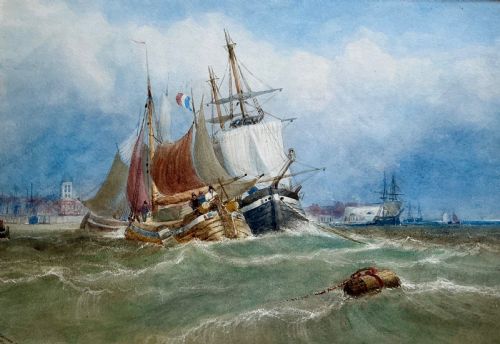
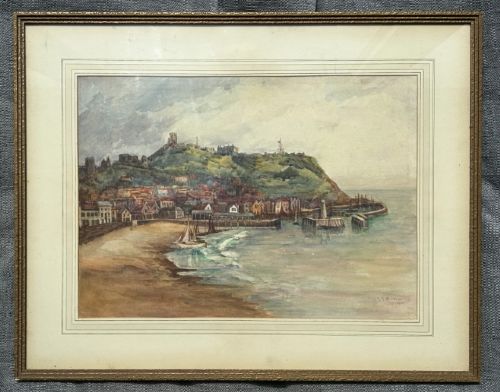
These blue coastal watercolour paintings capture sea and shore across the Victorian, Edwardian, and mid-twentieth century periods.
What blue coastal watercolour pieces are
When you search for blue coastal watercolour, you are looking at works on paper that depict marine scenes, harbours, and shorelines through washes of blue pigment. These pieces span the Victorian era, the Edwardian period, and into the middle of the twentieth century. The selection includes works aligned with Victorian Impressionism, Modern British Impressionism, the Newlyn School, and late nineteenth-century British traditions.
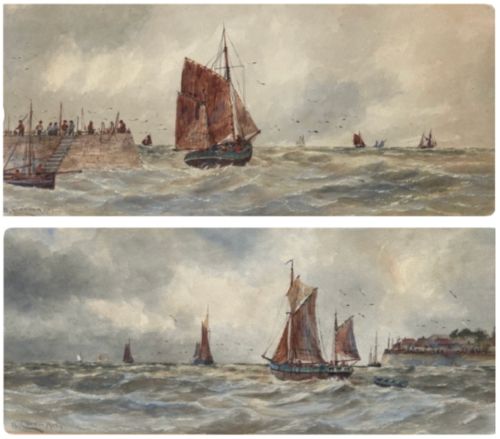
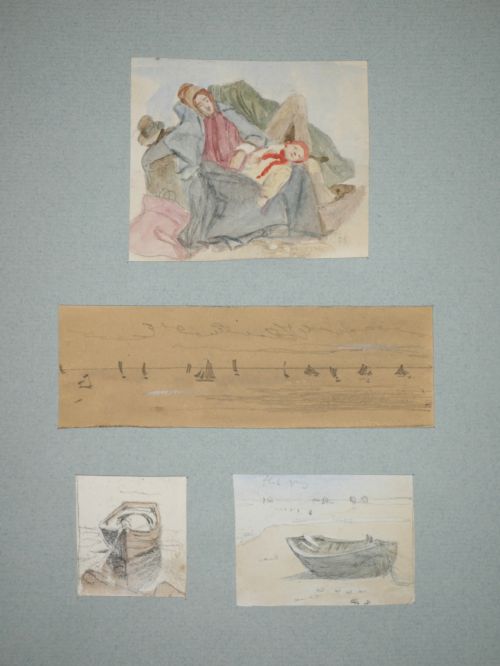
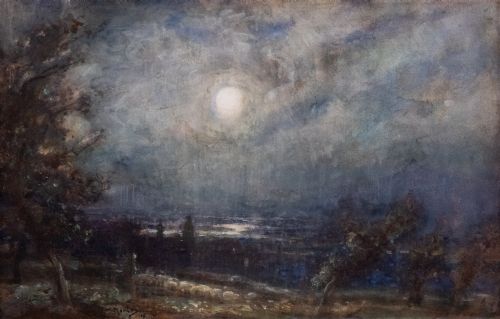
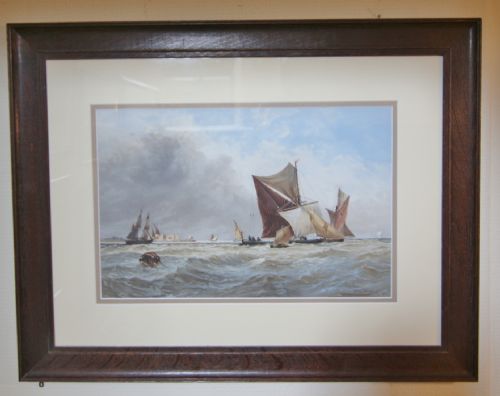
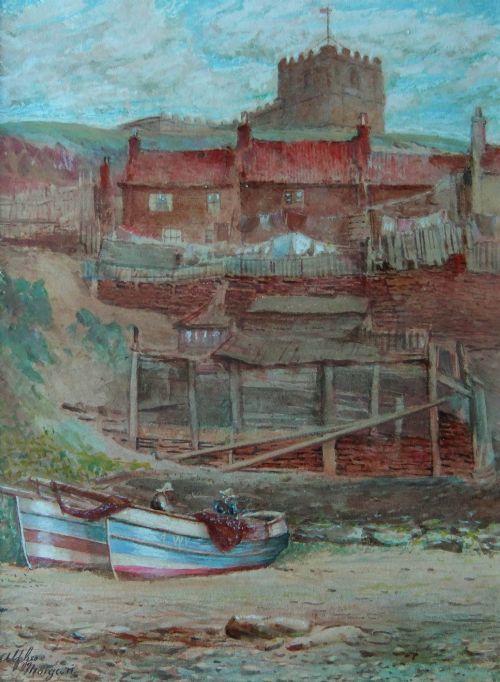
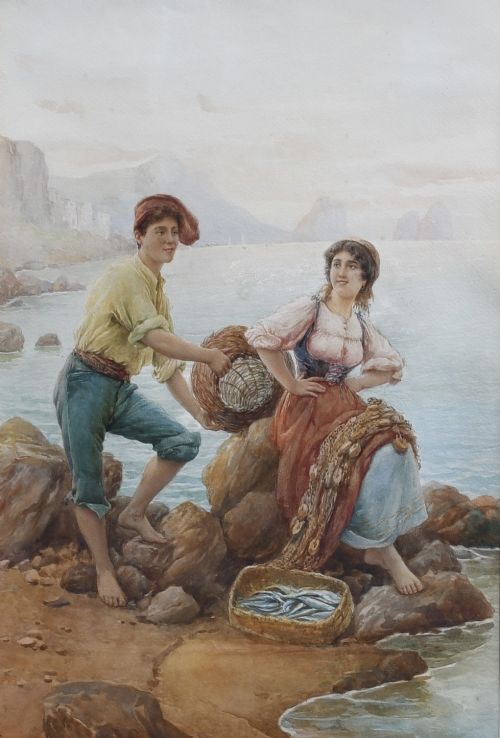
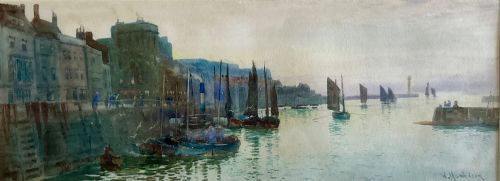
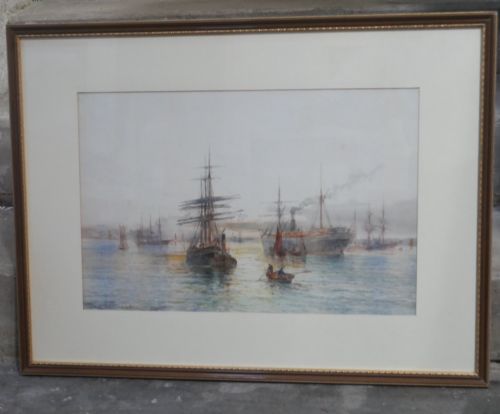
You are most likely to meet framed watercolours on paper behind glass, housed in wood frames. The subjects range from moonlight over coastal landscapes and harbour towns like Whitby to fishing boats at Brancaster Staithe and fisherfolk in Newlyn. Each painting records a specific coastal view through the lens of its period and maker.
How they were made
These works utilise watercolour paint applied directly to paper sheets. Artists built up their coastal scenes using fluid washes for skies and sea, alongside finer brushwork for boats, figures, and architectural details.
The finished watercolours are set behind protective glass and mounted in wooden frames suitable for display. The materials rely on traditional paper supports and water-soluble pigments to capture natural light and marine atmosphere.
Retail Price Guide 2026
Typical UK retail prices for blue coastal watercolour, calculated from the Sellingantiques database of over a million retail prices indexed since 2003. This retail price guide relies exclusively on Sellingantiques data; no external sources or auction records are used, so the figures do not describe the wider market.
Fisherfolk of Newlyn gaze out across maritime washes created a century ago.
What varies in quality
The distinction between works rests upon the surety of the brushwork and the artist's command of light and atmosphere across water. Stronger pieces display confident handling of the medium, where fluid washes and precise details combine to evoke the specific mood of the coastline.
Context and provenance further distinguish the range, as signed works by recognised figures carry greater art-historical weight than anonymous pieces. The sophistication of the composition and the preservation of the paper support also separate standard examples from finer works.
Thomas William Morley·Alfred G. Morgan·Edward Seago·John McDougal·William Lee Hankey
The Blue Coastal Watercolour Glossary
- Watercolour
- A painting method in which the paints are made of pigments suspended in a water-based solution. This medium allows for transparent washes and luminous effects particularly suited to seascapes.
- Newlyn School
- An art colony based in Cornwall during the late nineteenth and early twentieth centuries. Painters associated with this group focused on naturalistic depictions of local fisherfolk and coastal life in the open air.
- Victorian Impressionism
- A late nineteenth-century painting style that incorporated loose brushwork and a focus on fleeting effects of light. Artists working in this manner moved away from rigid academic finishes to capture atmospheric conditions.
- Modern British Impressionism
- A twentieth-century movement continuing the exploration of light and colour through painterly techniques. These later works often present simplified forms and expressive brush marks.
Frequently Asked Questions
What periods do these watercolours come from?
The listings include works from the Victorian era, 1900, 1910, 1920, and 1950.
These dates span from the late nineteenth century through to the mid-twentieth century.
How should I frame a watercolour?
Watercolours require framing behind glass to protect the paper surface from moisture and atmospheric dust.
A wooden frame with appropriate mounting keeps the paper from direct contact with the glass.
What subjects do these paintings show?
The pieces depict marine views, harbour towns, boats on staithes, and fisherfolk.
Locations include Whitby, Brancaster Staithe, and Newlyn alongside moonlit coastal landscapes.
Are these works signed by artists?
Several pieces are attributed to named artists such as Edward Seago and William Lee Hankey.
Signatures and attribution depend on the specific artist and the documentation accompanying each work.