





Blue Coastal Wall Art
Blue coastal wall art captures maritime life and open shorelines through historic paintings and watercolours.
Blue Coastal Wall Art
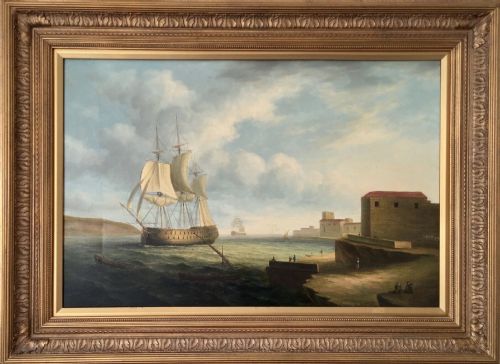
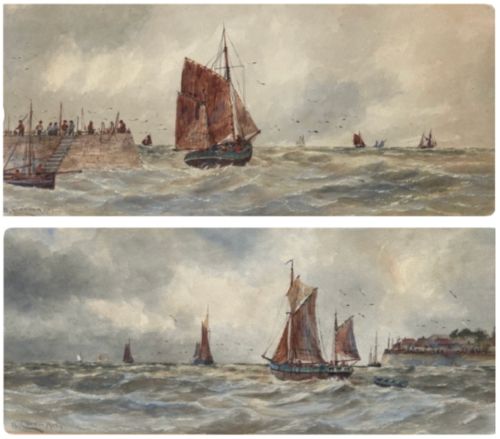
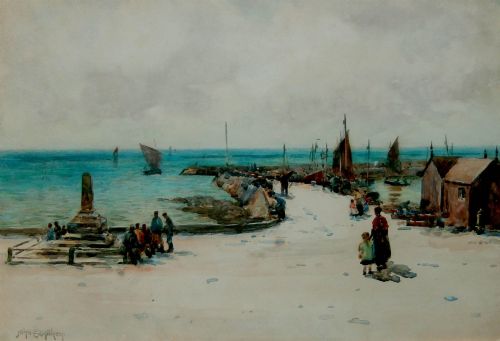
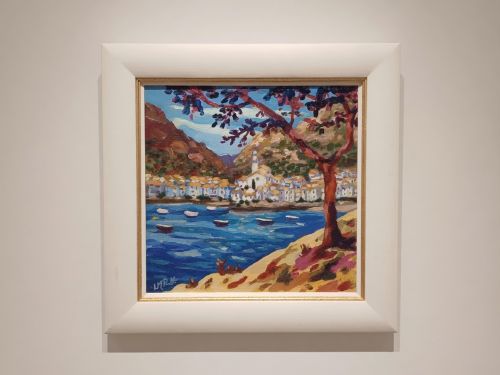
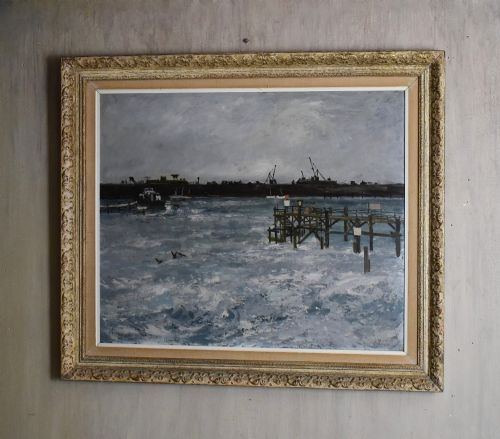
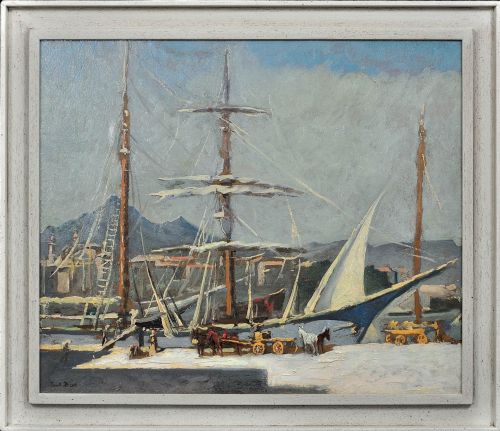
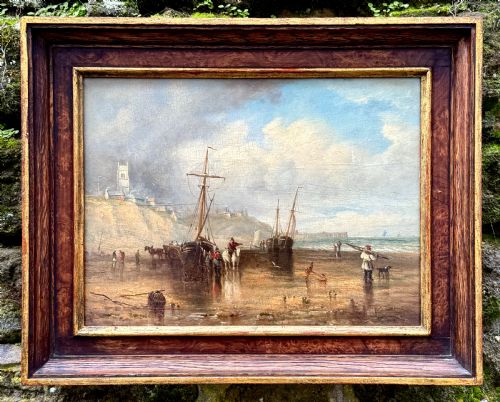
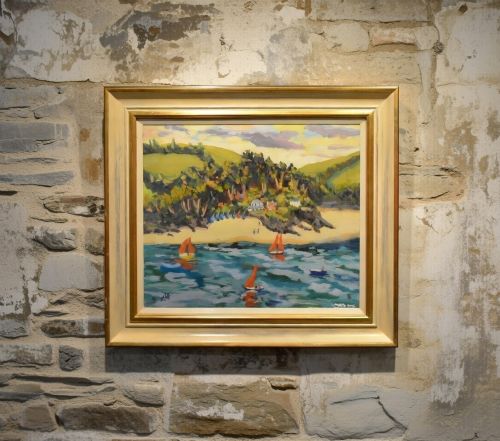
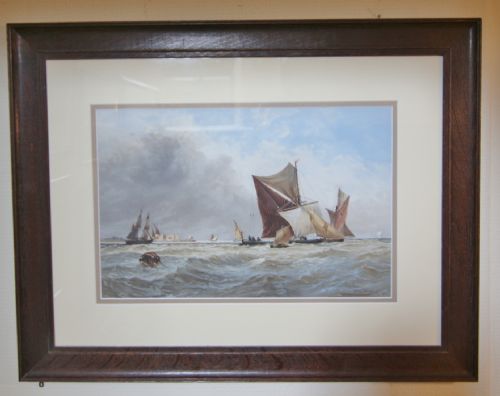
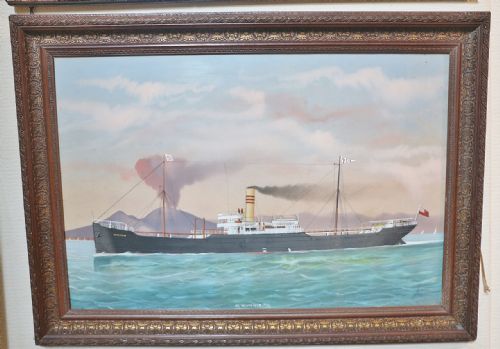
Collectors seeking blue coastal wall art will find a concentrated selection of maritime paintings and watercolours spanning the nineteenth century to the mid-twentieth century. These works document harbours, shipping lanes, and coastal villages across Britain, France, and the Mediterranean.
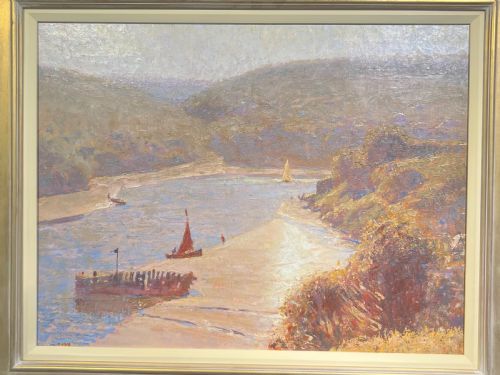
The prevailing forms on this page are framed canvas works and paper watercolours produced by regional artists working en plein air or in studios. Subjects range from bustling fishing ports to quiet estuaries rendered in naturalistic or impressionistic palettes.
How they were made
Artists relied primarily on oil paint applied to canvas or wood panels, alongside watercolours worked on heavy paper. These mediums allowed painters to capture shifting light and maritime weather conditions directly on location.
Many works remain housed in their period frames, constructed from wood and frequently finished with gilded mouldings that complement the coastal subject matter.
Listings feature works spanning the nineteenth century through the mid-twentieth century, utilising oil, watercolour, and canvas.
What varies in quality
Quality rests upon the artist's handling of atmospheric perspective and light, which separates routine topographical records from accomplished maritime compositions. Stronger pieces demonstrate confident brushwork and a secure grasp of nautical architecture and coastal topography.
Condition of the support material and the survival of original framing also influence desirability among collectors. Works retaining their early mountings and stable paint layers command greater interest.
James Hardy·James Orrock·William Cannon·Sidney A Court·John E Aitken·William Banks Fortescue·Lucy Pratt·Peter Brannan·Paul Bret·Bernard Benedict Hemy·Thomas Creswick·TB Hardy·Cecil Allan Mould·William Matthison·William Henry Williamson·Walter Goodin·George F Pennington·William Frederick Settle·Lionel Horsnell·Raymond Moritz·Joseph Edward Hennah·Paul Delvaux·Charles William Adderton·Edward Matthew Elliott·Charles Napier Hemy
The Blue Coastal Wall Art Glossary
- En plein air
- Painting executed outdoors to capture natural light and immediate visual impressions. This method was widely adopted by nineteenth-century marine and landscape artists.
- Seascape
- A work of art depicting the sea, shipping, or coastal views. These pieces often focus on harbour scenes, naval vessels, or fishing craft.
- Impasto
- Paint applied thickly to a canvas, standing in relief and showing brush or palette knife marks. This technique adds texture and tactile weight to water and sky.
- Watercolour
- A paint consisting of pigment suspended in a water-based solution, traditionally applied to paper. It offers luminous transparencies suited to marine atmospheres.
Blue Coastal Wall Art: Frequently Asked Questions
What subjects appear most often?
Harbour scenes, anchored sailing ships, and open coastal views dominate the selection. Artists frequently recorded daily maritime activities such as fishing boats departing or returning to port.
Views span British coastlines from Cornwall to Whitby alongside Mediterranean and French shorelines.
How should these paintings be hung?
Keep works away from direct sunlight and damp environments to protect nineteenth-century paper and canvas supports. Proper placement ensures the pigments and historic wooden frames remain stable.
Match the scale of the frame to wall space, allowing adequate room around the composition.
How do I identify the period?
Examine the materials, framing styles, and artist signatures recorded in the documentation. Nineteenth-century pieces typically feature traditional academic or maritime conventions, while later twentieth-century works adopt looser impressionistic brushwork.
Examine the backing boards and paper ageing for additional clues regarding age.
Are watercolours as durable as oils?
Watercolours on paper require protection behind glass to prevent atmospheric damage and fading. When properly framed and sealed, they survive centuries in stable condition.
Oil paintings on canvas offer greater resilience against ambient moisture but still benefit from controlled indoor environments.