


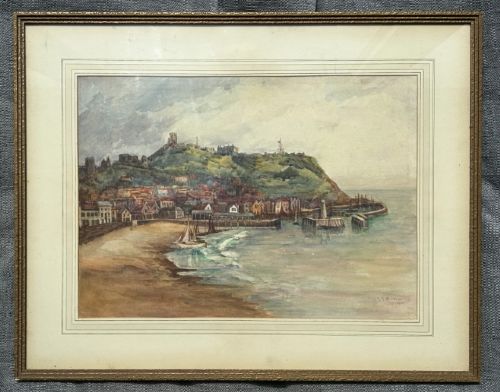


Antique Seaside Painting
These antique seaside painting works capture coastal shores, harbours and fishing villages through oils, watercolours and canvas.
Antique Seaside Painting
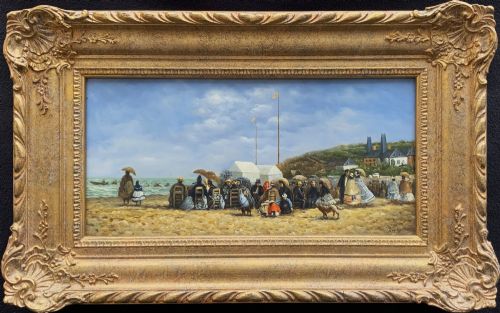
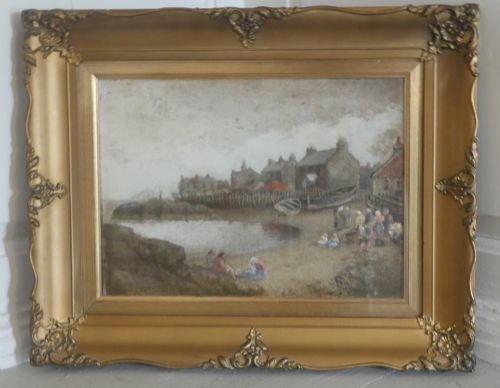
An antique seaside painting records coastal scenes, from bustling Yorkshire harbours and Dorset cliffs to French shores and Scottish waters. These works typically depict beach gatherings, piers, fisher folk, and coastal architecture observed directly from nature.
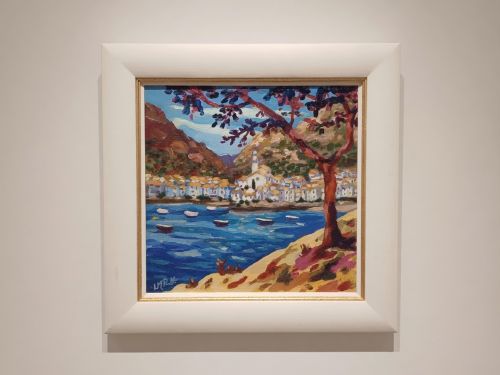
The pieces appearing most frequently on this page range from Victorian watercolours to early twentieth-century oil paintings and post-impressionist canvases. Artists capture specific locations such as St Ives, Scarborough, Cromer, and Normandy with varied atmospheric intensity.
Compositions alternate between quiet stretches of sand with children and donkeys, and dramatic coastlines featuring cliffs and working fishing boats. Collectors encounter both tightly finished topographical views and looser impressionist interpretations.
Materials and techniques of coastal works
Artists record the sea and shore primarily using oil on canvas, oil on board, and watercolour on paper, often housed within traditional wood and gilt wood frames. Watercolours rely on transparent washes and fine pencil underdrawings to describe light on water and chalk cliffs.
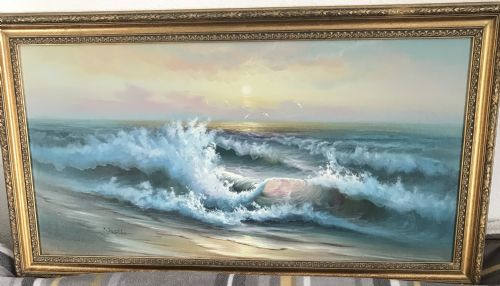
Oil paintings utilise heavier pigment application, capturing the texture of pebble beaches, crashing surf, and stormy skies through layered brushwork and impasto. Canvas supports provide durability while panels offer a rigid surface for plein-air sketching.
Listings feature works from the Victorian period through the 1960s, executed in oil, watercolour, and gouache on paper, canvas, and wood.
Elements that distinguish the finest works
Quality rests upon the artist's ability to render atmospheric light, shifting weather, and the specific chromatic character of marine environments. Stronger pieces demonstrate confident brush control and an understanding of perspective, particularly in complex harbour architecture and human figures.
Condition of the support and original framing significantly influence the integrity of a piece, with well-preserved watercolour pigments retaining their original vibrancy without fading or foxing. The directness of observation distinguishes masterly plein-air execution from formulaic studio production.
Edward Mills·William Banks Fortescue·F A Roylance·John Bedloe Goddard·Norman Lloyd·Sir Thomas Newenham Dean·William Raymond Dommersen·Sir William Russell Flint·H E Tidmarsh·Alfred Henry Vickers·Percy Brooke·Alfred Robert Quinton·James George Bingley·John Sanderson Wells·Robert Macaulay Stevenson·John Abernathy Lynas-Gray·William Greaves·James Watson·Edwin Bagshaw·James Kinnear·Yves Brayer·William Shayer·George Marks·Henry Valter·John Duvall
The Antique Seaside Painting Glossary
- Plein-air
- Painting executed outdoors to capture natural light and direct visual impressions of the coast. This method became central to nineteenth-century landscape practice.
- Watercolour
- Pigment suspended in a water-soluble binder, applied to paper to achieve translucent washes. It allows artists to render luminous skies and coastal haze rapidly.
- Impasto
- Paint applied thickly to a canvas or board, standing out from the surface. This technique gives tactile presence to churning waves and textured cliffs.
- Topographical
- Representing specific real-world locations with geographical accuracy. These works often serve as historical records of coastal towns and piers.
- Gouache
- An opaque watercolour medium mixed with a white pigment to create solid, matte areas of colour. Artists use it to add sharp highlights to marine watercolours.
Antique Seaside Painting: Frequently Asked Questions
How do I date an antique seaside painting?
Dating relies on costume details of figures on the beach, architectural clues like pleasure piers, and framing styles. Signatures and artist biographical dates also establish precise timelines.
Examine the reverse of the canvas or paper for old labels, gallery stamps, or handwritten inscriptions that frequently record titles and dates.
Were these paintings made outdoors?
Many nineteenth and twentieth-century coastal works began as quick plein-air watercolours or oil sketches painted directly on the beach. Artists recorded transient effects of light and tide before refining larger compositions in the studio.
Smaller panel and paper pieces usually represent direct observations of specific bays and harbours.
How should I frame and display a watercolour?
Watercolours require conservation framing behind glass with acid-free mounts to prevent paper degradation and fading from ultraviolet light. Avoid hanging them in direct sunlight or damp environments.
Keeping watercolours away from moisture protects both the paper support and the delicate pigment layers.
What is the difference between Newlyn School and Impressionist styles here?
Newlyn School works focus on naturalistic portrayals of coastal communities and fisher folk, often painted with earthy palettes. Impressionist and post-impressionist pieces prioritise broken brushstrokes and vibrant light effects over tight realism.
Both movements broke away from academic traditions to record modern seaside life.