



French Coastal Painting
French coastal painting captures the changing light and harbours of the Atlantic and Mediterranean shores, recorded by artists from the nineteenth century into the mid-twentieth century.
French Coastal Painting
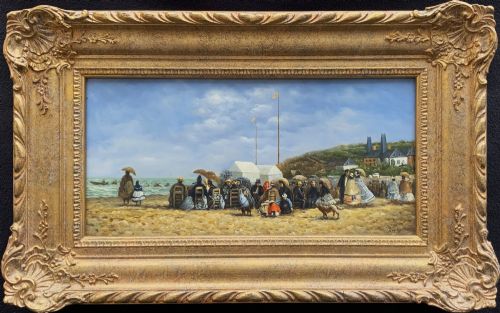
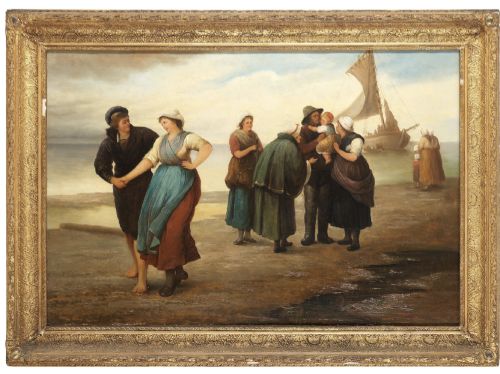
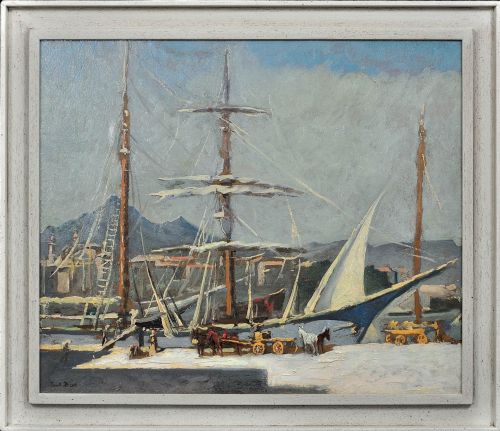
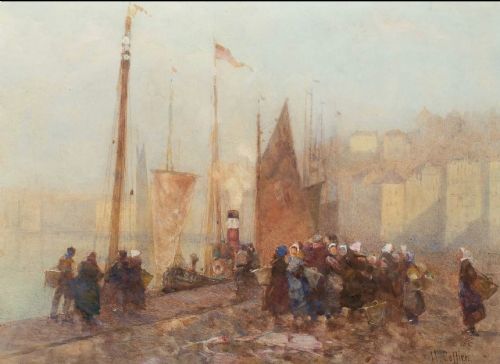
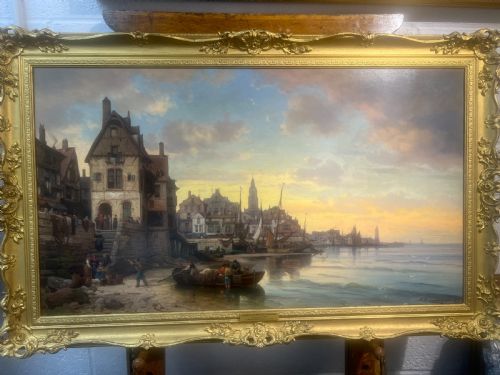
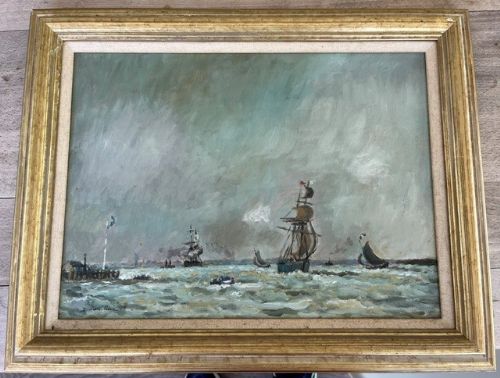
A French coastal painting represents harbours, cliffs, beaches and maritime scenes along the northern coasts of Normandy and Brittany or the southern stretches of the French Riviera and Provence. These artworks document local life, from seaweed gatherers and fishing fleets to promenades and sunbathers by the sea.
The pieces available span from the nineteenth century through to the mid-twentieth century, including works created around the nineteen-tens, twenties, thirties, forties, fifties and sixties. The most common examples met on this page are oil paintings on canvas or board, alongside watercolours on paper.
Artists working in these coastal regions responded to shifting atmospheres, capturing calm waters, busy ports and rugged shorelines through varied techniques. Styles range from nineteenth-century academic and realist traditions to impressionism, post-impressionism, fauvism and mid-century modernism.
How They Were Made
Painters employed oil paint applied to stretched canvas, wooden panels, board or textured printed surfaces, building up pigments to describe sea and sky. Watercolours on paper were also utilised for lighter, more immediate atmospheric studies of coastal towns and harbours.
Support materials varied according to the period and scale of the work, with nineteenth-century pieces frequently resting on oval wood panels or heavy canvases, while later twentieth-century examples often utilised board or paper.
Listings feature oil paintings and watercolours on canvas, wood, paper and glass across various twentieth-century and nineteenth-century periods.
What Varies In Quality
The strength of a French coastal painting relies on the artist's handling of light, brushwork and atmospheric perspective rather than mere subject matter. Finer examples demonstrate confident mark-making and a deliberate command of colour to evoke the specific heat of the Mediterranean or the cooler grey tones of the northern tides.
Compositional balance and the vitality of the brushwork separate accomplished studio or plein-air works from routine topographical views. Signed works by documented artists or pieces retaining clear historical provenance carry greater recognition among collectors.
Paul Bret·Hector Caffieri·Charles Euphraisie Kuasseg·Erich Mercker·Raymond Moritz·Paul Delvaux·Louis Suire·Gustave Vidal·Jean Baptiste Olive·Raymond Picque·William Lee Hankey·Cecil Rochfort D'Oyly John·Charles Malfroy·Roger de la Corbiere·Edward Henry Holder·Eugene Boudin·Henri Ottman·Yves Brayer·Augustus William Enness·Paul Louis Barruel·Andre Foneche
The French Coastal Painting Glossary
- Post-Impressionism
- An artistic movement following impressionism where painters explored structural form and expressive colour rather than naturalistic light alone. This approach appears frequently in twentieth-century depictions of French harbours.
- Plein-air
- Painting executed outdoors directly in front of the subject to capture natural light and transient weather conditions. Coastal artists often worked outdoors along the cliffs and quays.
- Fauvism
- A style characterised by strong, non-naturalistic pigments and bold brushstrokes applied directly from the tube. Such works emphasise painterly qualities over strict realist representation.
- Board
- A rigid flat support used by artists as an alternative to stretched canvas for oil paintings. Many twentieth-century coastal scenes are painted directly on wood or composition board.
French Coastal Painting: Frequently Asked Questions
What periods do these coastal paintings cover?
The available artworks span from the nineteenth century through various decades of the twentieth century, including the nineteen-tens, twenties, thirties, forties, fifties and sixties.
Early pieces reflect nineteenth-century realist and academic approaches, while works from later decades show the evolution of impressionist and modernist styles.
Which materials were used for these artworks?
Artists painted primarily with oil paint on stretched canvas, wooden panels or board. Watercolours on paper were also commonly utilised for lighter coastal studies.
Supports varied from traditional heavy canvases to textured boards depending on the artist's preferred medium and period.
Where do these maritime scenes take place?
The locations depicted include northern shores such as Normandy and Brittany, known for their rugged cliffs, tides and fishing ports. Other scenes capture the Mediterranean coast of the French Riviera, Provence and Marseille.
These varied geographies allowed artists to explore contrasting qualities of light and maritime activity across France.
How do I identify different painting styles?
Styles range from nineteenth-century realism to impressionism, post-impressionism, fauvism and mid-century abstraction. Realist works focus on detailed topographical accuracy, whereas impressionist and modernist pieces prioritise loose brushwork and atmospheric colour.
Examining the handling of paint and the treatment of light helps distinguish between academic precision and expressive twentieth-century interpretations.