





Blue Chinoiserie Charger
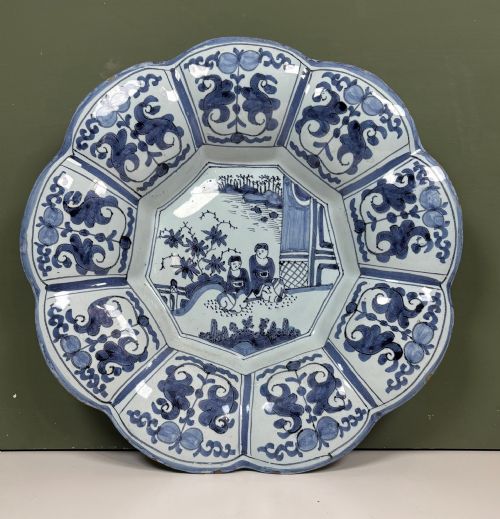
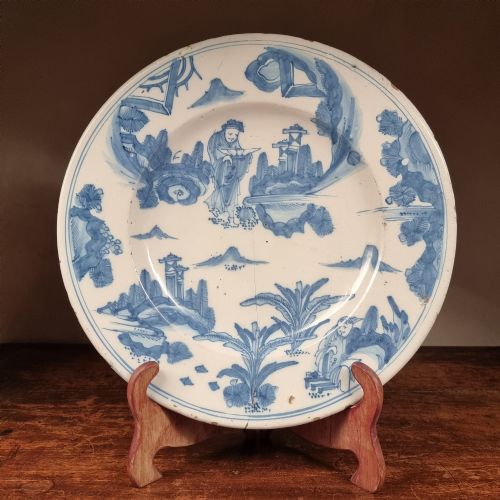
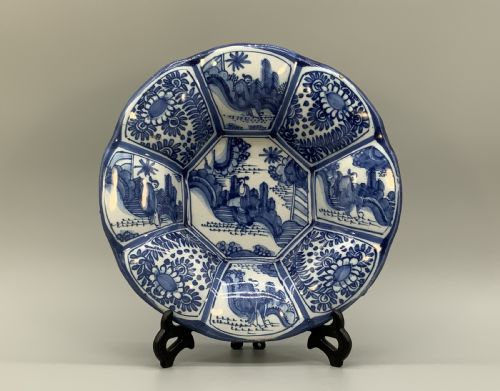
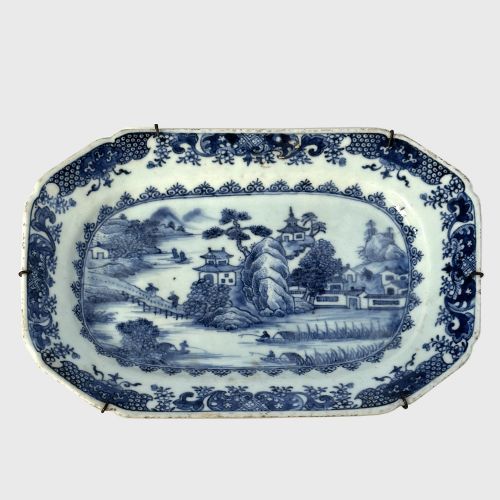
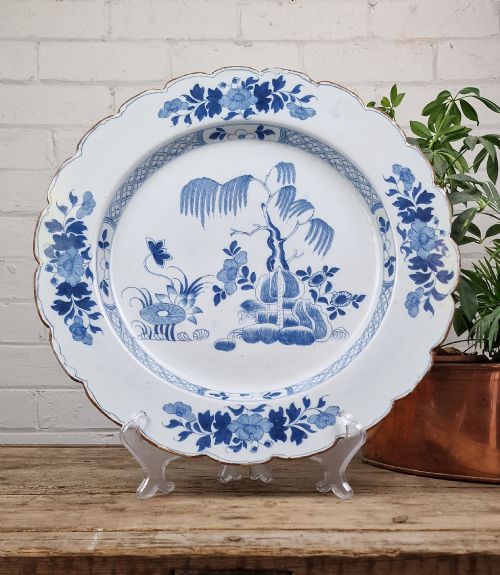
These large blue chinoiserie charger plates combine Eastern-inspired motifs with European tin-glazed earthenwares, offering striking wall or table display.
Blue Chinoiserie Charger
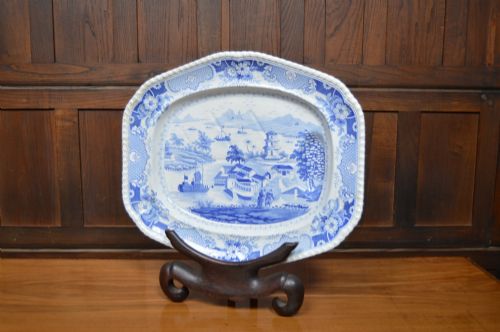
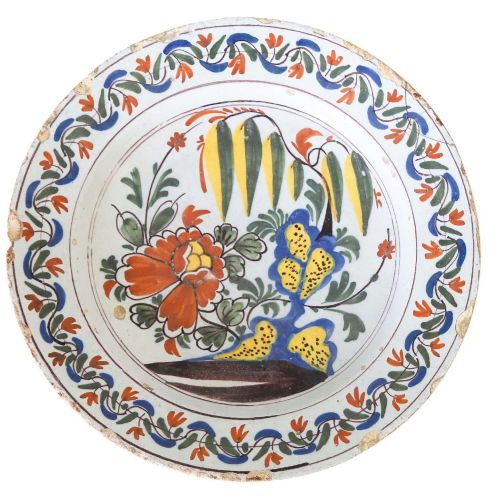
A blue chinoiserie charger is a wide decorative plate or platter painted with blue pigments depicting imagined landscapes, floral patterns, or figures influenced by Asian export porcelain. When searching for this form, buyers encounter items produced across multiple centuries, ranging from early English and Dutch tin-glazed earthenware to Victorian transferware and Chinese export porcelain.
The pieces appearing in this category span significant historical periods, predominantly the seventeenth, eighteenth, and nineteenth centuries. Alongside large chargers, the selection includes serving platters, meat plates, and smaller dishes sharing similar blue and white decorative schemes.
Origins vary between English potteries such as Lambeth, Bristol, and Caughley, continental European delftware centres, and Asian kilns. Buyers often find that seventeenth and eighteenth-century tin-glazed examples display the characteristic hand-painted brushwork central to the style.
Materials and production methods
Makers utilised earthenware, pearlware, and porcelain bodies as the foundation for these large dishes. Tin glaze or white slip was applied to create an opaque surface capable of holding detailed cobalt pigment decorations.
Cobalt oxide served as the primary pigment for painting the intricate scenes before firing. Potters later adopted transfer printing methods during the Victorian era to apply complex blue patterns efficiently onto ceramic bodies.
High-temperature kiln firings fused the metallic oxides into the glaze layers, producing the deep blue tones characteristic of these platters.
The inventory includes Dutch, English, and Asian production origins, encompassing forms from large chargers down to individual plates.
Assessing visual quality
The clarity and depth of the cobalt blue pigment dictate much of the visual success of each piece. Skilled painters achieved subtle tonal variations and sharp outlines, whereas lesser examples show blurred lines or muddy washes.
The smoothness and consistency of the tin glaze or porcelain surface affect the overall finish. Superior specimens maintain an even coating with minimal bubbling or glaze pooling across the expanse of the well.
The complexity and precision of the hand-painted or transfer-printed oriental design separate standard domestic items from exhibition pieces. Well-composed scenes maintain balance across large diameters without crowding the rim.
Minton·Spode·Caughley
The Blue Chinoiserie Charger Glossary
- Charger
- A large decorative plate or platter traditionally used for ceremonial service or display. These items typically measure significantly more than standard dining plates.
- Delftware
- Tin-glazed earthenware produced in the Netherlands and England. The ceramic body receives an opaque white glaze which is painted with metallic oxides before firing.
- Chinoiserie
- European artistic interpretations of Chinese and East Asian decorative styles. The motif includes imaginary landscapes, pavilions, and figures rendered in blue pigment.
- Transferware
- Pottery decorated by transferring a printed design from an engraved copper plate onto the ceramic surface. This technique emerged during the Georgian period.
- Tin Glaze
- A ceramic glaze made opaque by the addition of tin oxide. This coating provides a white background for cobalt painting.
Blue Chinoiserie Charger: Frequently Asked Questions
How were blue chinoiserie chargers used?
These large dishes served primarily as decorative display pieces on sideboards or walls during formal meals. Their generous surface area allowed makers to showcase elaborate painted or printed scenes.
Over time, many transitioned into pure cabinet pieces intended to highlight the owner's taste for Asian-inspired ceramics.
How do I identify a tin-glazed charger?
Tin-glazed chargers generally show an opaque white surface created by adding tin oxide to the liquid glaze. Examining the underside often reveals exposed earthenware or characteristic kiln support marks.
These pieces tend to feel slightly heavier than standard porcelain and may exhibit minor glaze chipping along the rims due to the softer nature of earthenware bodies.
What is the difference between delftware and porcelain?
Delftware consists of a porous earthenware body covered in an opaque tin glaze which absorbs cobalt pigment softly during painting. Porcelain utilises a dense, vitrified white clay body that remains non-porous even without glaze.
Porcelain items typically display sharper painted details and greater durability compared to the softer earthenware chargers.
How should I display a heavy charger safely?
Displaying heavy antique platters requires sturdy wall hooks designed specifically to distribute weight evenly across the base and rim. Wire hangers must be fitted securely without applying excessive pressure that could stress the ceramic body.
When placing pieces on flat surfaces, sturdy plate stands prevent tipping while keeping the entire face visible.