


Blue Ceramic Teapot
A blue ceramic teapot brings cobalt colour and quiet formality to the table, spanning centuries of porcelain and earthenware tradition.
Blue Ceramic Teapot
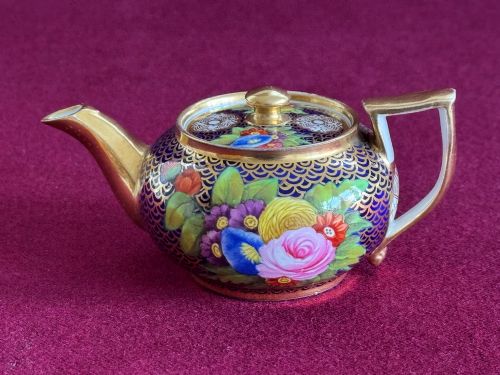
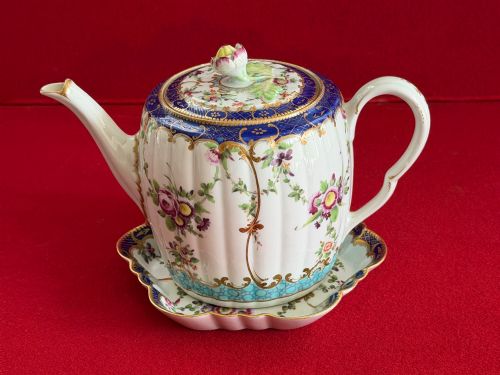
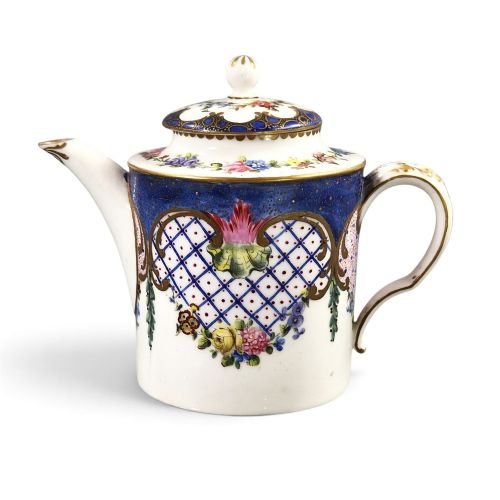
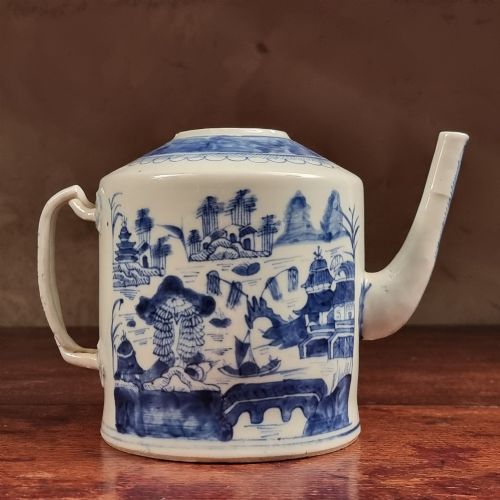
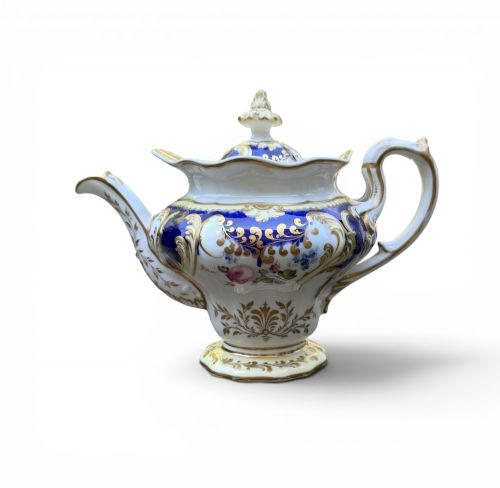
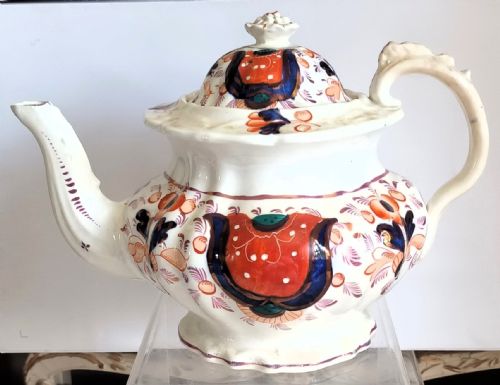
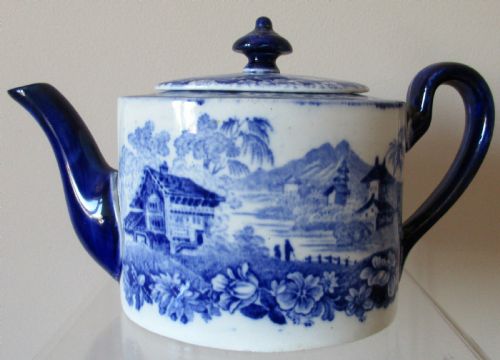
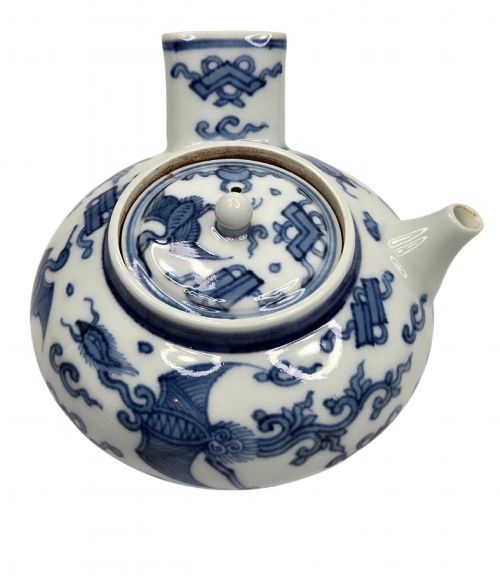
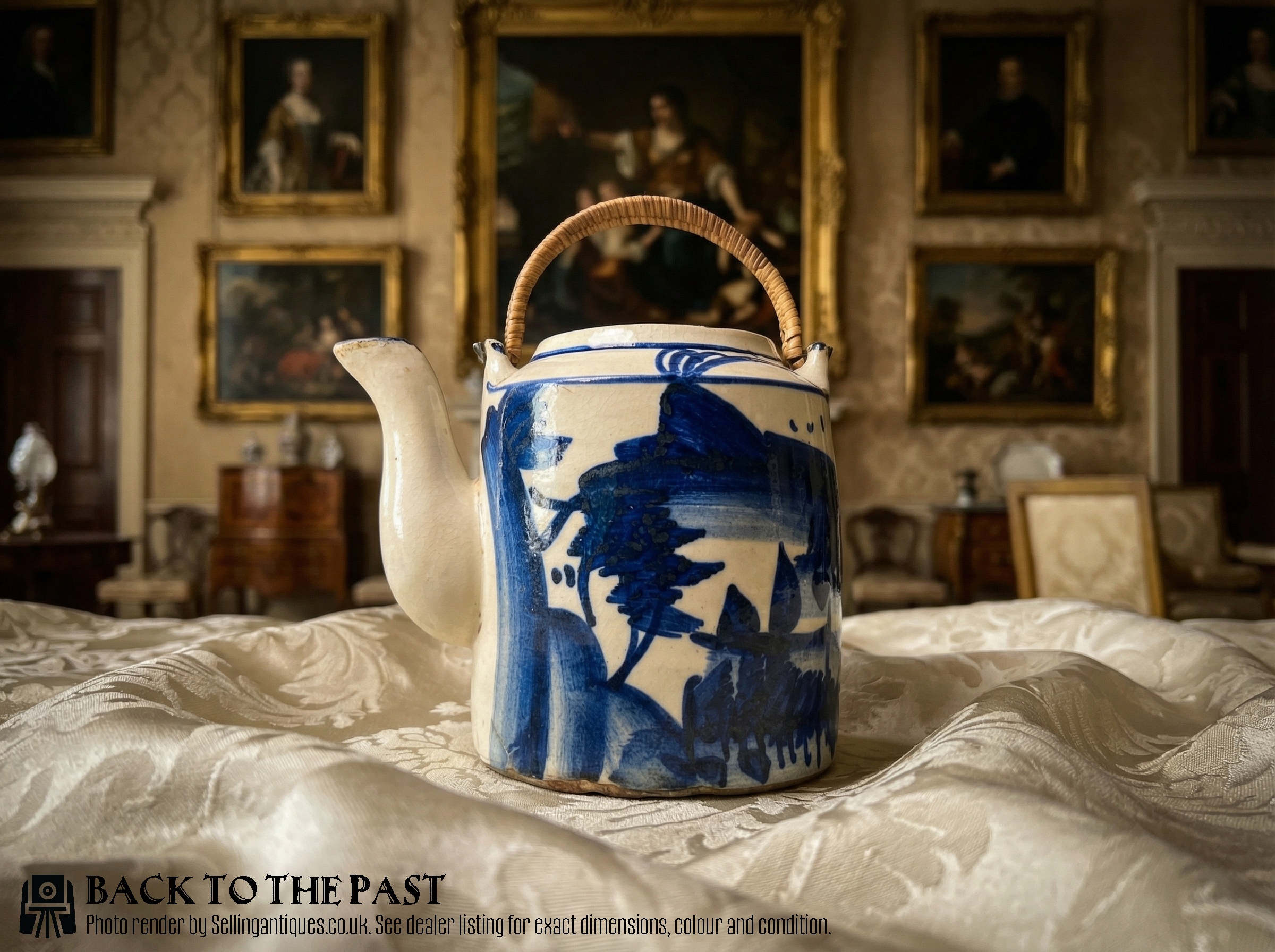
A blue ceramic teapot brings together centuries of domestic tea preparation across English, European and Asian traditions. When searching for a blue ceramic teapot, collectors encounter forms ranging from miniature solitaire pieces to full tea services and ewers. These vessels date from the seventeenth century through to the early twentieth century, encompassing Georgian, Victorian and Meiji periods.
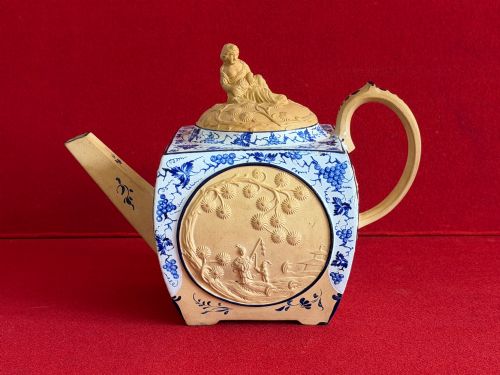
English factories dominate the selections here, alongside notable pieces from Chinese export kilns, French potteries and Japanese workshops. The forms include barrel shapes, octagonal bodies and transfer-printed designs, reflecting shifts in taste from rococo curves to clean classical lines.
Materials and production methods
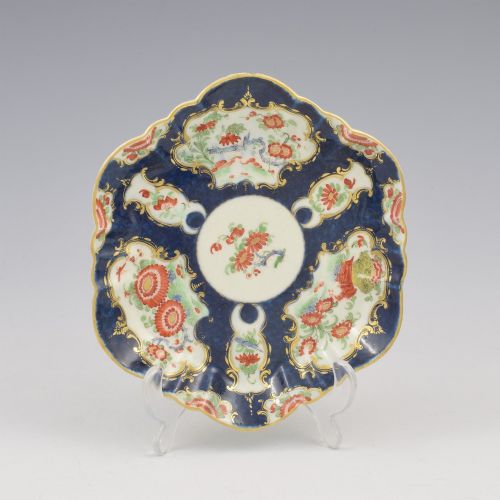
Makers utilised soft-paste porcelain, hard-paste porcelain, earthenware and ironstone, decorated primarily with cobalt underglaze or transfer printing. Cobalt blue required high firing temperatures to bond with the ceramic body, often beneath a clear glaze that lent depth to the pigment.
Some vessels incorporated gold leaf highlights, enamel additions or silver collars and mounts to secure handles and lids. The manufacturing techniques evolved from hand-painted Chinese export methods to industrial transfer printing in Staffordshire potteries.
Several teapots feature sculptural figures of Chinese boys riding melons or waiting patiently on lids, bringing unexpected humour to the tea table.
Distinguishing quality among examples
Quality rests upon the crispness of the cobalt decoration, the translucency of the ceramic body and the precision of the potter's form. Early porcelain pieces display hand-painted brushwork with deliberate variations in tone, whereas later transfer-printed wares rely on the sharpness of the pattern transfer.
The survival of original lids, matching stands and delicate spouts separates superior examples from incomplete sets. Potteries known for high standards maintained consistent wall thickness and balanced weight distribution even in miniature forms.
Copeland Spode·Enoch Wood And Sons·Joseph Holdcroft·Mintons·Royal Crown Derby·Royal Davenport·Royal Sevrès·Wedgwood·Worcester
The Blue Ceramic Teapot Glossary
- Cobalt Underglaze
- A blue metallic oxide pigment applied to the raw clay body before glazing and firing. This technique protects the pigment beneath a glassy protective layer.
- Transfer Printing
- A mechanical method of applying complex patterns to pottery using an engraved copper plate and tissue paper. It allowed factories to produce intricate blue and white scenes consistently.
- Soft-paste Porcelain
- A ceramic composition containing glass frit and white clay, fired at lower temperatures than true porcelain. It produces a warm, slightly creamy body frequently seen in eighteenth-century European pieces.
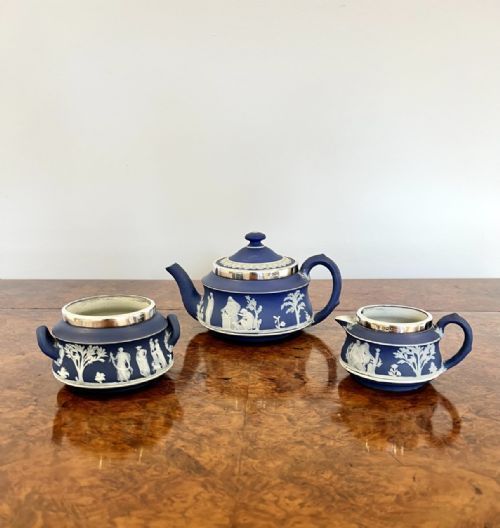
- Jasperware
- A fine-grained, unglazed vitrified stoneware developed by Wedgwood, typically featuring white raised reliefs against a solid blue ground. It requires precise control of kiln temperatures during manufacture.
Blue Ceramic Teapot: Frequently Asked Questions
How do I date an antique teapot?
Dating relies on factory marks, paste composition and decorative style. Examining the base often reveals manufacturer ciphers or pattern numbers corresponding to specific production decades.
Material changes, such as the transition from soft-paste porcelain to ironstone, provide further chronological markers when combined with stylistic evidence.
What is a solitaire tea set?
A solitaire set is designed for one person, typically comprising a miniature teapot, cup, saucer and sometimes a small jug. These compact groupings were popular for private bedroom use.
They reflect elite domestic habits of the eighteenth and nineteenth centuries, offering complete tea service on a smaller scale.
What distinguishes Chinese export porcelain?
Chinese export pieces made for Western markets combine traditional Eastern forms with European decorative preferences. These items often feature cobalt blue landscapes or heraldic motifs.
The potting reveals fine-grained paste and precise brushwork characteristic of imperial kilns and regional workshops.