





Blue Ceramic Planter
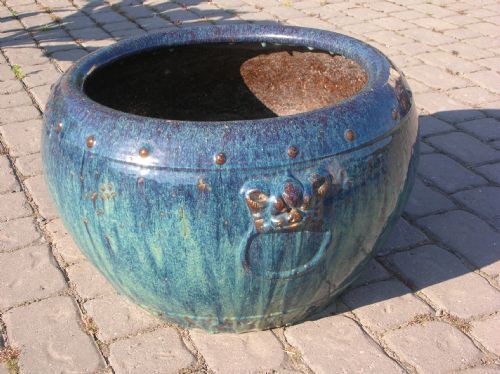
A blue ceramic planter brings garden greenery indoors with centuries of craftsmanship, offering deep cobalt tones and robust earthenware forms to anchor a room.
Blue Ceramic Planter
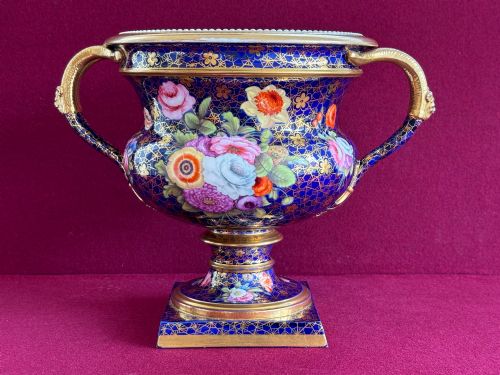
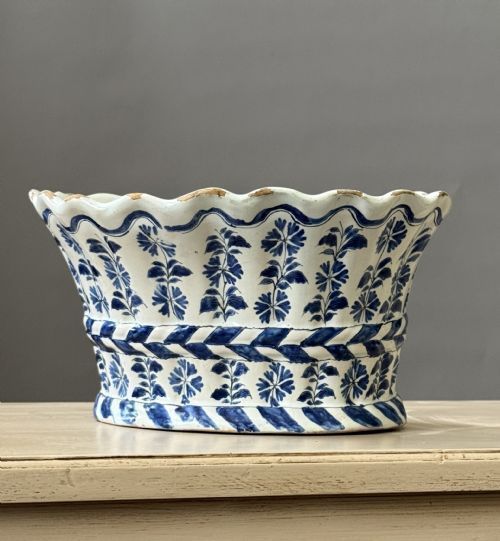
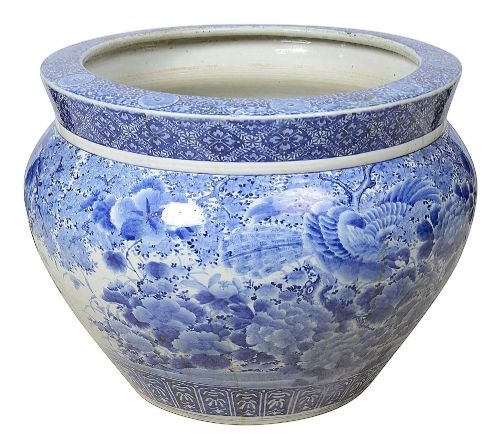
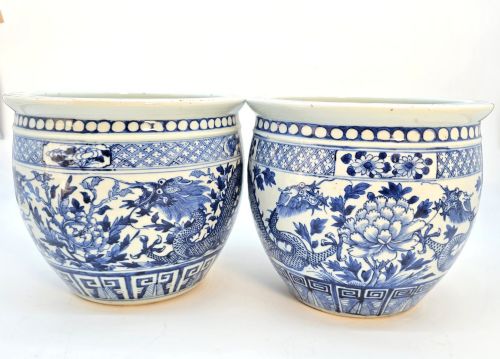
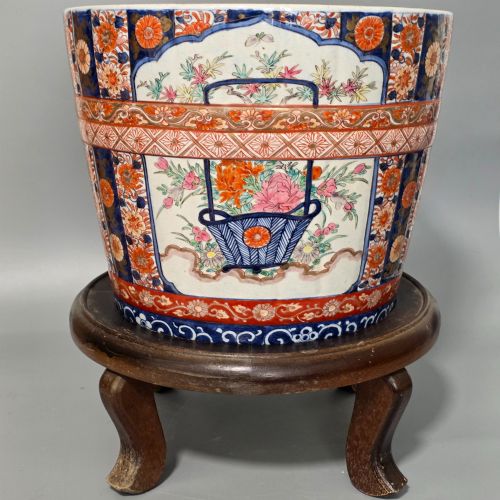
When you search for a blue ceramic planter, you encounter vessels designed to house indoor plants, ranging from substantial Victorian footbaths and jardinières to export porcelain fish bowls. These pieces span centuries of production, drawing heavily on nineteenth-century English stoneware, French majolica, and Japanese Imari porcelain.
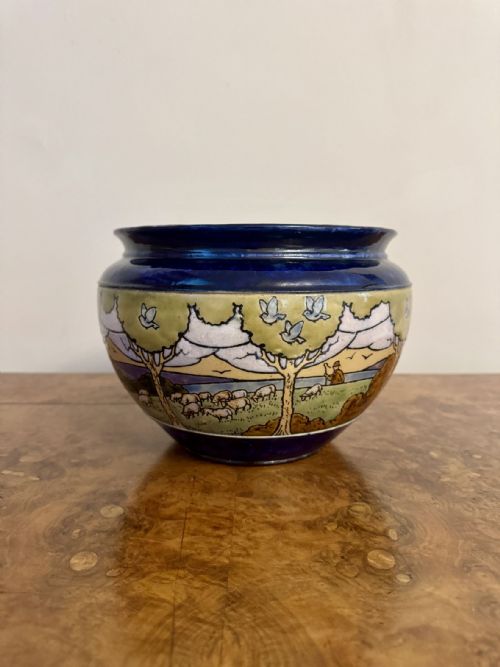
The selections on this page lean towards nineteenth-century creations by firms like Royal Doulton alongside eighteenth-century Delft and Chinese export ceramics. You find large floor-standing vessels alongside smaller table planters, each shaped to hold soil and plants safely.
Form follows function closely in these objects, with heavy rims and thick walls designed to manage moisture and weight. Many rest on fitted feet or associated stands, protecting surfaces from dampness and water rings.
How they were made
Potters shaped these vessels from earthenware, stoneware, and porcelain, utilising wheel-throwing or moulding techniques depending on the scale and complexity of the design. Stoneware and earthenware received opaque glazes, while porcelain bodies often displayed underglaze blue painting before firing.
Transfer printing became common in the nineteenth century, allowing factories to apply intricate blue and white patterns onto earthenware bodies before glazing and firing. Majolica pieces relied on heavy lead glazes over moulded relief decoration, creating glossy surfaces rich in colour and texture.
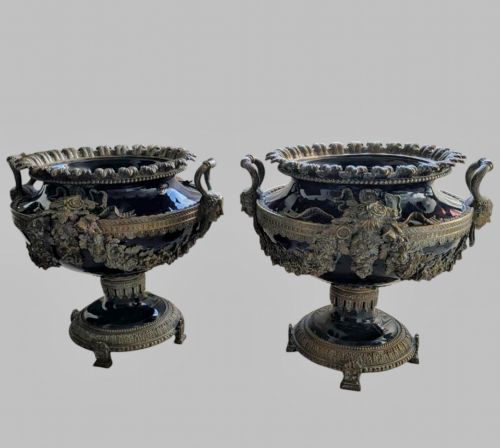
Metal mounts in gilt bronze or ormolu appear on select French and English specimens, fitted securely around the ceramic rims or bases to provide structural support and decorative contrast.
Some nineteenth-century makers constructed three-handled ceramic pots specifically so gardeners could hoist heavy damp greenery with a companion.
What varies in quality
The crispness of the blue pigment and the control shown during the firing process distinguish finer examples from standard production pieces. Deep, uniform cobalt glazes without clouding or excessive pooling indicate superior kiln management.
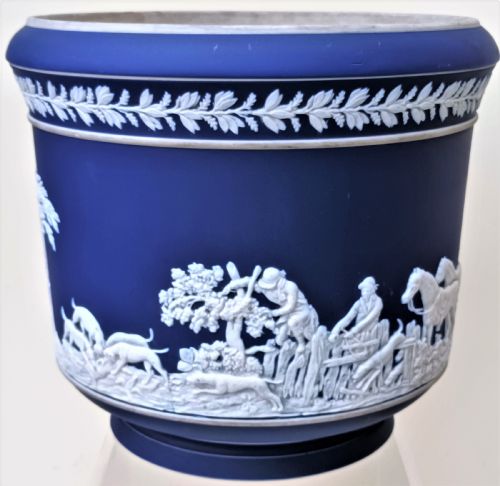
Moulded relief work reveals the skill of the original modeller, with sharper definition in leaves, scrolls, and figural scenes marking out the better workshops. Heavier potting and balanced proportions ensure the vessel withstands the physical demands of holding wet soil.
William Adams And Sons·Lauder Pottery Barnstaple·Royal Doulton·Doulton Burslem·Doulton Lambeth·Clement Massier·Spode·Royal Worcester·Wedgwood·George Jones·Minton
The Blue Ceramic Planter Glossary
- Jardiniere
- A large ornamental pot or stand for holding flowers or plants. They often sit on the floor or a dedicated base.
- Footbath
- A large ceramic vessel originally intended for personal washing that easily doubles as an oversized planter. These possess handles and substantial capacities.
- Majolica
- Low-firing earthenware covered with an opaque tin glaze and painted with metallic oxide colours. The technique yields bright, glossy surfaces popular in the nineteenth century.
- Jasperware
- A type of fine stoneware developed by Josiah Wedgwood featuring a matte surface, typically coloured with cobalt blue and applied with white clay reliefs. It requires precise temperature control during firing.
- Imari
- Japanese porcelain decorated in underglaze blue and overglaze iron red, gold, and other colours. Exported widely to Europe, it heavily influenced Western ceramic design.
Blue Ceramic Planter: Frequently Asked Questions
Can I plant directly inside antique planters?
Placing soil and water directly into nineteenth-century earthenware or porous stoneware can cause moisture to seep through the body over time. Using a plastic or terracotta nursery pot inside the vessel protects the antique ceramic from mineral deposits and dampness.
Placing a saucer at the bottom inside the planter catches excess drainage water and keeps the interior dry. This method also allows you to swap out plants easily without disturbing the main vessel.
How do I clean a ceramic planter safely?
Warm water and a soft cloth remove dust and surface dirt without harming delicate glazes or gilded mounts. Avoid harsh scourers and chemical cleaners that can scratch earthenware or strip surface finishes.
For stubborn mineral scale inside the pot, a weak vinegar solution applied gently with a sponge helps lift residue. Dry the ceramic thoroughly with a lint-free towel after washing.
Where should I place a heavy jardiniere?
Large stoneware and porcelain planters require sturdy surfaces like wooden sideboards, low tables, or direct floor placement. Their substantial weight when filled with soil means they need stable support to prevent tipping.
Keep them away from high-traffic walkways where they might get bumped, and protect delicate wood finishes underneath with a cork mat or protective felt pads.