


Glazed Stoneware Plant Pot
These glazed stoneware plant pot examples bring robust Victorian and Arts & Crafts horticulture indoors with durable ceramic bodies and rich surface decoration.
Glazed Stoneware Plant Pot
A glazed stoneware plant pot combines heavy-duty utility with decorative surface finish, functioning as a jardiniere or garden urn for indoor and outdoor planting. Buyers searching for a glazed stoneware plant pot encounter robust vessels designed to house potted greenery securely while adding period character to a room.
The pieces seen on this page predominantly date from the Victorian era up to the early twentieth century, spanning the 1880s, 1900, and 1920 periods. Forms range from large jardinieres and bonsai planters to substantial garden urns.
Origins represented in the evidence include British art potteries alongside continental European examples, notably German salt-glazed wares. Such pieces reflect the nineteenth-century passion for indoor horticulture and artistic domestic interiors.
How they were made
Potters shaped dense stoneware clay on the wheel or in moulds before firing the bodies at high temperatures to achieve vitrification. This high-heat process rendered the ceramic material completely waterproof and exceptionally durable.
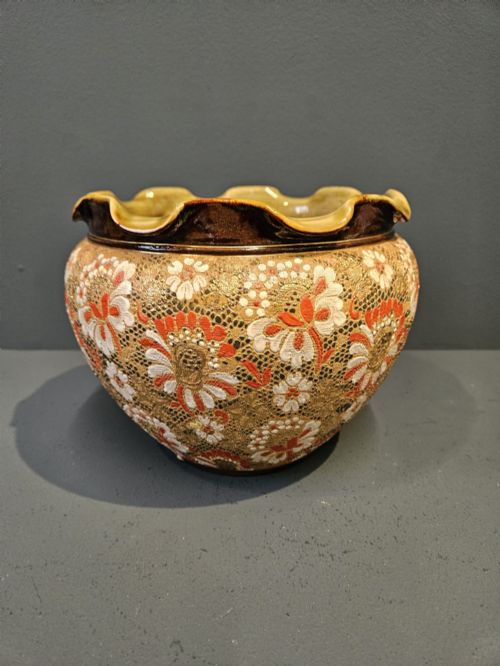
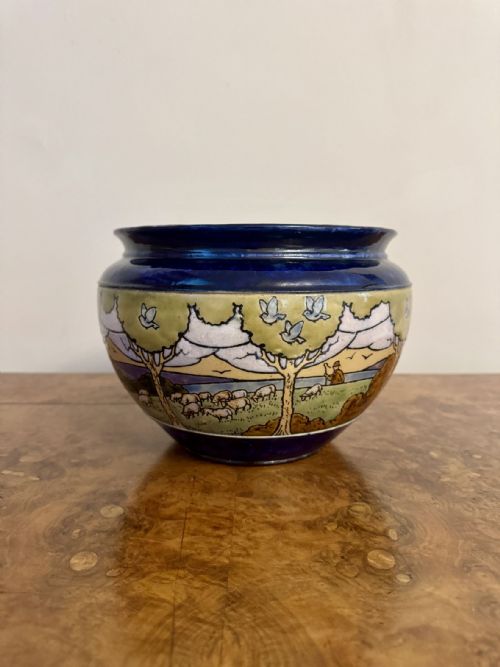
Surfaces received various treatments including salt glazing, enamel, and cobalt pigment decoration, often combined with textured Slaterware patterns. Workshops applied fluid coloured glazes that interacted with the dense clay body during firing to create rich, variegated tones.
The listings on this page span the Victorian era, the Arts & Crafts movement, and the early twentieth century, utilising stoneware, salt glaze, and cobalt pigment.
What varies in quality
Quality in a glazed stoneware plant pot lies in the crispness of the moulded relief and the depth of the glaze application. Superior examples display controlled colour variation and precise decorative detailing rather than flat, uniform surfaces.
The reputation of the maker heavily influences distinction, with pieces bearing specific studio signatures or model numbers standing apart from anonymous production wares. Structural crispness and balanced proportions separate utilitarian garden vessels from high-art domestic jardinieres.
Doulton Lambeth·Royal Doulton·Doulton Burslem
The Glazed Stoneware Plant Pot Glossary
- Jardiniere
- An ornamental ceramic pot or stand designed to hold a living plant indoors. These vessels usually sit on tabletops or plant stands rather than directly on the ground.
- Salt glaze
- A glossy, slightly textured finish achieved by throwing common salt into the kiln during high-temperature firing. The salt vaporises and combines with the silica in the clay to form a durable glassy coating.
- Slaterware
- A ceramic technique involving the pressing of lace or fabric into the damp clay body before firing to create a textured, textile-like surface pattern. This method was widely utilised by prominent British potteries.
- Cobalt pigment
- A metallic oxide colourant used under the glaze to produce deep blue decorative designs. It withstands high firing temperatures without losing its intense hue.
- Bonsai planter
- A shallow ceramic vessel specifically proportioned to accommodate miniature trees and shrubs. These pots often feature specific model numbers and understated geometric or naturalistic ornament.
Glazed Stoneware Plant Pot: Frequently Asked Questions
What is a jardiniere?
A jardiniere is a large decorative pot designed to hold a potted plant, traditionally displayed in principal reception rooms during the Victorian period. Unlike standard flowerpots, these vessels prioritise exterior ornamentation.
They often feature rich glazes, textured patterns, or sculptural relief work to complement interior furnishings while protecting surfaces from moisture.
How do I care for these pots?
Stoneware is naturally robust and waterproof, making these vessels well suited for holding live plants with minimal risk of seepage. Use an inner plastic liner to protect the historic interior surface from mineral deposits and damp.
Clean the exterior gently with a soft cloth and warm water, avoiding harsh chemical cleaners that might dull the historic glaze or enamel finish.
How do I date a stoneware pot?
Dating relies on stylistic markers, manufacturing techniques, and maker marks stamped into the unglazed base of the ceramic body. Victorian examples often display registry marks or specific factory ciphers specific to the nineteenth century.
Later pieces from the early twentieth century shift toward simpler Arts and Crafts aesthetics or standardised model numbers.
Are these pots frost resistant?
While stoneware is fired at high temperatures and resists water absorption, antique pieces with complex glazes or historic repairs are best kept indoors during freezing weather. Severe frost can cause historic ceramic bodies to crack or craze.
Garden urns intended for outdoor use handle weathering better, but indoor display preserves the delicate surface glazes of fine art pottery.