
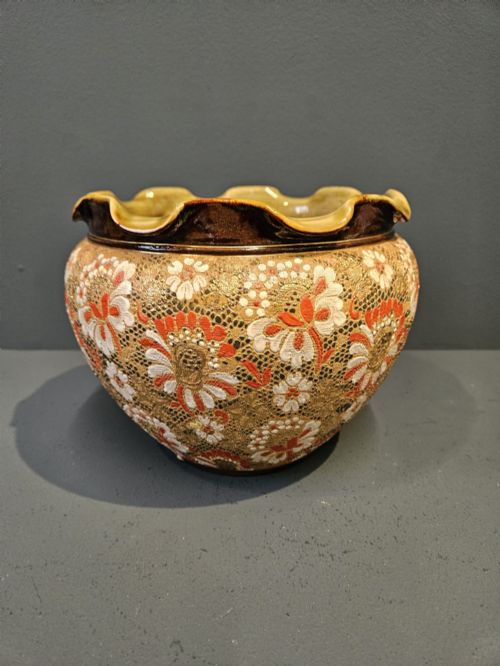


Victorian Floral Plant Pot
These Victorian floral plant pot pieces bring vibrant garden ornament indoors, offering robust ceramic forms that collectors prize for their intricate botanical decoration.
Victorian Floral Plant Pot
A victorian floral plant pot takes the form of a jardiniere or cachepot designed to house indoor greenery. These vessels emerge predominantly from the Victorian and Edwardian eras, spanning the late nineteenth and early twentieth centuries.
The pieces on this page lean heavily towards ceramic and earthenware bodies, often decorated with floral or botanical motifs. You will frequently encounter major pottery outputs alongside occasional stands and related plant holders.
Makers and regional potteries of the period utilised distinct floral styles, ranging from naturalistic botanical studies to stylized Art Nouveau and Chinoiserie interpretations. Each vessel reflects the interior display tastes of its original nineteenth or early twentieth-century setting.
Materials and Craftsmanship
Potters shaped these vessels from earthenware and stoneware bodies, applying rich glazes to seal the porous clay. Majolica glazes and colourful surface treatments dominate the appearance, giving the floral motifs depth and sheen.
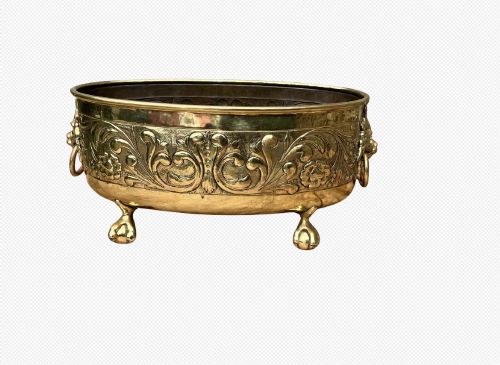
Some works incorporate specialised decorative techniques such as cloisonné enamel or hand-painted details. Metal elements like bronze or brass occasionally appear alongside ceramic bodies to form complete planters and stands.
Listings feature ceramics from the Victorian and Edwardian periods, alongside nineteenth-century bronze and cloisonné works.
Assessing Quality
Quality rests upon the crispness of the moulding and the richness of the glaze application. Superior examples display carefully executed botanical details without blurriness in the transfer printing or hand-painted lines.
The reputation of the producing pottery significantly influences the standing of a piece. Well-known ceramic houses achieved finer clay refinement and more durable, vibrant glaze finishes than smaller unrecorded kilns.
Royal Doulton·Doulton Lambeth·Doulton Burslem·Burmantofts Majolica·George Jones
The Victorian Floral Plant Pot Glossary
- Jardiniere
- A large ornamental pot or stand for holding flowers or plants. They typically sit directly on the floor or upon a dedicated pedestal.
- Majolica
- A type of earthenware coated with an opaque tin-glaze and painted with brightly coloured metal oxides. This technique produces the glossy, vibrant surface seen on many nineteenth-century planters.
- Cachepot
- An ornamental container used to conceal an ordinary flowerpot. The word translates from French as hide-pot.
- Imari
- A style of Japanese porcelain and its European imitations featuring a distinctive palette of underglaze blue, iron red, and gold. This decorative scheme appears on select floral cachepots from the period.
- Cloisonné
- An ancient technique for decorating metalwork objects with colourful materials held in place by thin metal strips. Examples in this category use enamel fused to a metal base.
Victorian Floral Plant Pot: Frequently Asked Questions
What is a jardiniere?
A jardiniere is a decorative pot designed to hold plants or flowers inside the home. Unlike standard flowerpots, these vessels serve a primarily ornamental purpose in interior decoration.
They often feature elaborate glazes, moulded floral patterns, or painted botanical scenes suited for prominent display on tables or dedicated stands.
How do I care for these pots?
Historic ceramic and earthenware vessels require gentle handling to protect their glazes and surface decoration. Use a dry or barely damp cloth for cleaning rather than harsh chemical detergents.
Because many nineteenth-century planters are porous or lack modern drainage protection, place a modern liner inside if using them for living plants.
Are these pots waterproof?
Most antique ceramic planters were glazed to hold moisture for plants, but centuries of age can make historic earthenware delicate. Micro-fissures in the glaze may develop over long periods.
It is safest to use a modern plastic saucer or insert inside the antique vessel to catch water and protect the historic body.
How do I identify Victorian pieces?
Victorian and Edwardian pieces often display specific factory marks, impressed registry numbers, or characteristic stylistic traits on the base. The presence of majolica glazes, dense floral motifs, and substantial earthenware bodies points directly to this era.
Comparing the decorative style, such as Art Nouveau curves or traditional botanical painting, helps narrow down the production decade.