


Victorian Doulton Stoneware Pot
These Victorian Doulton stoneware pot pieces are robust ceramics created for practical or decorative display, offering rich glazed surfaces that anchor a room.
Victorian Doulton Stoneware Pot
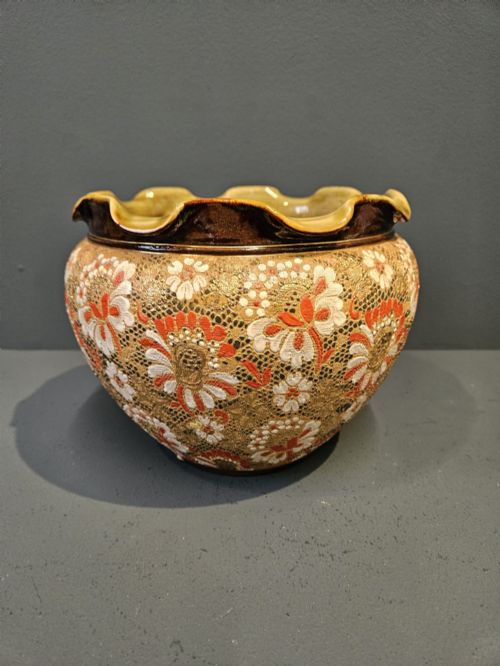
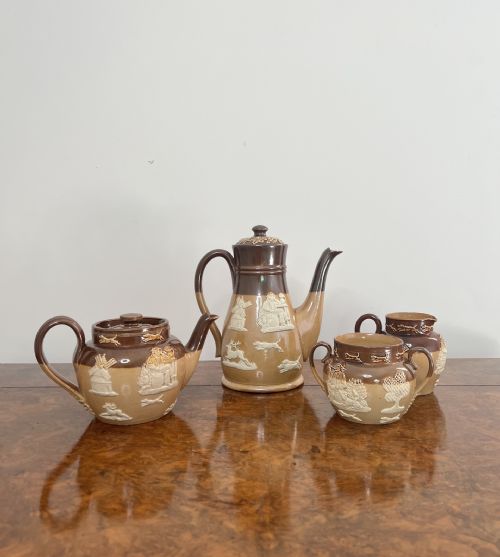
When you search for a Victorian Doulton stoneware pot, you encounter jardinières, vases, planters, tea sets, and jam pots spanning the nineteenth century and early twentieth century. The pieces you meet most often on this page are jardinières from Doulton Lambeth, alongside occasional vases and tea wares.
The objects originate from notable workshops including Doulton Lambeth and Doulton Burslem, reflecting styles such as Victorian Art Pottery, Victorian Arts and Crafts, and Art Nouveau. Forms range from large tree planter bases for the orangery to small jam pots and four-piece tea sets.
Materials and construction
Makers utilised stoneware and ceramic bodies, finishing the vessels with robust glazes and enamel details. These durable materials allowed for deep surface texturing and rich colour variation across the fired clay.
Potters shaped the clay on the wheel or in moulds before applying specialised ceramic glaze and enamel decoration. The firing process locked in the dense vitrified body and the glossy or matte finish characteristic of the period.
Listings feature stoneware, ceramic, and enamel materials across periods spanning the nineteenth century into the twentieth century.
Markers of quality
The distinction between standard production and finer examples lies in the crispness of the modelled ornament and the depth of the glaze. Hand-painted or signed works by specific artists demonstrate superior execution compared to standard factory output.
Balance in form and complexity of decorative technique separate simpler vessels from elaborate Arts and Crafts or Art Nouveau pieces. The handling of the glaze and enamel work dictates the visual presence of the object.
Doulton Lambeth·Doulton Burslem·Royal Doulton
The Victorian Doulton Stoneware Pot Glossary
- Stoneware
- A dense, hard ceramic fired at high temperatures until vitrified. This impermeable body resists liquid absorption without additional glazing.
- Jardiniere
- An ornamental ceramic pot designed to hold a live plant or flower arrangement. These vessels often sit on patios or inside reception rooms.
- Slaterware
- A ceramic technique imitating lace or fabric pressed into the wet clay body before firing. The resulting texture catches the glaze.
- Glaze
- A glassy coating fused to the ceramic body through heat. It provides colour, pattern, and a sealed surface.
- Art Pottery
- Ceramics produced by artists and studios focusing on creative design rather than mass manufacture. These pieces frequently show distinct stylistic influences from the Arts and Crafts movement.
Victorian Doulton Stoneware Pot: Frequently Asked Questions
What is a Victorian Doulton stoneware pot used for?
These vessels served various functions, from holding large plants in conservatories to serving tea or preserving jam in the household.
Today, collectors use them primarily as decorative planters, vases, or display items within traditional and contemporary interiors.
How do I identify a Doulton Lambeth piece?
Look for impressed factory marks, artist monograms, and specific stylistic traits associated with the Lambeth studio.
The use of distinctive glazes, incised ornamentation, and applied floral motifs often points directly to this London workshop.
Are these pots suitable for outdoor plants?
Stoneware is hardy and vitrified, making the material itself resistant to frost and moisture absorption.
However, historic vessels benefit from protection during harsh winter weather to preserve the glaze and decorative enamel details.
What styles influence these ceramics?
The pieces reflect Victorian design alongside the organic, flowing lines of Art Nouveau and the handcrafted ethos of the Arts and Crafts movement.
Studio decorators drew inspiration from natural forms, geometric patterns, and historical ceramic traditions.