


Blue Ceramic Meat Dish
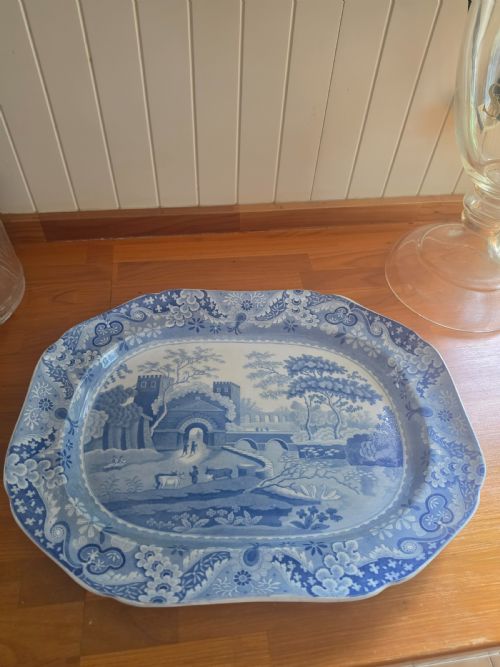
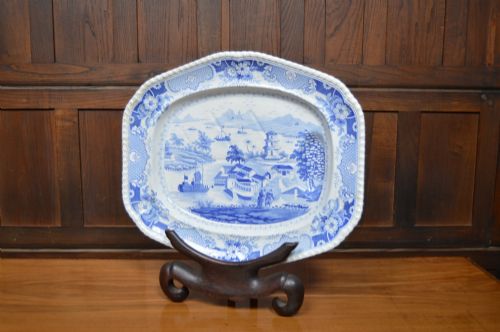
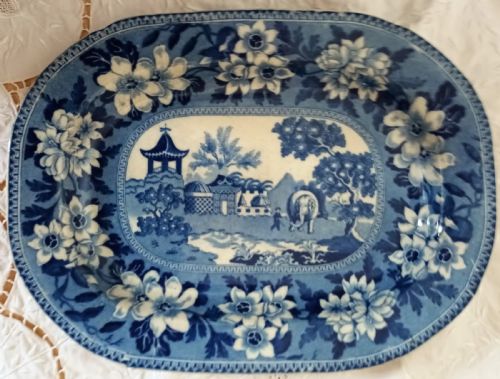
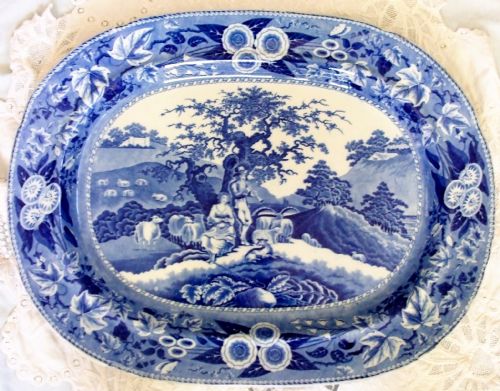
A blue ceramic meat dish brings generous proportions and cobalt transfer scenes to the table, offering a centrepiece for grand meals.
Blue Ceramic Meat Dish
A blue ceramic meat dish takes the form of a large serving platter, often featuring deep wells and channels for carving juices, made to present large joints at the dining table. You encounter these pieces primarily from the Georgian and Victorian eras, spanning the nineteenth century.
The selection ranges from Staffordshire earthenware and heavy Mason's ironstone to Chinese export porcelain. Designs span British topographical views, classical ruins, and Chinese-inspired transfer prints.
Depth of Print and Body
Quality rests in the crispness of the transfer print and the weight of the ceramic body, where finer platters show deep, even cobalt tones without blurring. Ironstone and porcelain examples offer greater density and ring clearly, whereas standard earthenware carries a softer presence.
Maker marks stamped or printed underneath elevate certain pieces, alongside specialised forms like well-and-tree platters with integrated drainers designed for functional carving.
Listings feature nineteenth-century Staffordshire earthenware, ironstone, and pearlware decorated with cobalt pigment in architectural and natural scenes.
Spode·John Rogers and Son·Copeland and Garrett·Thomas Lakin·Don Pottery·Minton·Elkin Knight and Bridgwood
The Blue Ceramic Meat Dish Glossary
- Transferware
- Ceramic decorated by applying a printed design from a copper plate onto tissue paper, which is then transferred onto the unglazed or bisque ceramic body.
- Ironstone
- A dense, durable type of earthenware patented in the nineteenth century that resists chipping and mimics porcelain.
- Pearlware
- A refined earthenware with a bluish-white glaze developed in the late eighteenth century to imitate Chinese porcelain.
- Well and tree
- A platter design featuring an integrated channel and central well that collects meat juices during carving.
Blue Ceramic Meat Dish: Frequently Asked Questions
How were these dishes used originally?
These platters served large joints of meat and poultry at the centre of the dining table during formal meals. The recessed wells and channels collected juices to keep the carving surface neat.
Servants brought them from the kitchens to the dining room laden with roasts, relying on the heavy ceramic body to retain heat throughout the course.
Can I use an antique platter for serving food today?
Most nineteenth-century earthenware and ironstone platters remain robust enough for modern culinary use, though hand washing preserves the glaze. Inspect the piece to ensure the surface glaze is stable and free from heavy staining before serving wet foods.
Many collectors prefer to display them on walls or dressers, utilising plate hangers to showcase the intricate cobalt transfer scenes.
What does ironstone mean on a listing?
Ironstone refers to a heavy, vitrified earthenware introduced to be tougher and more durable than standard pottery. It provides a thick, sturdy base that resists chipping during heavy kitchen use.
Platters made from this material often feel noticeably heavier and display a clean, dense white body beneath the cobalt pattern.
How do I distinguish Georgian from Victorian pieces?
Georgian platters, dating up to the eighteen-thirties, often feature fluid chinoiserie scenes, shell borders, and lighter pearlware bodies. Victorian examples tend to show heavier ironstone construction, denser industrial transfer prints, and topographical series.
Maker marks and registration diamonds stamped on the reverse frequently provide precise clues to the decade of manufacture.