



Antique Pottery Serving Platters
These antique pottery serving platters bring generous proportions and hand-applied transfer designs to the table.
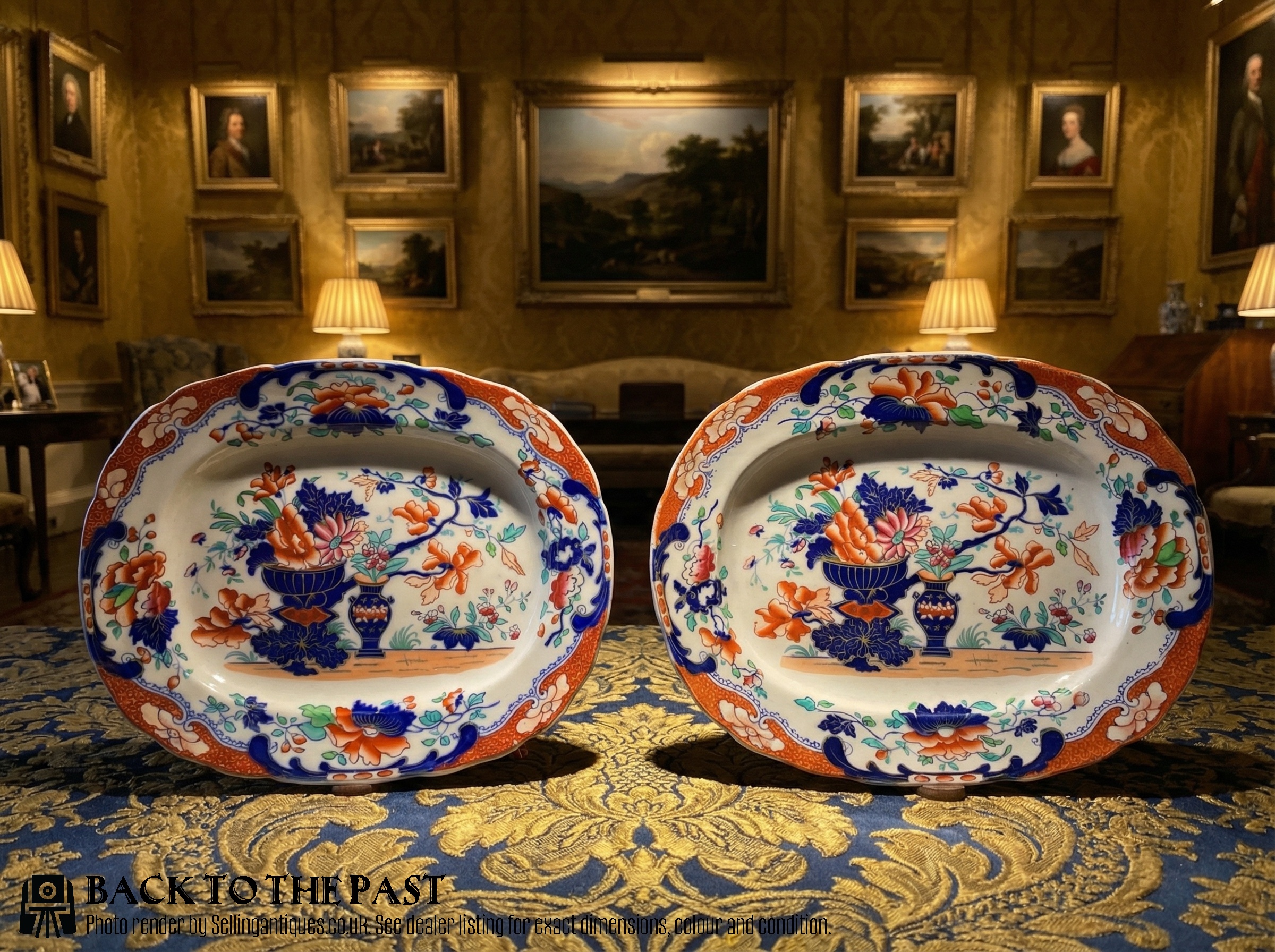
Antique Pottery Serving Platters
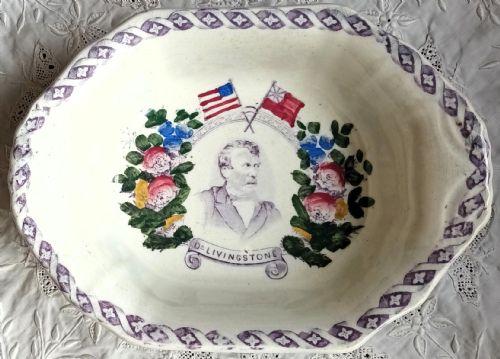
Antique pottery serving platters comprise large earthenware chargers, meat plates, and decorative dishes intended for communal dining or display. The examples on this page span the eighteenth, nineteenth, and early twentieth centuries, reflecting changing domestic habits and table designs.
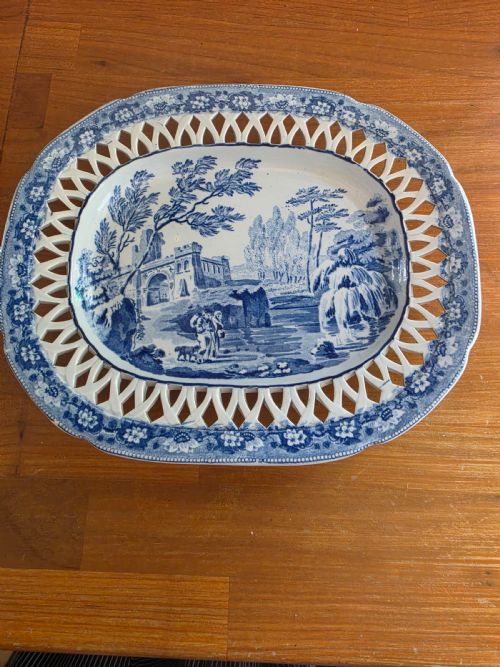
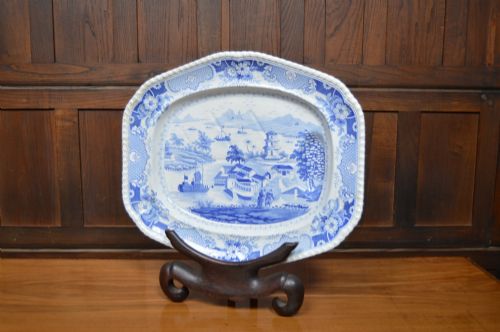
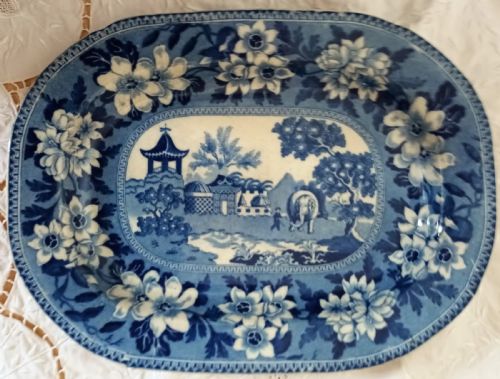
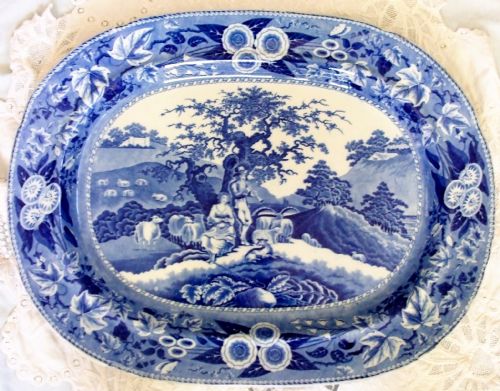
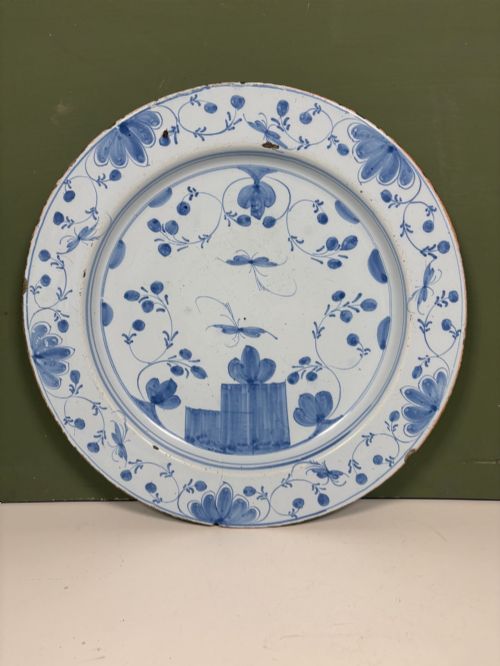
Buyers will most frequently encounter blue and white transferware platters from the Georgian and Victorian periods, often bearing named topographical, architectural, or exotic scenes. Pieces range from straightforward utilitarian meat dishes to elaborate pierced creamware trays and large tin-glazed delftware chargers.
Origins stretch across English potteries in Staffordshire and beyond, alongside Dutch delftware and French faience production. Forms include oval meat platters, round chargers, square bread stands, and sauce tureen bases designed to hold substantial quantities of food.
How they were made
Potters shaped these items from earthenware, creamware, pearlware, and ironstone, utilising lead glazes to seal the porous clay body. Cobalt pigment and enamel colours provided the palette for hand-painted details or copper-plate transfer printing.
Transfer printing allowed intricate scenes like architectural ruins and oriental landscapes to be applied to the moist clay or fired bisque before glazing. High-temperature kilns fused the pigments into the glaze, producing durable surfaces suitable for heavy daily use.
The selection includes regional English potteries alongside Dutch delftware chargers and French faience dishes.
What varies in quality
Quality in these platters depends on the crispness of the transfer print, the evenness of the glaze application, and the ambition of the moulded form. Early pieces show careful hand-modelling, such as pierced fretwork borders and shaped silver edges that required skilled potting.
Subtlety in hand-painted polychrome decoration and depth of blue cobalt tone distinguish superior workshop output from standard commercial wares. The weight of the ceramic body and the stability of the large flat surfaces also indicate the maker's technical mastery.
Davenport·Wedgwood·John Rogers and Son·Spode·Copeland and Garrett·Mintons·Mason·Thomas Lakin·J and R Clews·Don Pottery
The Antique Pottery Serving Platters Glossary
- Creamware
- A refined earthenware body with a pale yellowish-straw lead glaze, developed in Yorkshire and Staffordshire during the eighteenth century.
- Transferware
- Pottery decorated by applying a paper impression from an engraved copper plate onto the ceramic surface, leaving a monochrome design beneath or over the glaze.
- Charger
- A large decorative plate or shallow dish, traditionally used for formal dining or displayed upright on sideboard ledges.
- Pearlware
- An improved earthenware with a bluish-tinted glaze designed to mimic the appearance of Chinese porcelain.
- Delftware
- Tin-glazed earthenware produced in England and the Netherlands, featuring opaque white surfaces painted with blue or polychrome pigments.
Antique Pottery Serving Platters: Frequently Asked Questions
How were antique pottery serving platters used?
These large dishes served roast meats, vegetables, and bread at the centre of the dining table, accommodating the substantial portions common in Georgian and Victorian households. Many were paired with drainage wells and gravy troughs to manage juices during carving.
Deep chargers also functioned as decorative wall plates or sideboard centrepieces when not in active dining service, displaying colourful transfer-printed landscapes and armorial motifs to guests.
Can I use these platters for food today?
While structurally sound for modern presentation, antique earthenware platters feature porous clay bodies and historic lead glazes that require careful handling. Hand washing is essential to preserve the nineteenth-century glaze integrity.
Sudden temperature changes can cause historic ceramic materials to craze or crack, so avoiding microwave heating and oven use protects the material stability of the piece.
How do I date a blue and white platter?
Dating relies on examining the ceramic body, the shade of the blue pigment, and the style of the printed border patterns. Creamware and pearlware bodies point toward the late eighteenth and early nineteenth centuries, while denser ironstone and heavy stoneware bodies generally indicate mid to late Victorian manufacture.
Impressed factory marks, pattern names printed on the reverse, and registration diamonds offer precise chronological clues for pieces produced after the mid-nineteenth century.
What is the difference between ironstone and creamware?
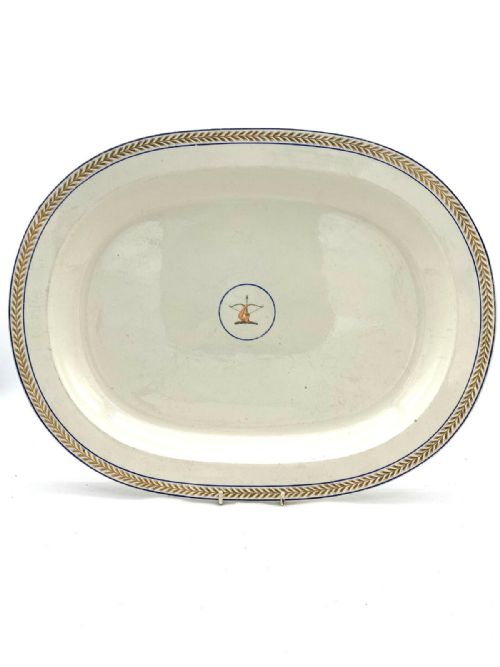
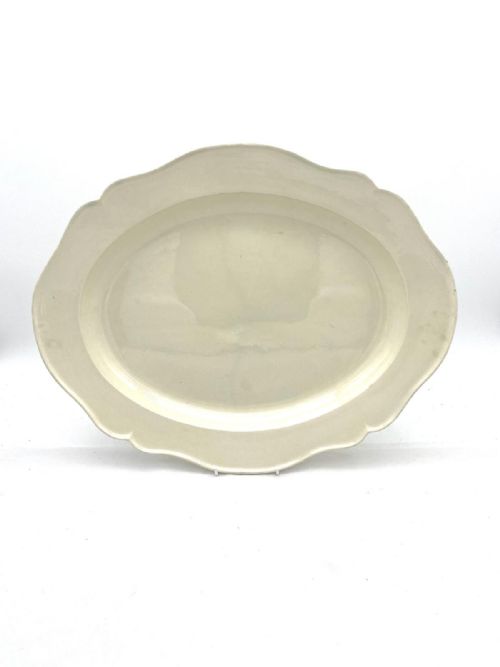
Creamware is a light earthenware developed in the eighteenth century with a warm, pale yellow hue beneath a translucent lead glaze. It prioritises refined elegance and delicate potting techniques.
Ironstone is a much heavier, vitrified ceramic patented in the early nineteenth century to resist chipping and heavy wear. It provides a durable white surface that supports bold, densely detailed transfer prints.