
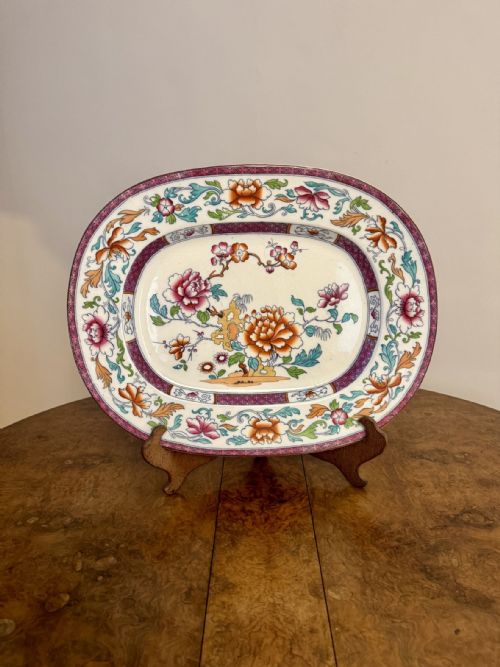


Ironstone Meat Serving Platter
An ironstone meat serving platter brings heavy nineteenth-century presence to the dining table, offering immense utility and bold decorative patterns.
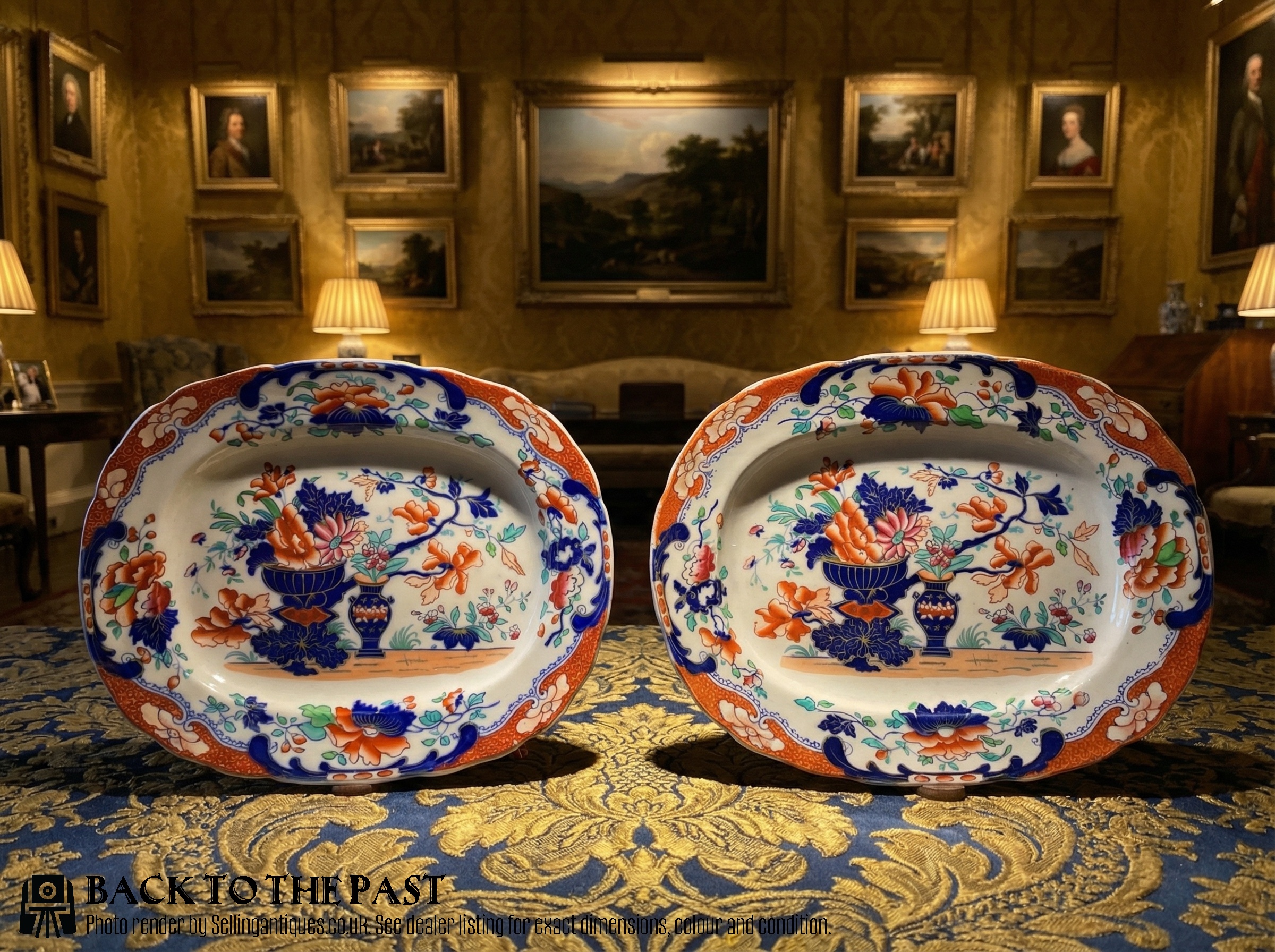
Ironstone Meat Serving Platter
An ironstone meat serving platter is a durable ceramic vessel designed for presenting joints of meat at the table, frequently appearing in large formats dating from the nineteenth century. These robust pieces range from plain utilitarian whiteware to richly decorated examples featuring transfer-printed landscapes or hand-painted patterns.
The versions most commonly met on this page belong to the Victorian era, alongside earlier Regency and Georgian examples. Forms include standard oval platters, specialised well and tree designs for catching juices, and pieces accompanied by original ceramic drainers.
Materials and manufacture
These heavy vessels are formed from ironstone china and earthenware, providing a dense, vitrified ceramic body capable of withstanding heavy daily use. A thick glaze covers the surface, protecting the underlying ceramic and providing a smooth ground for decoration.
Decoration on these platters relies primarily on blue and white transfer printing, supplemented by hand-applied enamel colours and touches of gold leaf. Specialised components like strainer inserts are pierced with drainage holes before firing to separate meat juices from the joint.
Listings feature nineteenth-century ironstone and earthenware, spanning Georgian, Regency, and Victorian periods with decorated Chinoiserie and Imari styles.
Assessing quality and character
Quality in an ironstone meat serving platter rests on the crispness of the transfer printing and the precision of any hand-applied enamel painting. Stronger pieces retain deep, vibrant cobalt blues and clean white glaze surfaces without excessive firing blemishes.
The presence of specialised functional elements, such as an integrated well and tree or a matching ceramic drainer, elevates the status of a piece. Maker attribution, particularly to prominent nineteenth-century potteries, further distinguishes finer examples from standard utilitarian wares.
Mason's Ironstone·Minton·Elkington
The Ironstone Meat Serving Platter Glossary
- Ironstone
- A heavy, durable type of earthenware patented in the nineteenth century that mimics porcelain in its strength. It resists chipping far better than standard pottery.
- Well and tree
- A platter design featuring an engraved channel around the edge and a central treed basin that drains meat juices away from the joint. This keeps the carved meat from sitting in its own liquid during service.
- Drainer
- A perforated ceramic insert that sits inside the well of a platter to elevate the meat. These removable pieces are frequently lost over time.
- Transfer printing
- A decoration technique where an engraved copper plate transfers a design onto tissue paper, which is then stamped onto the ceramic body. This allowed intricate patterns like Chinoiserie landscapes to be produced with great consistency.
- Ashet
- A traditional Scottish and northern English term for a large meat platter or serving dish. The word derives from the French assiette.
Ironstone Meat Serving Platter: Frequently Asked Questions
How do I date an ironstone meat serving platter?
Dating relies on a combination of backstamps, stylistic cues, and the weight and colour of the ceramic body. Earlier Regency and Georgian pieces often feature distinct blue and white patterns with specific maker marks underneath.
Victorian examples tend to show broader decorative influences, including Imari palettes and Chinoiserie motifs. Examining the glaze thickness and crazing patterns also helps establish the age of the piece.
Were these platters used for everyday dining?
Nineteenth-century households utilised these large vessels primarily for formal dinners, Sunday roasts, and large gatherings. Their substantial size made them ideal for presenting whole poultry, game, and large joints of meat.
Working kitchens and country houses relied on their durability to handle heavy, hot food repeatedly. Today, they serve equally well as festive centrepieces or decorative wall displays.
Can I still use an antique ironstone platter for serving food?
These ceramic platters remain entirely food-safe and sturdy enough for serving roasted meats and large dishes. Hand washing is strongly recommended to protect the historic glaze and any delicate enamel or gold leaf details from harsh detergents.
Avoid thermal shock by not exposing cold platters to extreme sudden heat.