
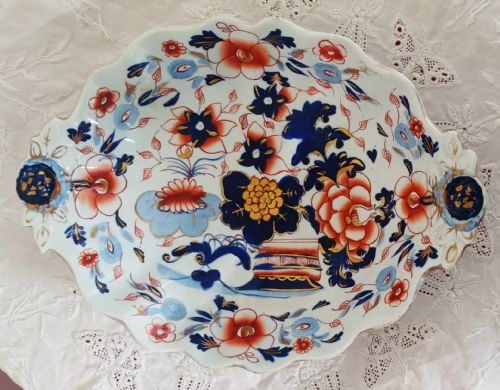
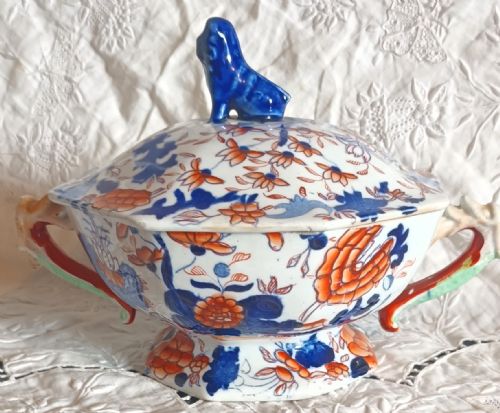


Imari Ironstone Serving Dish
An imari ironstone serving dish brings bold colour and heavy utility to the table, combining eastern palettes with durable British ceramic bodies.
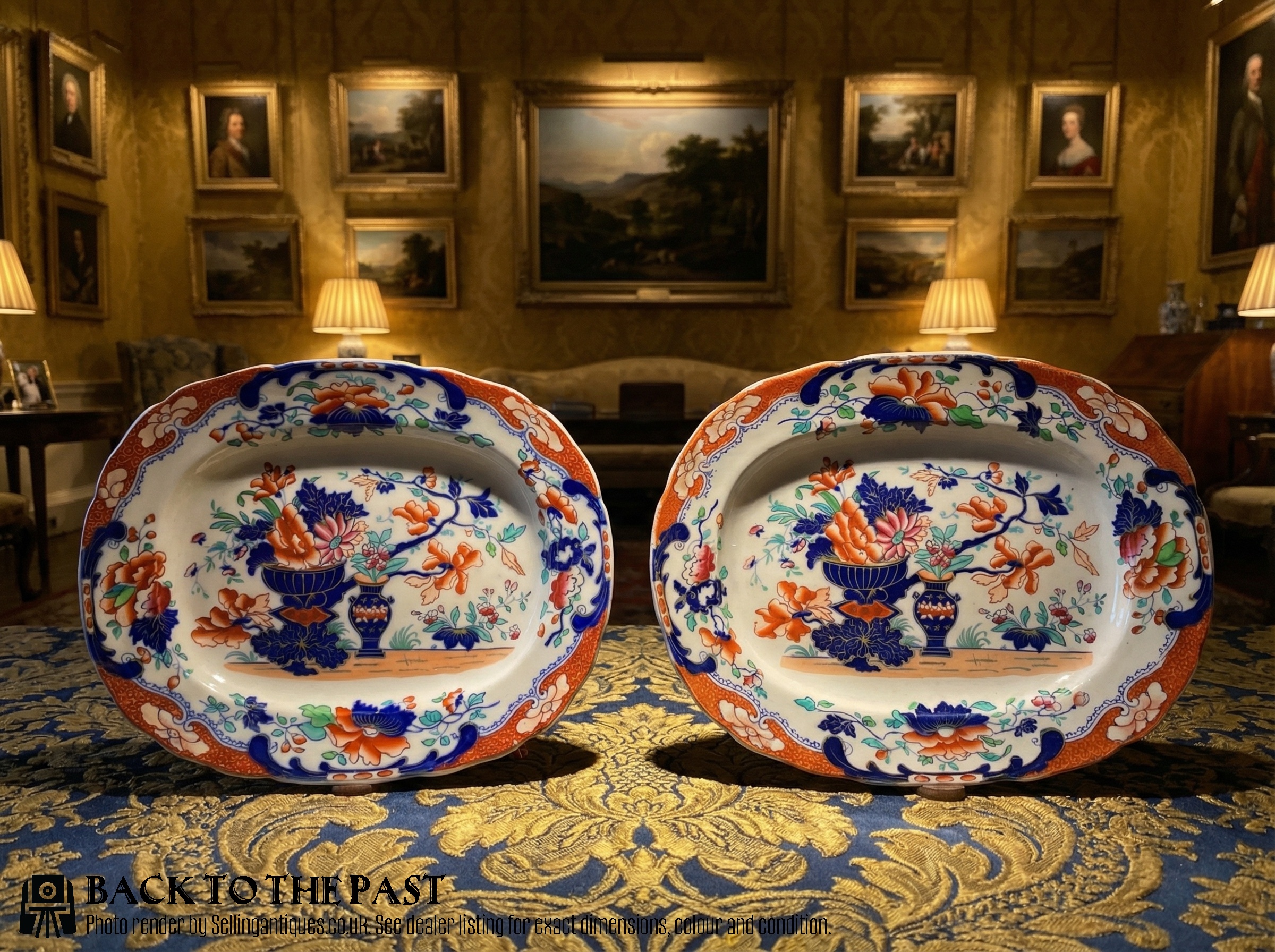
Imari Ironstone Serving Dish
When you search for an imari ironstone serving dish, you encounter robust domestic tableware designed for substantial dining across the nineteenth century. These forms include large meat platters, vegetable tureens with covers, low comports, and well and tree platters produced during the Georgian and Victorian eras.
The objects on this page reflect the nineteenth-century fascination with Japanese Imari patterns rendered in durable ironstone china and earthenware. You will most frequently meet large platters and covered tureens bearing traditional cobalt blue and iron red motifs heightened with gilding.
Originating primarily from English potteries, these serving pieces served functional roles in country houses and formal dining rooms alike. Their survival in varied serving shapes demonstrates their original manufacture for heavy, practical use alongside decorative display.
How they were made
The manufacture of these pieces relies upon dense ceramic bodies such as ironstone china and earthenware, providing heavy thermal mass and resistance to chipping. Potters shaped these utilitarian forms into deep platters, comports, and lidded tureens to withstand daily service.
Decoration combines hand-applied or printed underglaze cobalt blue with vibrant enamel overglaze colours like iron red. Artisans frequently added gold leaf and gilding to accentuate the borders and motifs.
A protective vitreous glaze seals the ceramic body, giving the surface a glossy finish that protects the delicate enamels beneath.
Listings feature nineteenth-century ironstone serving pieces utilising heavy ceramic bodies, enamel paints, and gold leaf gilding across various tureen and platter forms.
What varies in quality
The crispness of the transfer-printed outlines and the precision of the hand-painted enamel brushwork dictate the visual hierarchy of these serving pieces. Finer examples display meticulous alignment between the cobalt blue underglaze and the subsequent iron red and gold leaf highlights.
The weight and potting of the ironstone body itself differ, with superior pieces maintaining clean lines and well-balanced proportions even in massive soup tureens and well and tree platters. The preservation of the original gilding and the clarity of the glaze also separate ordinary utilitarian wares from exceptional dining pieces.
Mason s Ironstone·Minton·Coalbrookdale
The Imari Ironstone Serving Dish Glossary
- Ironstone
- A dense, durable type of earthenware patented in the nineteenth century to imitate Chinese porcelain. It offers high resistance to breakage during heavy dining service.
- Imari
- A decorative style originating in Japan, characterised by a palette of cobalt blue, iron red, and gold. British potteries freely adapted these patterns for domestic earthenware.
- Comport
- A raised dish or bowl used for serving fruit or dessert at the table. These pieces often feature footed bases to elevate them above the dining surface.
- Well and tree platter
- A large meat serving dish featuring a channel and a recessed well to collect juices during carving. These were essential items for large Victorian dinners.
- Ashet
- A Scottish and northern English term for a large serving platter or dish. The word derives from the French assiette.
Imari Ironstone Serving Dish: Frequently Asked Questions
Can I use an antique ironstone dish for serving food?
These ceramic pieces were built for heavy dining service and remain fully functional for serving food today. Modern hand washing protects the historic glaze and delicate gilding from harsh detergents.
Sudden thermal shock should be avoided, so hot ovenware use is not recommended for antique bodies.
How do I identify a Georgian ironstone piece?
Georgian examples often display robust potting with thick ironstone bodies and rich Japan pattern decorations. The forms tend to reflect Regency and early Victorian aesthetic preferences.
Impressed factory marks and characteristic crazing in the glaze also help establish the early nineteenth-century timeline.
What is the difference between a tureen and a platter?
A tureen is a deep, covered vessel designed for holding soups, sauces, or vegetables at the table. Platters are flat or slightly dished boards used for presenting joints of meat or poultry.
Both items frequently share matching Imari ironstone patterns within larger dining services.
Why are some platters called well and tree?
Well and tree platters feature an incised channel system shaped like a tree that drains meat juices into a lower well. This practical design kept carved joints elevated from pooling liquids during large Victorian meals.
They represent some of the largest and most complex serving forms produced in ironstone.