
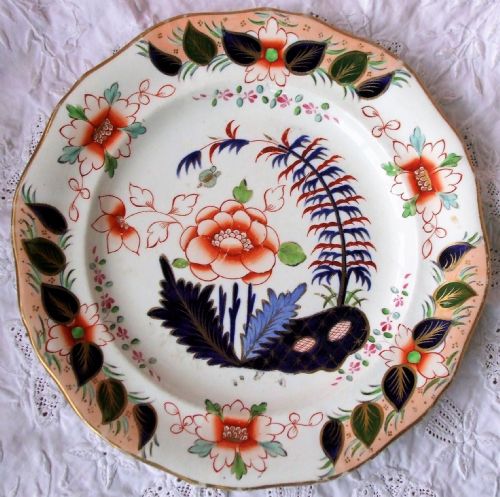


Decorative Ironstone Wall Plates
These decorative ironstone wall plates bring robust nineteenth-century utility and vivid colour to domestic interiors.
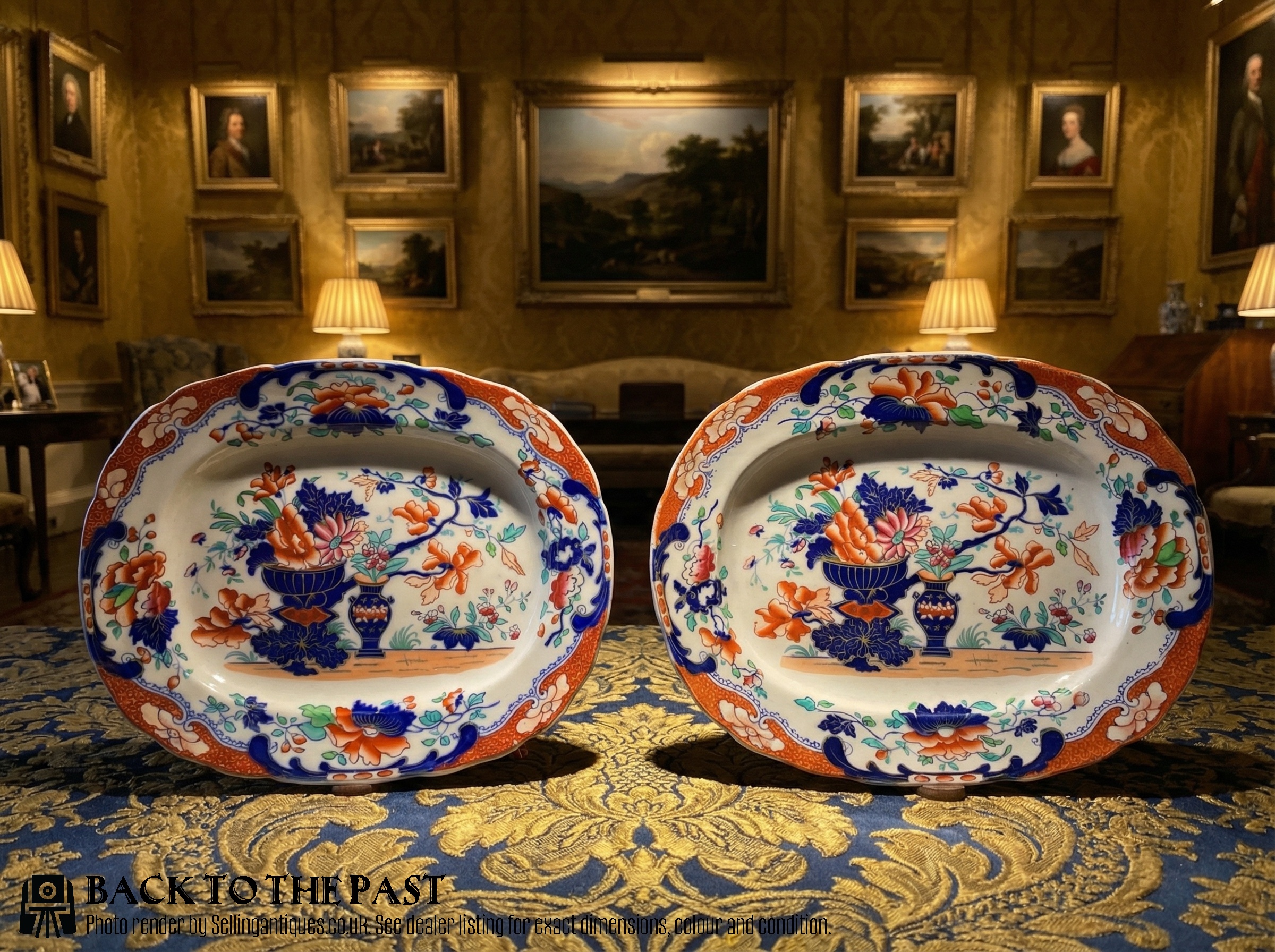
Decorative Ironstone Wall Plates
When you search for decorative ironstone wall plates, you encounter substantial ceramic tableware transformed into wall display through bold patterns and generous proportions. These pieces span the Georgian, Victorian, and Edwardian periods, capturing changing tastes from classical Regency lines to elaborate nineteenth-century styles.
The selection here relies heavily on nineteenth-century production, featuring large chargers and dinner plates alongside dessert services. You will find forms ranging from standard plates to expansive platters, often dominated by Chinoiserie motifs and botanical patterns.
Originating largely from English potteries, these items combine the durability of stoneware and earthenware with refined surface decoration. They survive in varied groupings, from single large chargers to extensive sets of matched plates.
Materials and manufacture
The foundation of these objects is dense ironstone or stoneware, fired to create a heavy, resilient body designed to withstand hard use. Potters coated this ceramic base in smooth glazes that provided a stable canvas for subsequent painting.
Decoration typically involved hand painting combined with enamel colours and occasional touches of gold leaf. Skilled artisans applied intricate patterns such as Chinoiserie scenes, exotic birds, and Oriental-style motifs directly onto the glazed surface before secondary firing.
Listings feature nineteenth-century materials including ironstone, stoneware, and earthenware enhanced with enamel and gold leaf.
Distinctions in quality
Quality in these plates rests primarily on the crispness and complexity of the painted design, particularly in hand-painted motifs like exotic birds and Chinoiserie landscapes. Superior examples exhibit precise brushwork and vibrant, well-preserved enamel colours that retain their original brilliance.
The weight and refinement of the ironstone body also mark the grade of the piece, with finer potting showing smoother surfaces and well-balanced proportions. Additionally, the presence of intact gold leaf and rich ground colours, such as orange or yellow, elevates the visual impact of the charger.
John Davenport of Longport·John Ridgway·Mason
The Decorative Ironstone Wall Plates Glossary
- Ironstone
- A heavy, durable type of earthenware or stoneware patented in the nineteenth century to imitate Chinese porcelain. It offers high resistance to chipping and forms a dense base for heavy enamel decoration.
- Charger
- A large decorative plate or platter traditionally used for ceremonial dining or display. In this context, they serve as prominent wall pieces due to their expanded diameter.
- Imari
- A decorative style borrowing from Japanese export porcelain traditions, characterised by a palette of cobalt blue, iron red, and gold leaf. Victorian makers frequently adapted this aesthetic for ironstone bodies.
Decorative Ironstone Wall Plates: Frequently Asked Questions
How do I hang heavy ironstone plates safely?
Displaying heavy ceramic pieces requires robust, properly sized spring-loaded brass hangers that distribute the weight evenly across the rim and foot ring. Ensure the wall fixing is anchored securely into a stud or uses appropriate masonry plugs.
Check the tension of the hanger periodically to ensure the plate remains firmly gripped. Avoid wire-only adhesives that rely on glue, as the dense ironstone body is significantly heavier than standard earthenware.
Can these plates still be used for dining?
While these pieces originated as functional tableware, antique examples with delicate enamel work and gold leaf are best reserved for display. Utensil use and modern dishwashing can wear down nineteenth-century hand-painted surfaces.
Plain meat plates and robust stoneware services from the period are physically durable enough for occasional serving use. However, most collectors prefer wall mounting to preserve the intact glaze and vibrant ground colours.
What is the difference between ironstone and standard earthenware?
Ironstone is a specific type of semi-vitreous earthenware developed to be much harder and heavier than traditional pottery. It contains ingredients like slag of iron stone, giving it stone-like durability.
This density prevents the ceramic body from absorbing moisture easily, allowing nineteenth-century manufacturers to create large chargers and meat plates that resist cracking under daily demands.
How do I identify Victorian Chinoiserie patterns?
Victorian Chinoiserie patterns typically feature whimsical oriental landscapes, distinct pagodas, and exotic birds rendered in bright enamel colours. These designs reflect nineteenth-century interpretations of East Asian art rather than authentic export pieces.
Look for vibrant yellow or orange ground colours combined with hand-painted details characteristic of English potteries from the mid-nineteenth century onwards.