
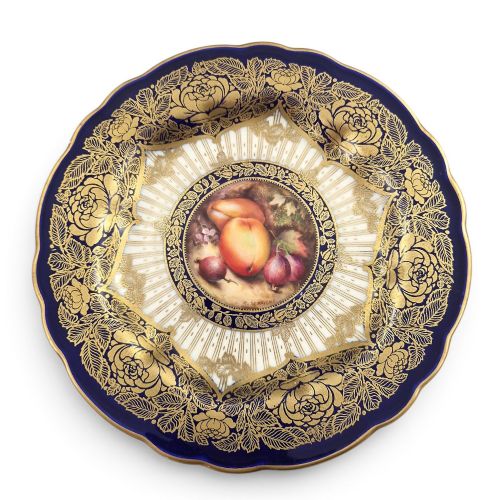
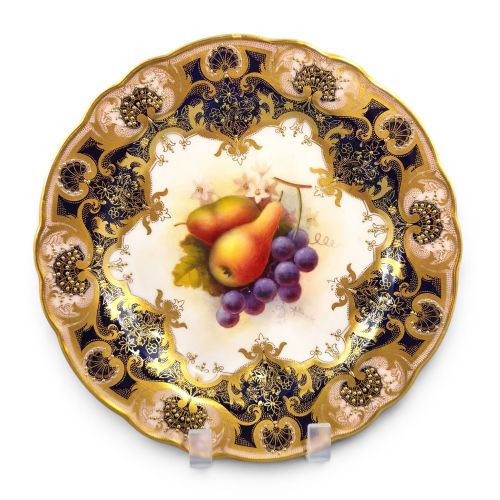
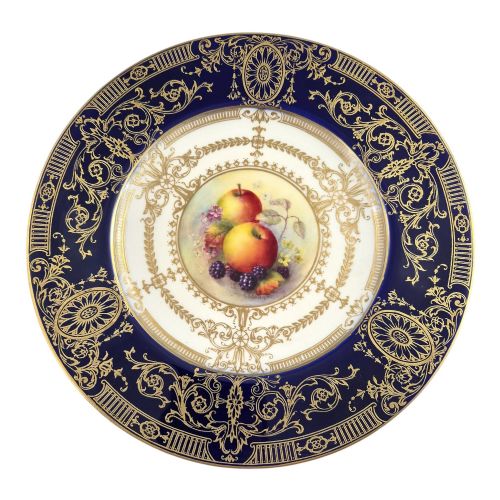
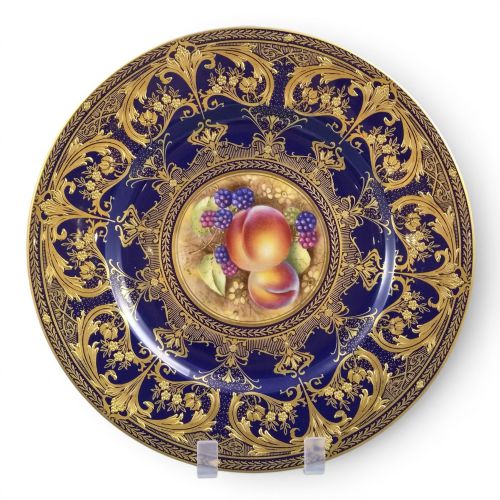


Blue Bone China Plates
These blue bone china plates are fine tablewares spanning periods from the nineteenth century to the twentieth.
Blue Bone China Plates
When searching for blue bone china plates, collectors encounter cabinet plates, dessert services, and serving dishes produced across multiple eras. The pieces on this page range from nineteenth century creations through to mid twentieth century items.
Traditional English factories supply the core of these listings, taking forms such as decorative plates and tea sets. Makers utilise styles including Victorian, Edwardian, and Art Deco to shape domestic and display settings.
Materials and technique
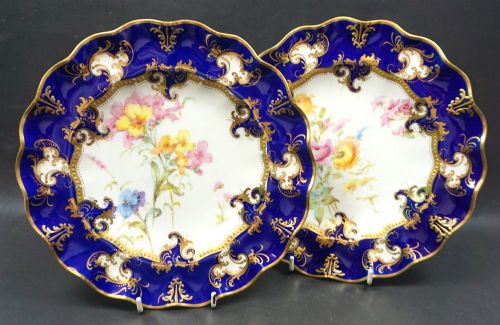
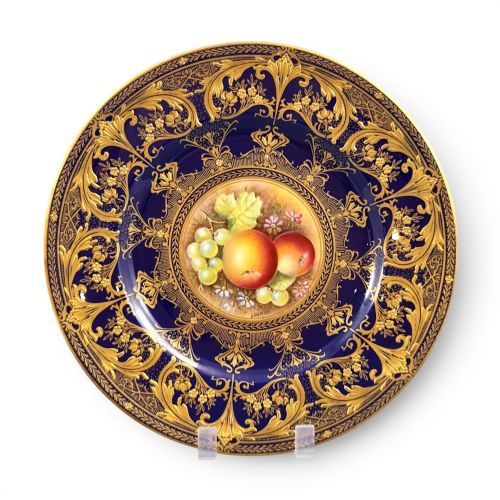
Potters form these objects using bone china and porcelain, applying enamel glaze to create smooth surfaces for hand painted scenes. Artisans then enrich the pieces with gold leaf, gilding, and gold gilding along the rims and borders.
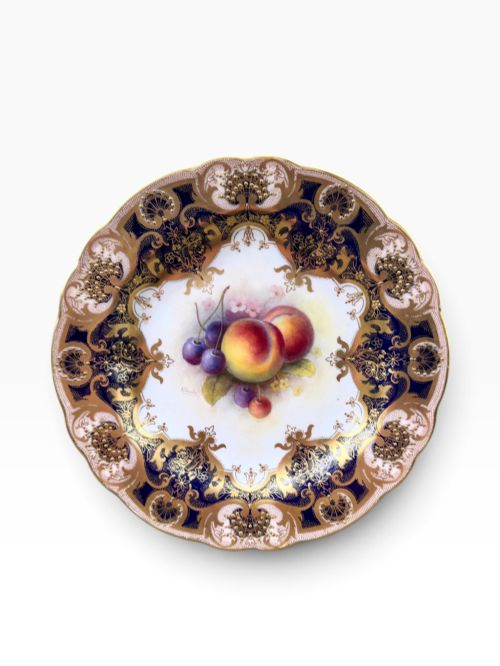
Painters sign individual fruit and botanical cabinet plates, recording dates and factory marks into the glaze. Cobalt blue pigments and enamel colours fuse during firing to secure permanent decoration.
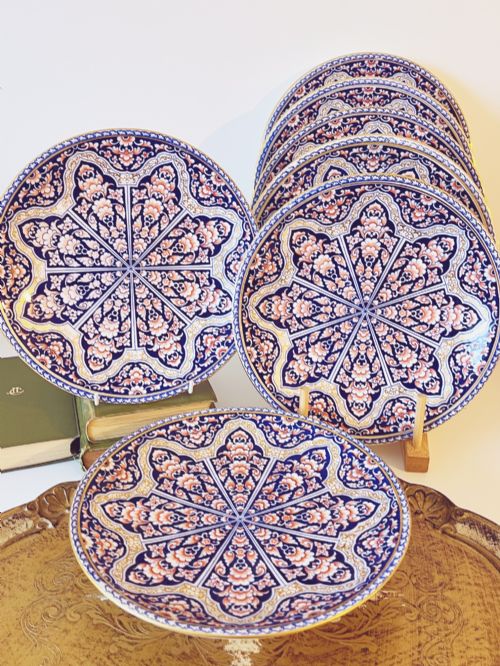
One nineteenth century Minton set records the delightfully informal title Crazy Cow or Bengal Tiger.
Quality variations
The standard of painting determines the merit of each plate, particularly where artists render fruit or landscapes by hand. Named painters and specific factory ciphers elevate individual dessert dishes and cabinet pieces above standard production wares.
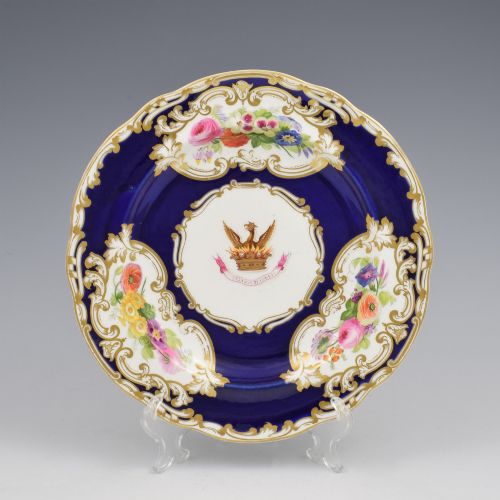
The application of gilding and the preservation of enamel glaze dictate the condition of older items. Armorial crests and detailed botanical studies reflect greater skill than simpler transfer printed patterns.
Royal Crown Derby·Royal Worcester·Coalport·Chamberlain Worcester·Minton·Sutherland·Copeland
The Blue Bone China Plates Glossary
- Bone china
- A type of porcelain incorporating calcined bone ash to achieve a high degree of whiteness and translucency. English potteries developed this body to produce durable yet delicate tableware.
- Cabinet plate
- A decorative plate intended for display in a cabinet rather than for daily dining use. These items frequently feature hand painted scenes by named artists.
- Armorial
- Bearing a coat of arms or family crest as part of the primary decoration. Such plates were commissioned by landed families.
- Gilding
- The application of gold leaf or gold powder to the surface of ceramics. This finish highlights rims, handles, and raised borders.
- Imari style
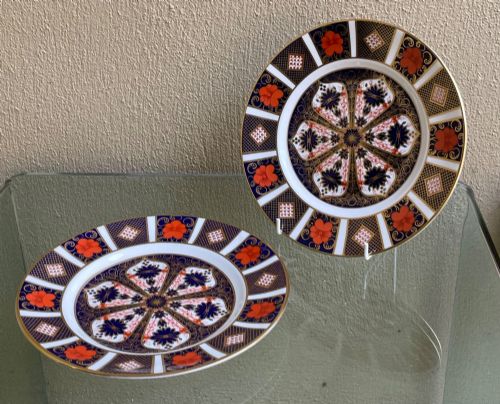
- A decorative scheme inspired by Japanese export wares, typically employing deep blue, iron red, and gold. English makers adopted this palette during the eighteenth and nineteenth centuries.
Blue Bone China Plates: Frequently Asked Questions
What are cabinet plates used for?
Cabinet plates serve primarily for display rather than practical dining purposes. They showcase artistic painting, armorial crests, or specialised glaze work.
Collectors place them on stands or within glass fronted furniture to protect the delicate enamel and gold leaf from wear.
How do I identify the date of a plate?
Makers employ factory specific date codes, impressed ciphers, and painted pattern numbers on the underside of the ceramic body. Researching these specific marks reveals the operational era of the pottery.
Stylistic cues such as Victorian borders or Art Deco geometry also help narrow the period of manufacture.
Are these plates safe for daily use?
Historic plates featuring hand painted enamel and gold leaf require gentle handling and hand washing. Regular use in modern dishwashers damages the delicate surface gilding and enamel glaze.
Most buyers restrict antique and vintage service pieces to occasional dining or display.
What is a dessert service?
A dessert service comprises a matching set of plates and serving dishes intended for the final course of a formal meal. These assemblies often include a central comport alongside multiple smaller plates.
Wealthy households used matching sets to display wealth and artistic taste during formal dining.