

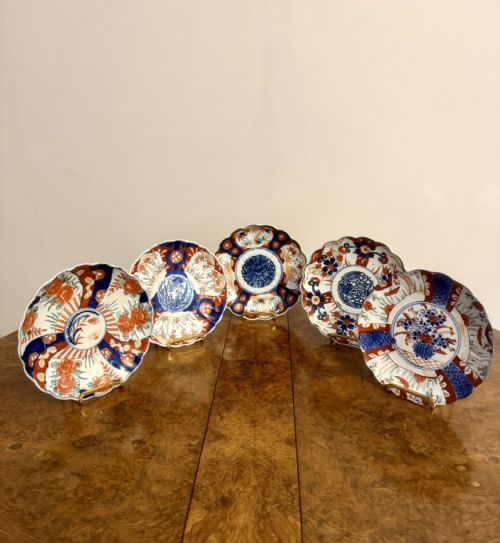


Red Cobalt China Dish
These red cobalt china dish examples bring together striking Imari palettes and robust ironstone forms for everyday display or table use.
Red Cobalt China Dish
A red cobalt china dish covers a diverse group of ceramics spanning English earthenware and porcelain alongside Japanese and Chinese export wares. You will encounter plates, comports, chargers, bowls and trays that share the characteristic rich blue and rust-red palette.
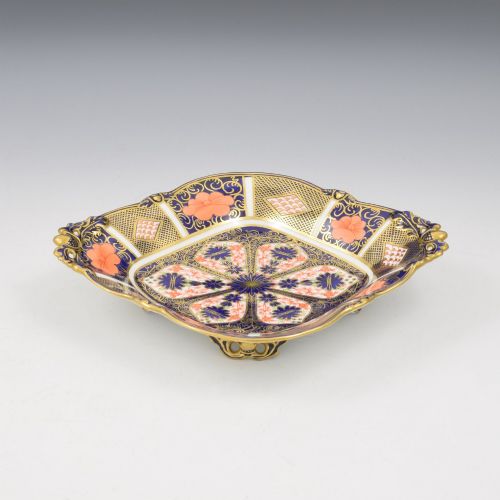
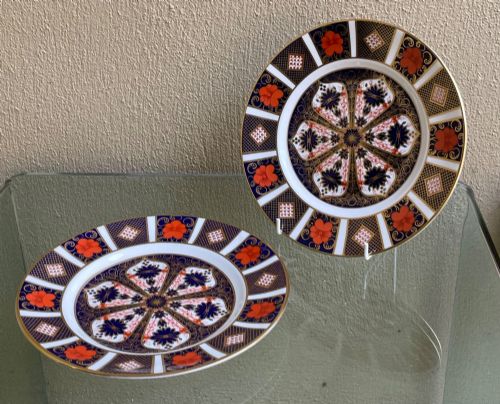
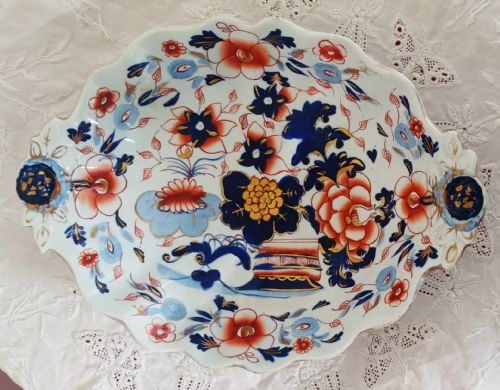
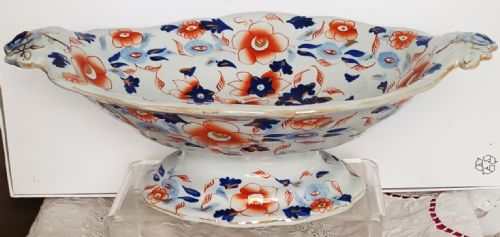
The selections on this page draw heavily from nineteenth-century Japanese Imari production, Georgian English ironstone, and specific English makers like Royal Crown Derby and Mason's. These range from large display chargers to low footed comports and specialised soap dishes.
Many of these items utilise traditional Imari patterns or Japan patterns, echoing East Asian export designs that proved immensely popular in European interiors. The forms vary from scalloped edge bowls and ribbon plates to pierced serving trays.
How they were made
The manufacture of these pieces relies on durable ceramic bodies including ironstone, bone china and porcelain, fired to withstand regular service. Glazes seal the surface, providing a smooth base for hand-painted cobalt blue and enamel detailing.
Makers applied rich underglaze cobalt combined with iron-red enamel highlights, frequently supplemented by gold leaf or gilding to catch the light. Hand-painting techniques ensure that individual plates and bowls display subtle variations in brushwork and pattern placement.
Listings feature porcelain, ironstone, enamel and bone china across Victorian, Georgian and twentieth-century periods.
What varies in quality
Quality rests in the crispness of the hand-painted cobalt and enamel decoration, where finer pieces exhibit precise lines and balanced symmetry across complex motifs. The depth of the glaze and the preservation of any applied gilding or gold leaf also separate ordinary items from superior examples.
Royal Crown Derby·Masons Patent Ironstone China
The Red Cobalt China Dish Glossary
- Imari style
- A decorative scheme originating in Japan featuring a distinct palette of underglaze cobalt blue and iron-red enamel, often accented with gold. This aesthetic heavily influenced European ceramic factories throughout the eighteenth and nineteenth centuries.
- Ironstone
- A dense, durable type of earthenware patented in the nineteenth century as a robust alternative to porcelain. It formed the heavy body for many English comports, plates and soap dishes.
- Comport
- A raised serving dish or pedestal bowl used on the dining table for fruit or sweetmeats. Georgian examples in ironstone often feature footed or low bases.
- Charger plate
- A large decorative plate or platter primarily utilised for display rather than individual dining. These pieces often showcase expansive hand-painted scenes and rich borders.
- Pierced serving dish
- A tray or dish featuring cut-out openwork patterns along the rim or border. This technique required skilled ceramic shaping before firing and glazing.
Red Cobalt China Dish: Frequently Asked Questions
What is a red cobalt china dish?
It is a ceramic plate, bowl or tray decorated in the distinctive blue and rust-red palette associated with Imari and Japan patterns. These items originate from both Asian export kilns and European potteries.
The listings on this page include nineteenth-century Japanese chargers, English ironstone comports and porcelain serving trays that utilise this classic colour combination for decorative effect.
How do I date an antique Imari dish?
Dating relies on examining the ceramic body, glaze characteristics, and the style of the hand-painted motifs. Nineteenth-century pieces often display heavier ironstone bodies or characteristic Meiji period export traits.
Maker marks stamped or painted on the underside provide the most reliable clues. Comparing the cobalt depth and enamel texture against known factory timelines helps narrow the decade.
What is the difference between Imari and Japan pattern?
Imari refers specifically to Japanese export ceramics produced in Arita and shipped through the port of Imari, defined by cobalt blue, iron-red, and gold. Japan pattern is an English interpretation of these motifs.
English factories like Royal Crown Derby and Mason's adopted these aesthetic elements onto ironstone and bone china bodies during the Georgian and Victorian eras.