





Blue and White Urns
Blue and white urns bring together centuries of global ceramic design, offering striking botanical and figural scenes for interior display.
Blue and White Urns
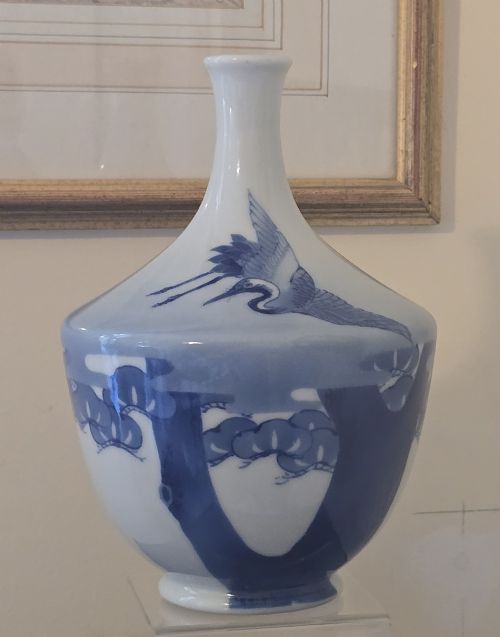
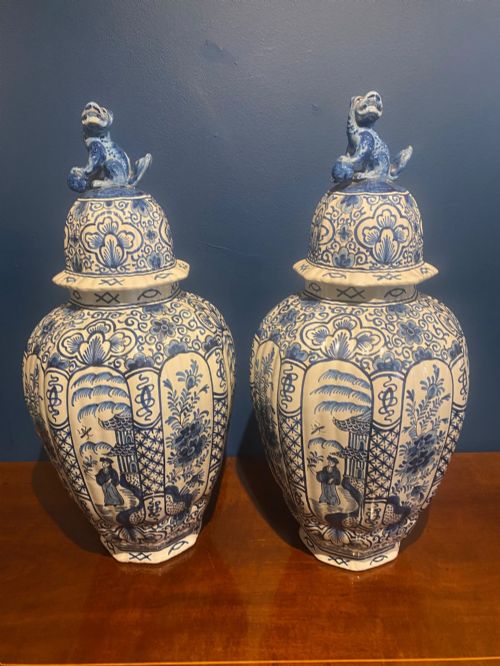
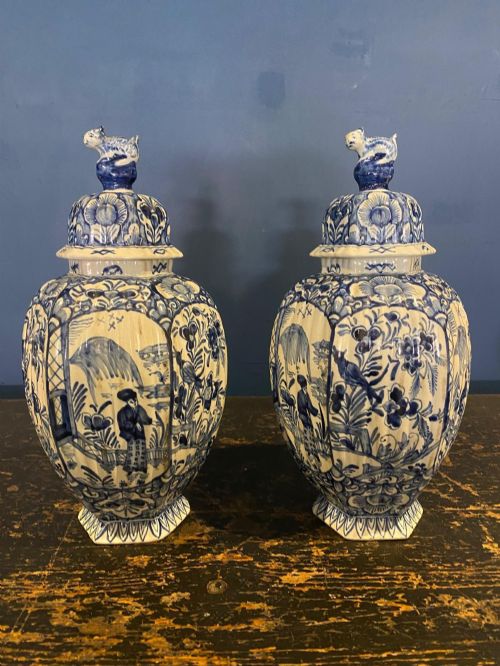
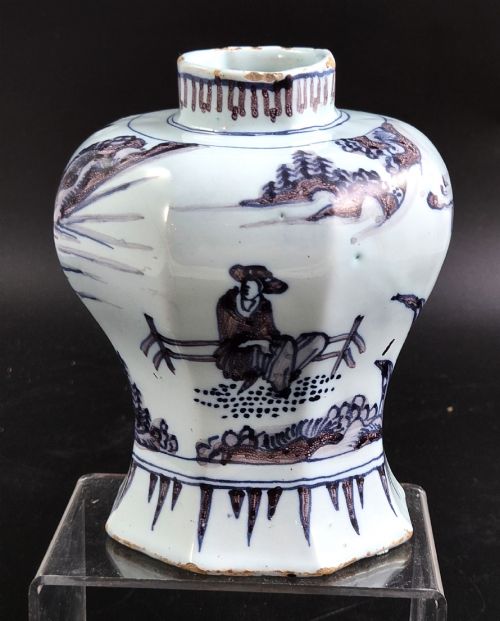
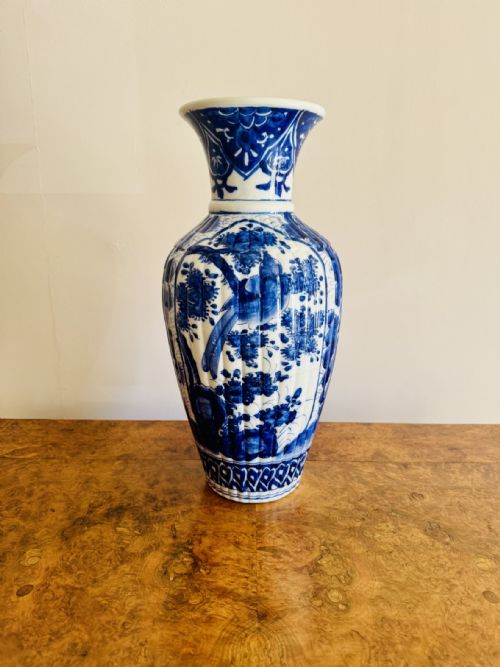
When you search for blue and white urns, you encounter a varied selection of vessels spanning several centuries and origins. The pieces on this page include Dutch Delftware, Chinese export porcelain, Japanese imari, and European faience, taking the form of lidded jars, garden urns, and decorative vases.
You are most likely to meet 19th century interpretations alongside earlier 17th and 18th century examples. Many of these historic vessels have been adapted over time into table lamps or fitted with bronze mounts, reflecting changing domestic uses.
The decorative schemes range from traditional Chinese floral and bird motifs to Dutch baroque landscapes and French revival styles. These objects serve primarily as focal decorative pieces for mantelpieces, cabinets, and tables.
How they were made
The makers utilised ceramic bodies such as porcelain, earthenware, and ironstone, shaped into balanced vessels and jars. Cobalt glaze provides the characteristic blue pigment applied beneath a clear glaze or over a tin-glazed surface.
Firing techniques varied across regions, from high-temperature kilns used for Chinese and Japanese porcelains to lower-fired earthenware requiring tin-glazing to achieve an opaque white background. Artisans often hand-painted these surfaces with detailed cobalt decoration before final glazing and firing.
Secondary materials such as brass, bronze mounts, and wooden or gilt bases frequently accompany the ceramic bodies, particularly on pieces converted into lamps or mantel clocks.
Blue and White Urns Retail Price Guide 2026
Typical asking prices for blue and white urns among the pieces listed under this phrase on Sellingantiques today, from the lower quarter to the upper quarter. They describe what is for sale here now, not the wider market.
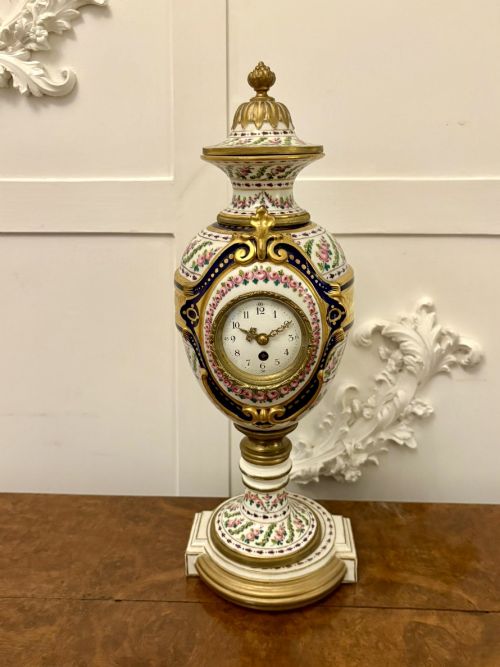
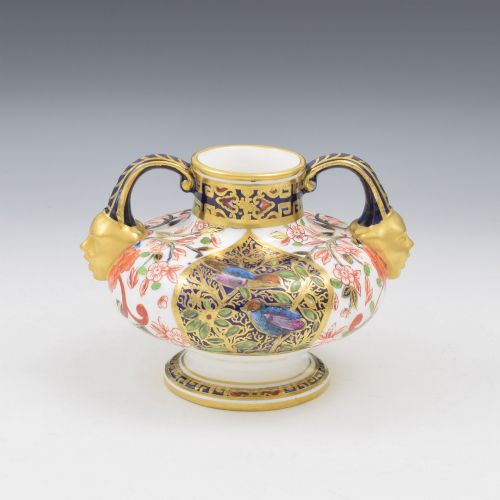
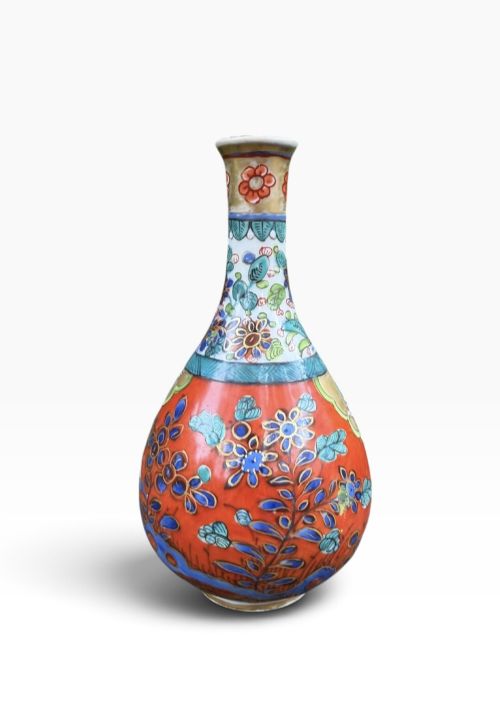
The documented forms range from Chinese export bottle vases and Japanese imari jars to French faience mantel clocks and Wedgwood campana urns.
What varies in quality
The distinction between ordinary and exceptional examples rests upon the precision and fluidity of the hand-painted cobalt decoration. Skilled artisans achieved subtle tonal gradations and crisp outlines, whereas lesser pieces show rushed brushwork and muddy cobalt absorption.
Form and proportion heavily influence the stature of a piece, with well-balanced thrown bodies and crisp moulding distinguishing masterworks from routine factory production. The integration of mounts, lids, and later conversions also dictates the overall cohesion and authority of the object.
Cantagalli·Fourmaintraux-Courquin·Hicks and Meigh·Makuzu Kozan·Masons Ironstone·Spode·Wedgwood
The Blue and White Urns Glossary
- Delftware
- Tin-glazed earthenware produced in the Netherlands and England, imitating Chinese porcelain with cobalt blue designs. This technique created an opaque white surface ideal for painted narratives.
- Cobalt glaze
- A metallic pigment used under the glaze to produce deep blue decoration on ceramics. It withstands high firing temperatures without losing intensity.
- Campana urn
- A bell-shaped classical vessel form with a flared rim and foot, popular in European neoclassical design. These were frequently rendered in ironstone or jasperware.
- Baluster vase
- A tall vase form characterised by a curved body swelling above a narrower base, resembling an architectural baluster. This shape was favoured in Chinese export and Dutch Delft production.
Blue and White Urns: Frequently Asked Questions
How do I date an antique ceramic urn?
Dating relies on examining the characteristics of the ceramic body, glaze formulation, and cobalt pigment under magnification. Stylistic clues in the painted motifs and baseline markings also help align pieces with specific periods like the Qing dynasty or 18th century Dutch production.
Changes in manufacturing methods, such as the shift from tin-glazed earthenware to ironstone in the 19th century, provide further chronological markers. Comparing the potting technique with documented examples from known potteries narrows down the decade of creation.
Were these vessels originally used indoors?
Most of these containers were designed for interior display, serving as garniture sets on mantelpieces or as decorative jars in grand rooms. Larger garden urns were intended for sheltered outdoor or conservatory settings.
Over the centuries, many decorative jars and vases transitioned from pure display pieces into functional household items, such as being converted into table lamps during the Victorian era.
How should I clean a painted ceramic surface?
Dusting gently with a soft, dry brush is the safest method for maintaining antique glazed surfaces. Moisture can infiltrate hairline fractures or old repairs, so liquids should be avoided unless handled by a professional conservator.
Parts made of brass or bronze mounts require separate, careful maintenance using appropriate metal cleaners that will not splash onto the surrounding ceramic glaze.
What is the difference between porcelain and earthenware?
Porcelain is fired at extremely high temperatures, resulting in a vitrified, non-porous body that often rings when struck and appears translucent in thin sections. Earthenware is fired at lower temperatures, producing a porous body that requires an opaque glaze, such as tin-glaze, to hold liquids and display painted designs.
European faience and Dutch Delft are forms of earthenware, whereas pieces originating from Qing kilns or Japanese furnaces typically utilise porcelain bodies.