



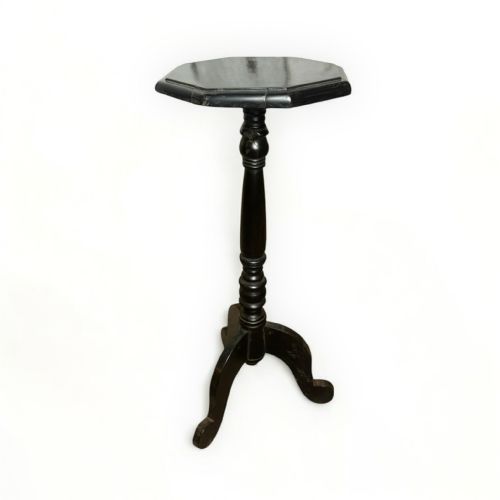

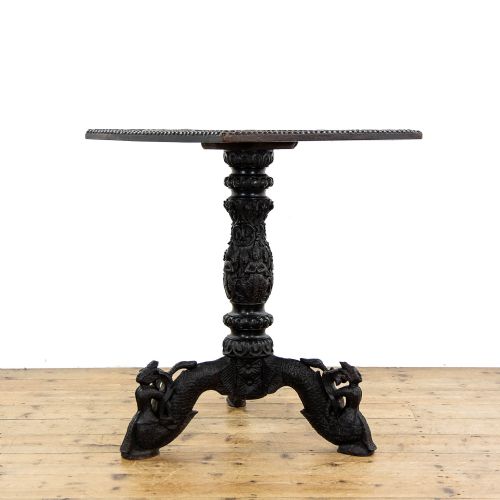


Black Wood Tripod Table
These black wood tripod tables offer dark surfaces and turned supports, prized for bringing striking silhouette and contrast into a room.
Black Wood Tripod Table
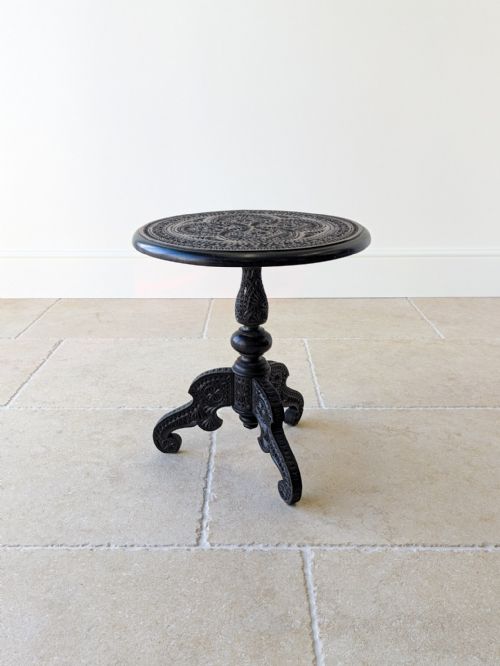
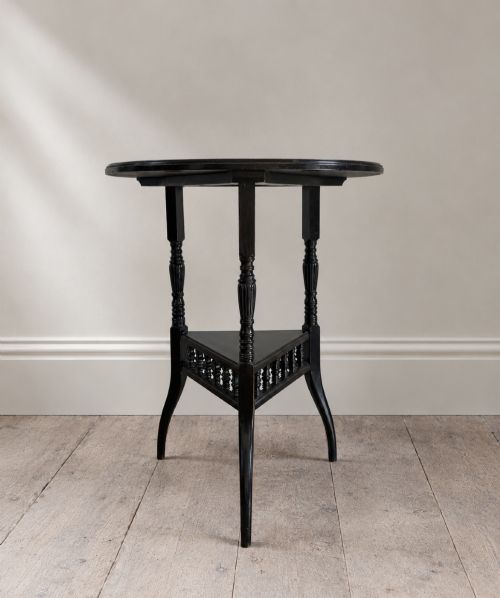
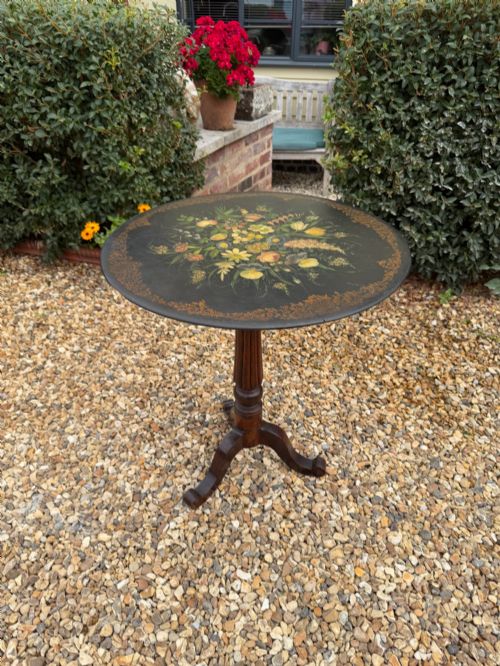
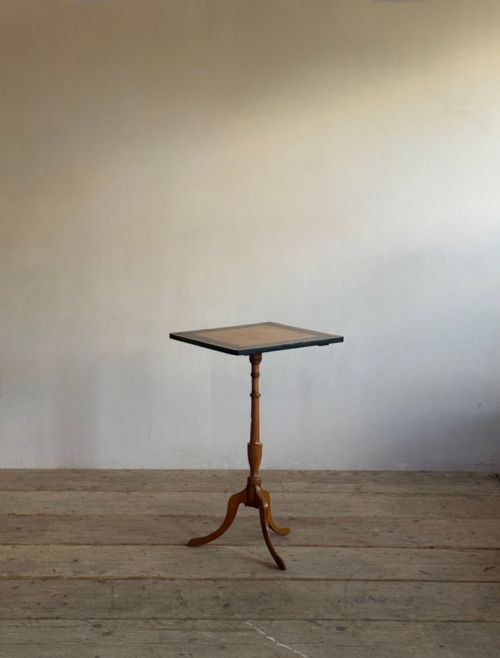
A black wood tripod table sits on a central pillar supported by three feet, creating a stable and compact footprint for everyday use. These pieces appear across several periods, including Georgian, Regency, Victorian, and Arts and Crafts, reflecting shifting aesthetic tastes over time.
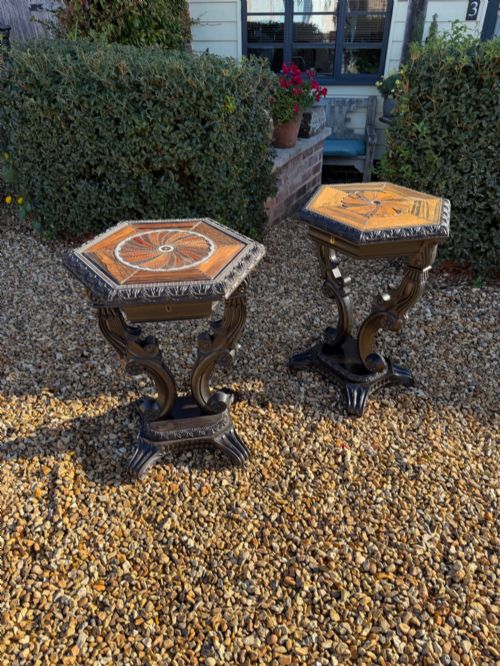
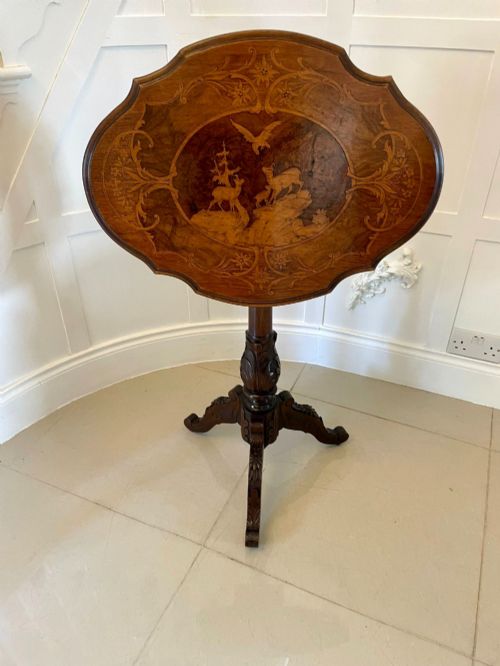
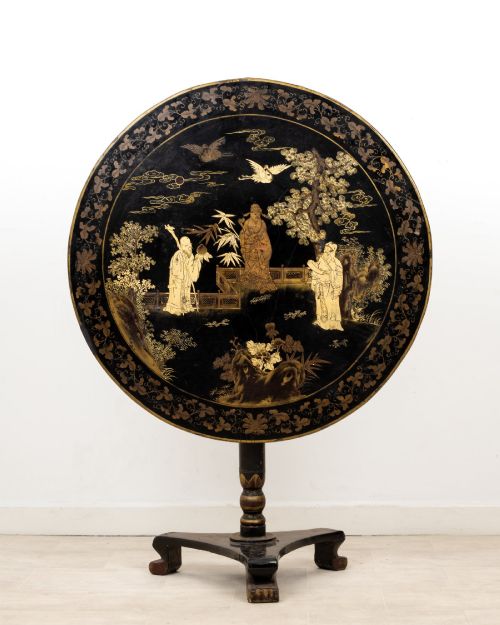
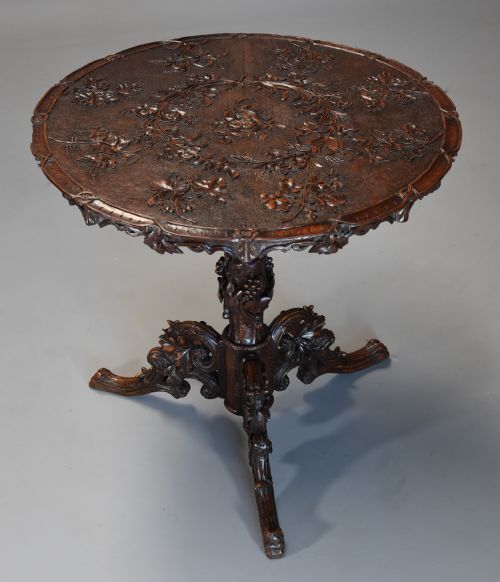
The materials span solid ebony, ebonised hardwood, walnut, and linden wood, often finished with dark lacquer or ebonisation to achieve the signature sombre tone. Forms range from simple occasional tables to intricately carved Black Forest pieces and Chinoiserie tilt-top designs.
Makers drew on various regional traditions, producing Anglo-Indian colonial tables, Chinese lacquer items, and European carved works. The most common varieties encountered here combine turned or carved wooden supports with circular or octagonal tops.
Materials and construction
Makers utilised dense timbers such as ebony, fruitwood, and linden wood, selecting them for their ability to hold fine detail under chisels and turning tools. Ebonised hardwood provided a uniform dark finish for pieces that did not use naturally dark woods.
Carving and inlay techniques define the surfaces, featuring profuse naturalistic motifs in Black Forest work, bone inlay, marquetry, and penwork decoration. Lacquer and parcel gilt finishes added reflective contrast to dark wooden grounds on Regency and Chinoiserie examples.
Black Wood Tripod Table Retail Price Guide 2026
Typical asking prices for black wood tripod table among the pieces listed under this phrase on Sellingantiques today, from the lower quarter to the upper quarter. They describe what is for sale here now, not the wider market.
Listings feature 19th century, Georgian, and Regency periods alongside materials like solid ebony, walnut, and linden wood.
Assessing quality and execution
The depth and clarity of the carving separate standard items from superior works, particularly in Black Forest and Anglo-Indian pieces where naturalistic details must remain crisp and well-defined. Hand-carved linden wood and solid ebony demand high levels of joinery skill compared to applied surface decoration.
The stability of the three-legged base and the precision of the pillar attachment dictate the structural integrity of each table. Quality rests on the harmony between the timber used, whether solid ebony or ebonised hardwood, and the intricacy of any accompanying inlay or gilt work.
The Black Wood Tripod Table Glossary
- Tripod table
- A small table supported by a single central pillar resting on three feet. This design became popular in the eighteenth century for its mobility and space-saving form.
- Ebonised
- Wood treated with stain or paint to imitate the dark, dense appearance of genuine ebony. This finish was widely utilised during the nineteenth century on various hardwoods.
- Black Forest
- A regional style of wood carving originating from Switzerland and Germany, characterised by naturalistic depictions of animals, foliage, and rustic scenes. These items often employ linden wood.
- Chinoiserie
- European decorative style reflecting Chinese artistic traditions, typically featuring lacquerwork and gilt motifs on dark backgrounds. It appeared frequently during the Regency period.
- Marquetry
- The art of applying pieces of veneer to a structure to form decorative patterns and pictures. Walnut and other woods were commonly cut and fitted in this manner.
Black Wood Tripod Table: Frequently Asked Questions
What is a black wood tripod table used for?
These tables function well as occasional surfaces for lamps, books, or decorative objects in sitting rooms and hallways. Their compact footprint allows them to fit easily beside chairs or in corners where larger furniture cannot go.
Historically, specific versions like tilt-top tables were stored upright against walls when not in use. This flexibility in placement made them enduring staples of domestic interior decoration across multiple centuries.
How do I care for ebonised wood?
Keep these surfaces away from direct sunlight and excessive moisture to prevent the dark finish from fading or lifting. Dust gently with a dry, soft cloth rather than using harsh chemical polishes.
Maintaining a stable room temperature helps protect older timbers like walnut, linden wood, and ebony from splitting. Natural wax can be applied sparingly to nourish solid wood elements.
Are all black woods solid ebony?
Many items utilise ebonised hardwood rather than solid ebony, which was reserved for high-status pieces due to its weight and cost. Fruitwood, beech, and other timbers were commonly stained or painted black to achieve a similar visual effect.
Inspection of the underside or unexposed areas often reveals the base timber beneath the dark surface treatment. Both solid ebony and ebonised alternatives appear frequently across the available inventory.
How do I distinguish regional styles?
Black Forest tables are generally identified by deep, naturalistic carvings of foliage, animals, or linden wood surfaces. Anglo-Indian and Oriental pieces often incorporate distinct motifs, bone inlay, or traditional lacquer techniques.
European examples from the Georgian and Regency eras lean towards cleaner geometric lines, pillar turnings, and gilt accents. Examining the specific motifs and carving styles clarifies the geographic origin of each piece.