

Black Study Desk
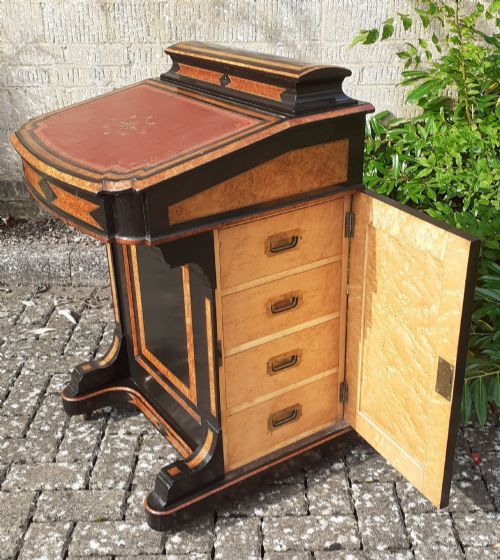
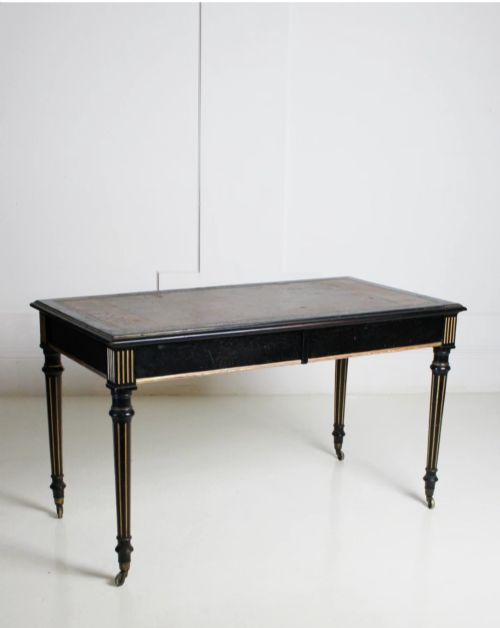
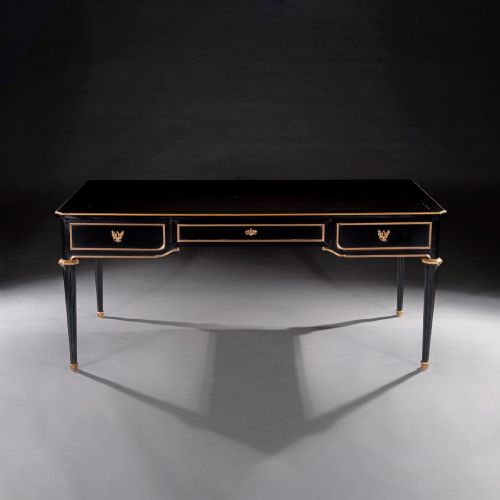
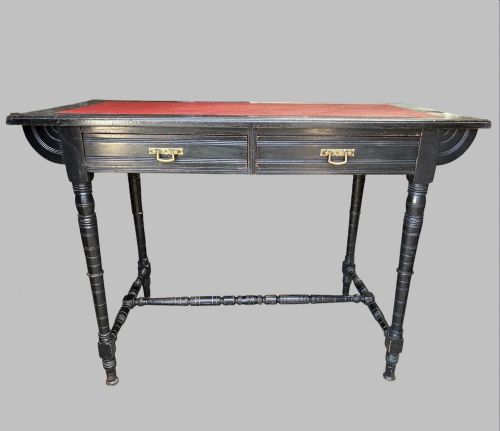
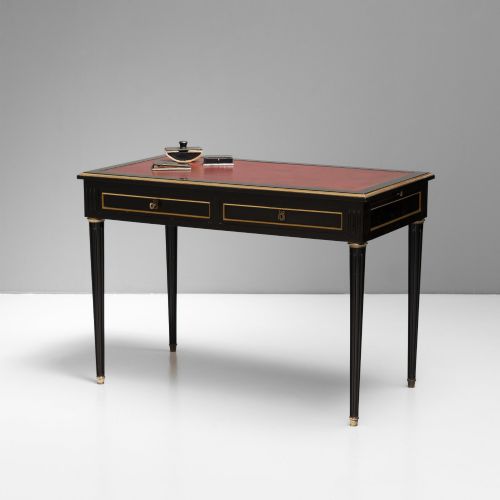
A black study desk anchors a room with dark tones and practical workspace, built from ebonised wood and fitted with leather.
Black Study Desk
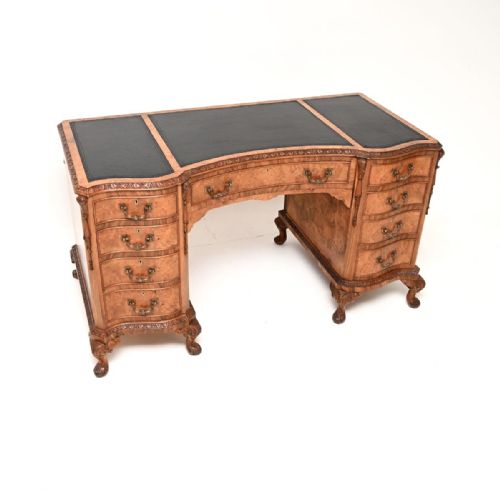
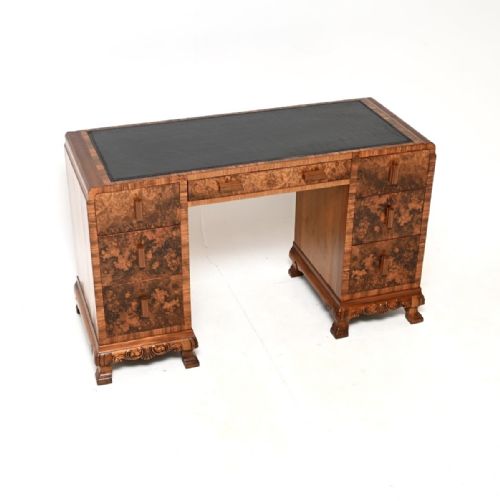
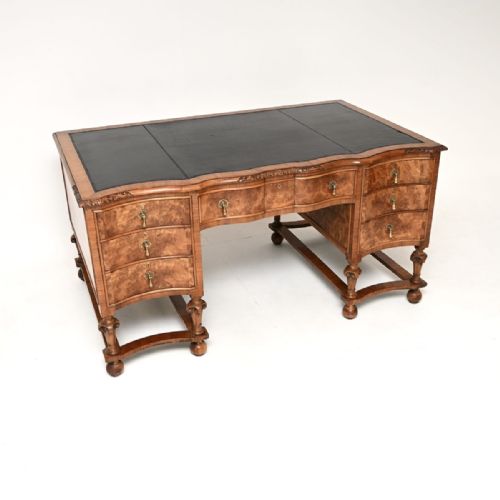
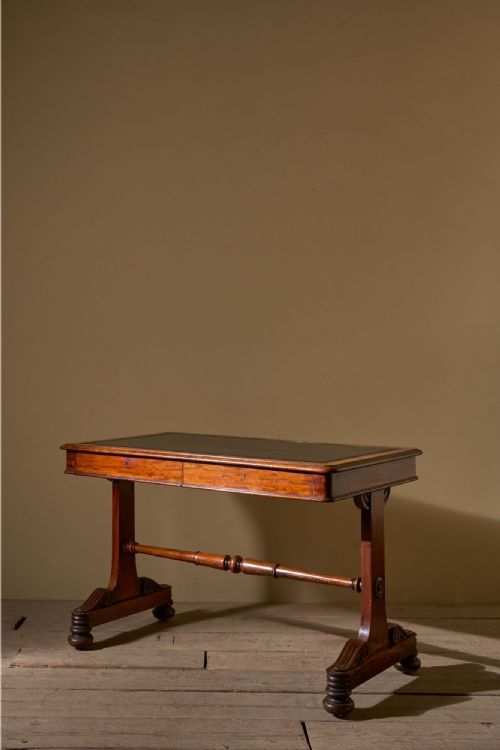
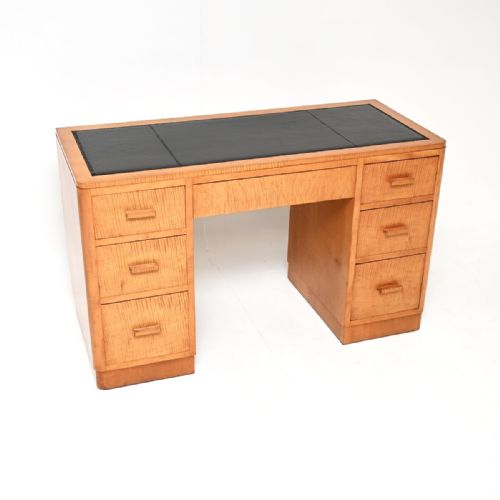
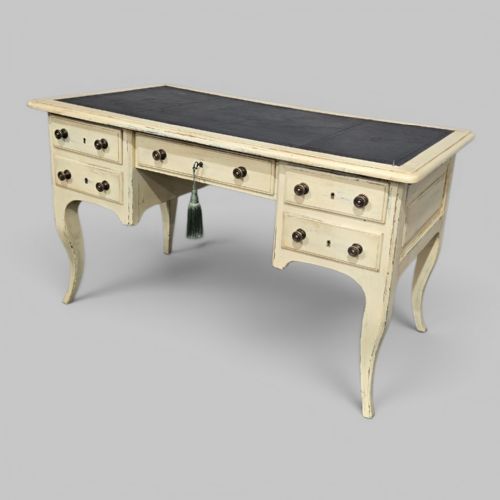
A black study desk spans pedestal forms, writing tables, and partners desks produced across the Victorian, Edwardian, and Art Deco periods. These pieces serve as functional work surfaces that incorporate contrasting leather inserts or polished timber tops.
The selection ranges from ebonised mahogany writing tables to burr walnut pedestals and French ebonised bureau plat designs. Buyers will encounter various incarnations utilising dark finishes or natural dark hardwoods like ebony.
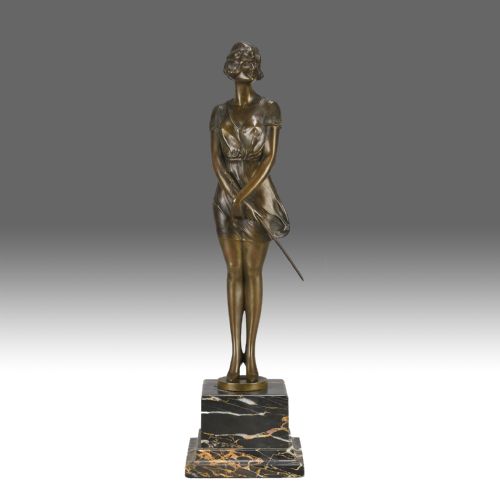
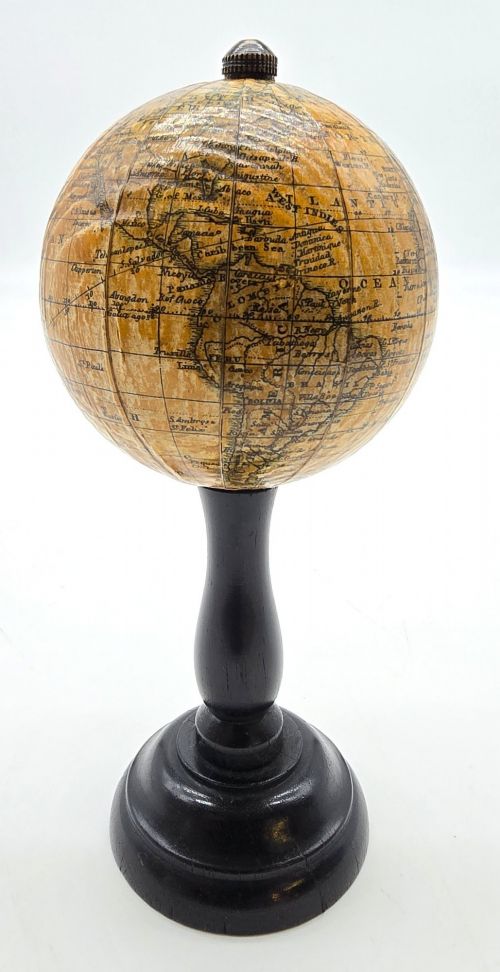
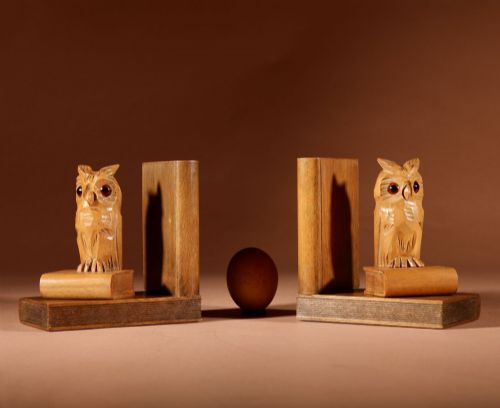
Alongside conventional desks, related study items such as desk chairs, bronze studies, bookends, and desk lamps appear within the selection. These companion pieces complement the primary writing surfaces found on this page.
How they were made
Construction relies on traditional cabinet-making timbers such as mahogany, oak, and walnut, frequently finished with ebonising or French polish to achieve a dark surface. Secondary woods support structural frames while decorative veneers like burr walnut or satin birch provide figured top surfaces.
Writing surfaces integrate inset panels of leather, often tooled with blind or gilt borders to frame the working area. Metal elements including brass handles, nickel plating, and cast bronze details appear on mounts, lamps, and associated desk accessories.
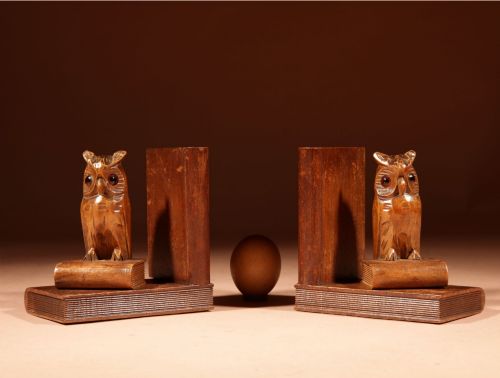
Carved Black Forest wooden dogs and owls double as whimsical inkwells and bookends on turn-of-the-century writing desks.
What varies in quality
The distinction between standard commercial office furniture and superior library pieces rests upon the selection of timber and the crispness of carved or turned details. High quality examples display carefully matched veneers and robust secondary framing designed to endure heavy daily use.
Hardware integrity and the retention of original leather writing surfaces significantly influence the character of a desk. Superior items maintain original brassware, working locks, and stable drawer construction without modern replacements.
Maple and Co·Johnstone and Jeanes·Bruno Zach
The Black Study Desk Glossary
- Ebonised
- Timber treated with a dark stain or finish to imitate ebony. This technique was popular during the Victorian and Edwardian eras for formal furniture.
- Partners desk
- A large double-sided desk designed for two people to work opposite one another. These typically feature drawers and cupboards on both long sides.
- Bureau plat
- A freestanding French writing table featuring a flat top and one or more rows of drawers beneath. They are usually finished on all sides to allow placement in the centre of a room.
- Davenport desk
- A compact Victorian writing desk featuring a sloping hinged top above a bank of side drawers. The top often encloses a small storage compartment for stationery.
- Gimbal
- A pivoted ring mounting that allows a lamp or compass to remain horizontal despite movement. These appear on maritime lighting from the early twentieth century.
Black Study Desk: Frequently Asked Questions
What is a partners desk?
A partners desk provides workspace on both sides with matching drawers and cupboards facing outward. This configuration allows two individuals to sit opposite each other while working.
Such desks are typically substantial in scale and were originally intended for offices or large libraries.
How do I care for a leather top?
Leather desk inserts require gentle cleaning with a damp cloth and periodic treatment with appropriate leather dressings to prevent drying. Avoid harsh chemical cleaners that can strip the original dye and gilt tooling.
Keeping the surface protected from direct sunlight preserves the colour and suppleness of the hide.
What is an ebonised finish?
An ebonised finish involves staining or painting timber to simulate solid ebony wood. This method was widely used on nineteenth-century tables and chairs to create a formal dark appearance.
Under closer inspection, the underlying grain of mahogany or fruitwood remains partially visible beneath the dark coating.
Are swivel chairs period correct?
Swivel desk chairs with mahogany frames and leather upholstery date back to the Victorian and Edwardian periods. They were engineered for office and library use to provide mobility at large writing desks.
Original examples feature robust mechanical pivots concealed beneath the seat structure.