




Ebonised Office Desk
An ebonised office desk offers dark elegance and functional workspace, bringing striking contrast and period character into a study.
Ebonised Office Desk
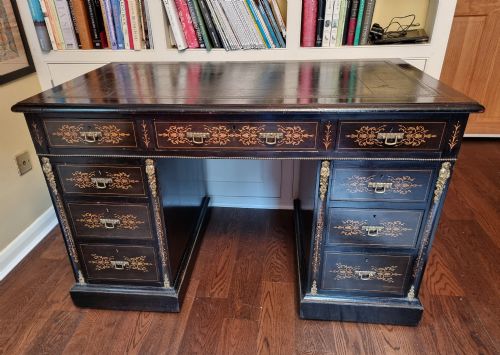
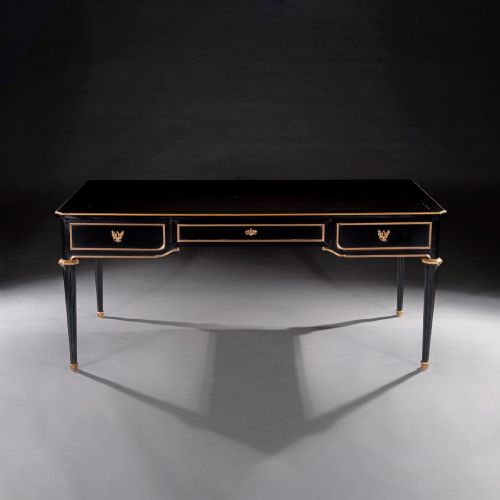
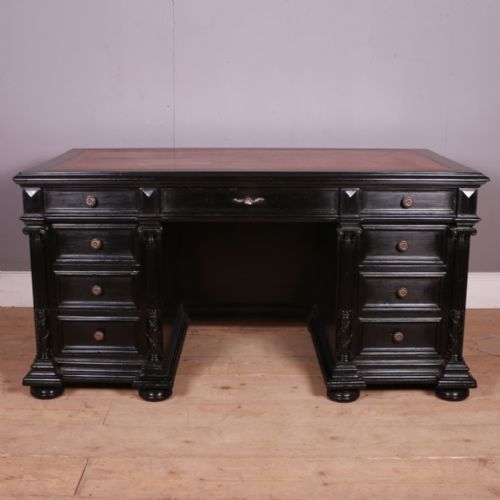
When searching for an ebonised office desk, buyers encounter robust nineteenth-century writing furniture finished with dark staining to resemble ebony. These pieces range from pedestal forms and kneehole desks to bureau plat writing tables.
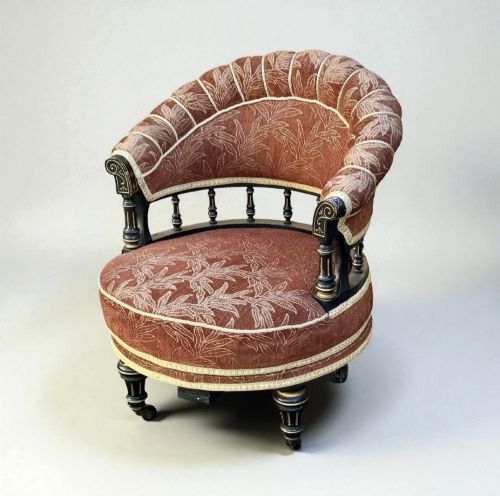
The selections span various historical revivals including Victorian, French Napoleon III, and Aesthetic Movement designs. Alongside traditional desks, associated seating such as revolving armchairs also appears within the selection.
Originating predominantly from the nineteenth and early twentieth centuries, these writing tables merge deep-toned timber surfaces with practical storage configurations. Buyers frequently discover brass mounts, leather inserts, and marquetry details integrated into the primary forms.
How they were made
Cabinet makers utilised hardwoods such as mahogany and birch, applying dark finishes to achieve the desired ebonised appearance. Surfaces often incorporate contrasting veneers like burr walnut or oak crossbanding to highlight the primary structure.
Metal ornamentation played a significant role in construction, with ormolu mounts and brass detailing applied to drawers and angles. Leather writing surfaces were frequently inset into the timber tops, bordered by blind tooling.
Listings feature nineteenth-century and early twentieth-century pieces, spanning Victorian, Regency, and Empire Revival styles.
What varies in quality
The standard of an ebonised office desk depends on the finesse of its timber preparation and the integration of decorative mounts. Superior examples exhibit precise marquetry inlay, well-fitted drawers, and high-grade ormolu detailing.
Maker attribution and stylistic cohesion elevate certain pieces above standard utilitarian workspace furniture. The preservation of original leather writing surfaces and polished finishes also influences the standing of individual examples.
Edwards & Roberts
The Ebonised Office Desk Glossary
- Ebonised
- Wood treated with a dark stain or finish to imitate true ebony. This technique gained widespread popularity during the Victorian period.
- Ormolu
- Gilded bronze ornamentation applied to furniture mounts and details. It provides a bright metallic contrast against dark ebonised wood.
- Bureau Plat
- A freestanding writing table featuring a rectangular top and drawers beneath. Originating in France, these tables typically stand on slender legs.
- Kneehole desk
- A compact desk configuration featuring a central recess for the user's legs, flanked by pedestals of drawers. This form became prevalent in nineteenth-century studies.
- Marquetry
- Decorative veneer work arranged in geometric or floral patterns across the surface. Skilled artisans cut contrasting woods to create detailed pictorial designs.
Ebonised Office Desk: Frequently Asked Questions
What is an ebonised desk?
An ebonised desk is a nineteenth-century writing table finished with a dark stain to replicate expensive ebony wood. These pieces often feature contrasting brass mounts or burr walnut veneers.
They serve as functional workspace furniture while providing a strong visual statement through their deep, dark surfaces and period detailing.
How do I clean an ebonised wood surface?
Cleaning ebonised wood requires a soft, dry cloth to remove dust without disturbing the dark finish. Avoid harsh chemical cleaners that can strip or dull the polished surface.
Period wax applied sparingly helps maintain the lustre of the timber over time.
Where were these desks used?
These desks were primarily utilised in nineteenth-century studies, libraries, and formal drawing rooms. They provided dedicated spaces for correspondence and administrative duties.
Today, they function effectively in modern home offices while retaining their antique character.
How do I identify the period?
Period identification relies on examining construction methods, hardware styles, and prevailing design revivals such as the Aesthetic Movement or French Napoleon III. Specific wood choices and leg configurations offer further chronological clues.
Comparing structural details against documented nineteenth-century furniture types confirms the era of manufacture.