
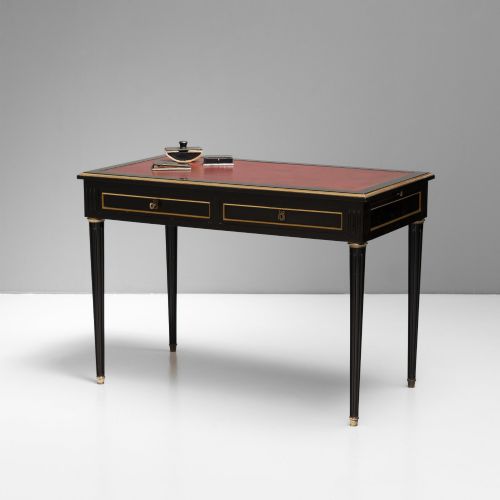


Black Ebonised Library Desk
These black ebonised library desks and associated writing pieces bring dark, disciplined surfaces and period craftsmanship directly to your study.
Black Ebonised Library Desk
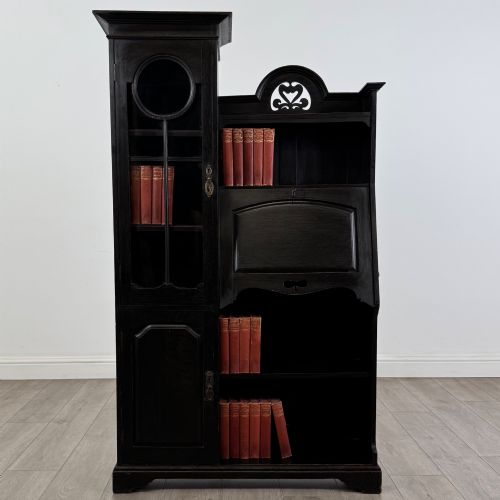
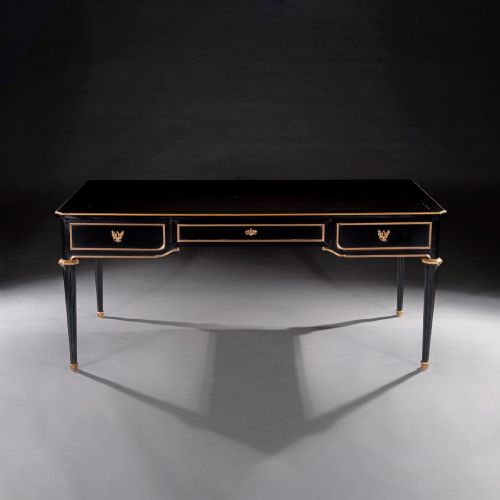
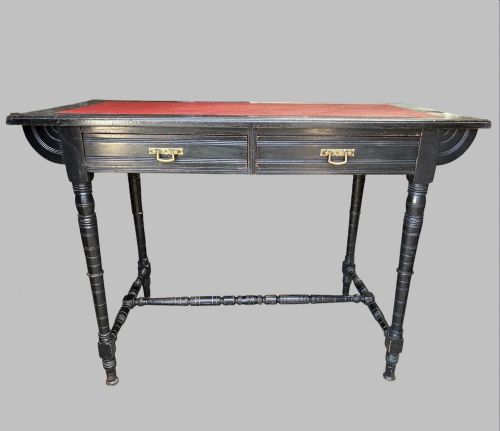
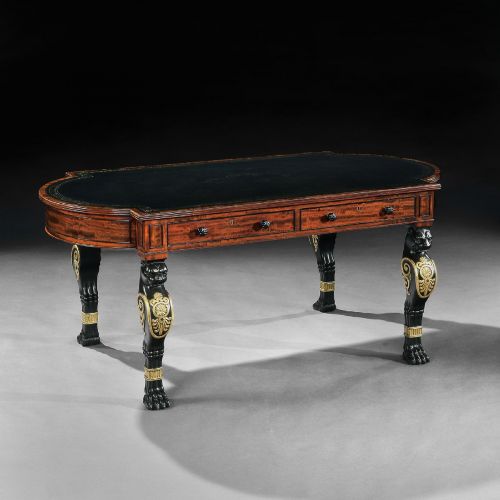
A black ebonised library desk brings together writing tables, bureaux, and partner desks finished in deep, dark timber alongside related library seating and accessories. Pieces span from the Regency era through the Victorian period into the twentieth century, reflecting varied interpretations of classical and revival designs.
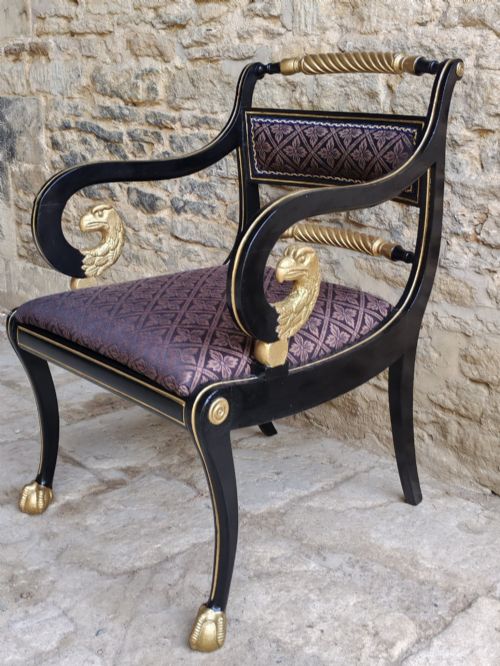
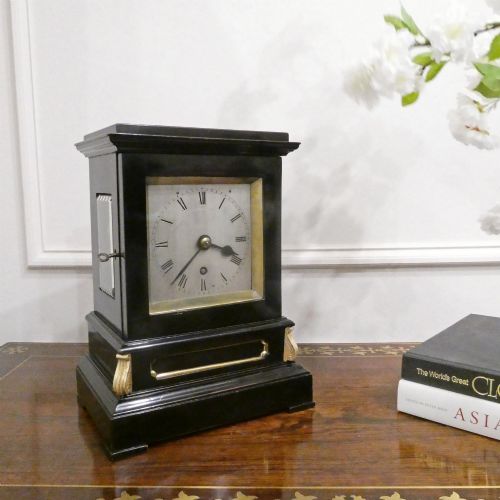
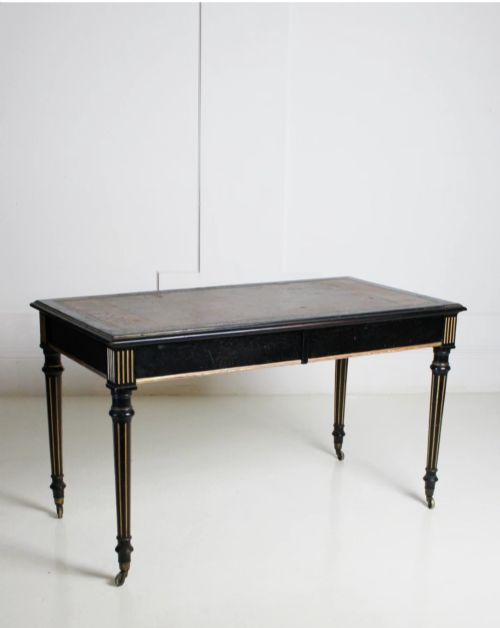
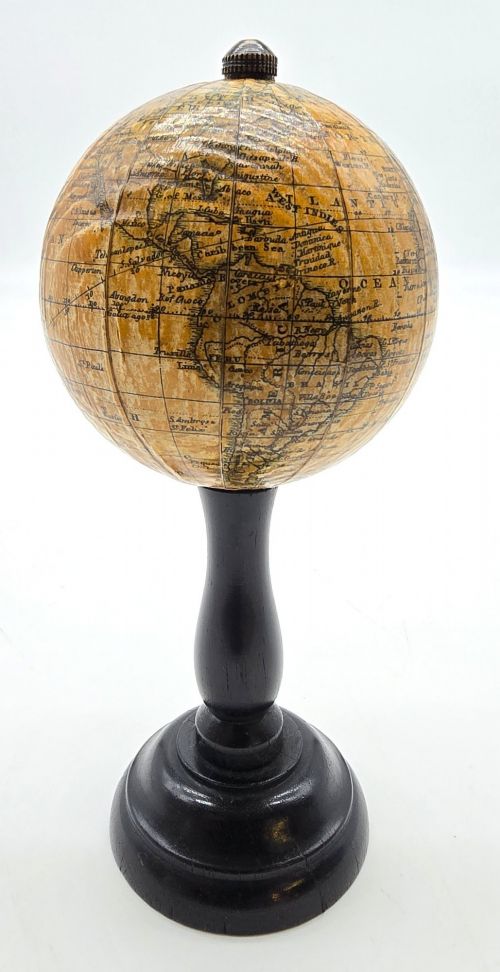
The most frequent examples on this page date to the nineteenth century, including Victorian writing tables and French bureau plat models. Alongside full-sized desks, the selection encompasses library armchairs, mantel clocks, and miniature globes that complete a study interior.
Materials and construction
Construction relies heavily on ebonised wood, often paired with contrasting elements such as brass mounts, ormolu, and parcel gilt highlights. Writing surfaces frequently incorporate inset leather panels to provide a durable and traditional plane for daily correspondence.
Cabinetmakers utilised structural hardwoods like oak and mahogany beneath the dark finishes, sometimes adding intricate inlay work, carved details, or engraved metal plaques to elevate the piece.
Listings feature items spanning the Regency, Victorian, Edwardian, and Interwar periods, executed in ebonised wood, oak, brass, and leather.
Evaluating craftsmanship
Quality rests upon the depth and finish of the ebonisation, alongside the crispness of any carved ornamentation or brass inlay. Finer examples display meticulous attention to secondary timbers and stable joinery that withstands heavy daily use.
The integration of original hardware, such as cast brass handles and functioning locks, distinguishes superior workshop production from simpler commercial outputs of the later periods.
The Black Ebonised Library Desk Glossary
- Ebonised wood
- Timber treated with stain or paint to imitate expensive ebony. This dark finish gained immense popularity during the nineteenth century for formal library furniture.
- Bureau plat
- A freestanding French writing table featuring a flat top, usually lined with leather, and drawers set into the frieze. These tables were designed to sit in the centre of a room rather than against a wall.
- Ormolu
- Gilt bronze ornamentation applied to furniture and clocks. The technique involves treating brass or bronze with a gold amalgam to achieve a rich metallic lustre.
- Partners desk
- A large double-sided desk designed for two people to work opposite one another. These tables typically feature banks of drawers on both sides beneath a spacious leather-topped surface.
- Bergère
- An enclosed upholstered armchair with wooden framing. Library versions often feature padded armrests and deep seats designed for long hours of reading.
Black Ebonised Library Desk: Frequently Asked Questions
What defines a black ebonised library desk?
These pieces are dedicated writing surfaces finished with a dark, ebony-like stain or polish, often originating from the nineteenth or early twentieth centuries. They combine functional drawers and leather-insets with the formal aesthetic required for a traditional study.
Designs range from compact French writing tables to substantial partners desks and associated library seating. The dark finish serves to unify diverse wood types under a uniform, classical appearance.
How do I care for ebonised wood surfaces?
Maintain the dark finish by dusting regularly with a soft, dry cloth and avoiding direct sunlight that can fade the pigment over time. Treat the timber occasionally with appropriate furniture wax to nourish the grain without building up a heavy residue.
Protect inset leather surfaces from moisture and sharp objects by using appropriate blotters or writing pads during daily use.
How can I date a nineteenth-century desk?
Examine the construction methods visible within the drawer linings, the type of screws or fixings used, and the style of any brass hardware. Regency and early Victorian pieces often display hand-cut dovetails and heavier timber scantlings compared to later Victorian iterations.
Maker's marks, stamps, or paper labels found inside drawers or beneath tabletops provide definitive clues to the workshop of origin and the decade of production.
Where should I place a partners desk?
Partners desks are designed to stand away from walls as freestanding centerpieces within a spacious room. Because drawers and kneeholes appear on both sides, the piece requires clearance around all edges to function as intended.
Positioning the desk perpendicular to a window ensures optimal natural light across the leather writing surface for reading and correspondence.