


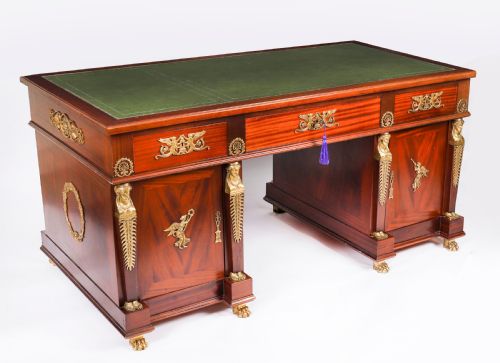


Empire Executive Desk
An empire executive desk brings monumental French Neoclassical presence and fine ormolu mounts to a room, offering a commanding centrepiece for work.
Empire Executive Desk
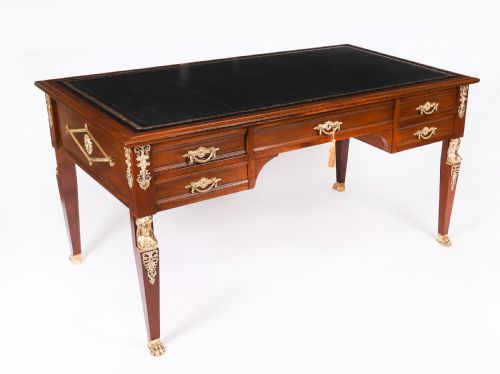
An empire executive desk typically appears as a bureau plat or pedestal desk shaped by French Empire, Neoclassical, and Austrian Empire aesthetics. These forms draw on classical antiquity, presenting a commanding writing table or partner's desk for a study.
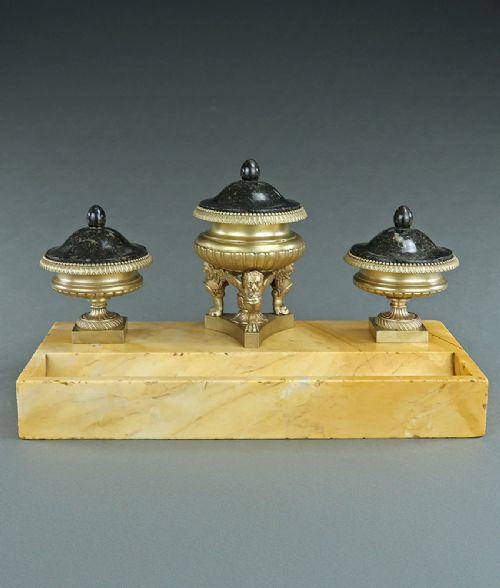
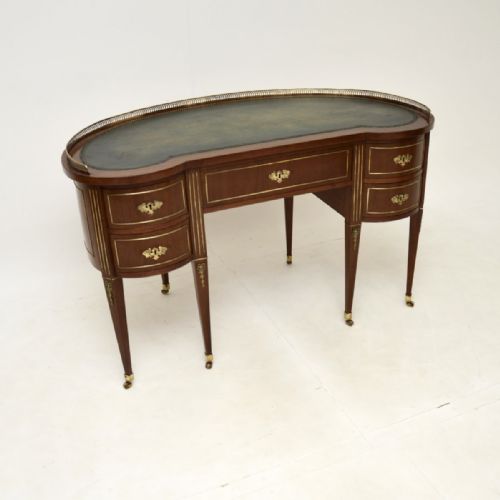
The pieces on this page span the nineteenth century through the early twentieth century, including Empire Revival versions in birch and mahogany. Alongside writing tables, the selection includes related items such as encriers, office sets, and desk chairs.
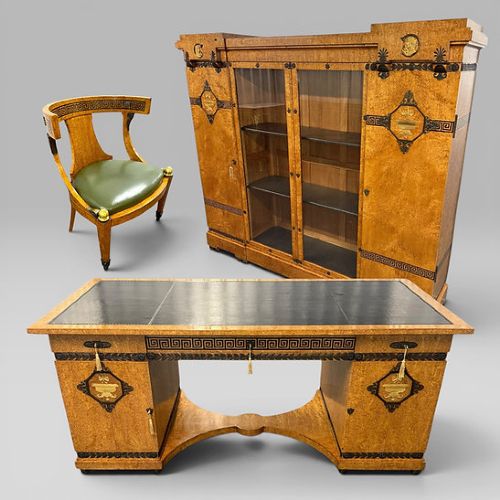
Makers and workshops of the period, such as Mercier Frères, produced coordinated office suites comprising desks, cabinets, and seating. Buyers encounter both freestanding writing tables and heavier pedestal configurations designed for formal offices.
What varies in quality
The sophistication of the ormolu mounts dictates much of the visual hierarchy, distinguishing finely chased bronze work from simpler cast elements. Crisp detail in the classical motifs and secure integration into the wood signify superior craftsmanship.
Timber selection and secondary framing determine structural integrity, with dense mahogany and thoughtful veneer matching separating robust execution from lighter revival pieces.
Materials across these listings include mahogany, birch, ormolu, gilt bronze, leather, and Sienna marble.
Mercier Frères
The Empire Executive Desk Glossary
- Bureau plat
- A freestanding writing table with drawers in the frieze, typically finished on all sides for placement in the middle of a room. This form served as the primary desk for statesmen and writers during the nineteenth century.
- Ormolu
- Gilt bronze mounts applied to furniture edges, feet, and key escutcheons to provide a golden contrast against dark timbers. The technique involves applying a gold amalgam to cast bronze before firing.
- Fauteuil de bureau
- A desk armchair designed to match the executive workspace, featuring an upholstered seat and back for prolonged use. These chairs often incorporate curved arms and neoclassical carving.
- Directoire
- A transitional style preceding the full Empire period, characterised by simplified neoclassical lines and restrained ornament. It bridges Louis XVI forms and the heavier imperial aesthetic.
Empire Executive Desk: Frequently Asked Questions
What is a bureau plat?
A bureau plat is a freestanding writing table featuring drawers beneath the top surface. It is finished on all sides so it can sit in the middle of a room rather than against a wall.
These tables formed the centerpiece of nineteenth-century studies and executive offices, offering a spacious leather-lined writing surface.
How do I identify Empire style?
Empire style draws directly on the architecture and motifs of ancient Rome, Greece, and Egypt. You will see symmetrical designs, columns, and classical laurel wreaths.
Ormolu mounts in gilt bronze provide strong metallic contrast against dark woods like mahogany and ebonised timber.
Where do I put an empire desk?
Because a bureau plat is finished on every side, it looks best floating in the centre of a study or library. This placement lets the ormolu mounts and mahogany grain show from any angle.
Pair the desk with a matching armchair or pedestal cabinet to maintain the formal nineteenth-century aesthetic.
Are pedestal desks different from writing tables?
Pedestal desks feature banks of drawers running down to the floor on one or both sides, creating a heavy and enclosed workspace. Writing tables like the bureau plat stand on open legs or columns.
Both forms appear across the nineteenth and early twentieth centuries, serving executive functions in different architectural settings.