




Empire Bureau Desk
An empire bureau desk delivers stately classical proportion and concealed writing surfaces, bringing architectural gravity to a study.
Empire Bureau Desk
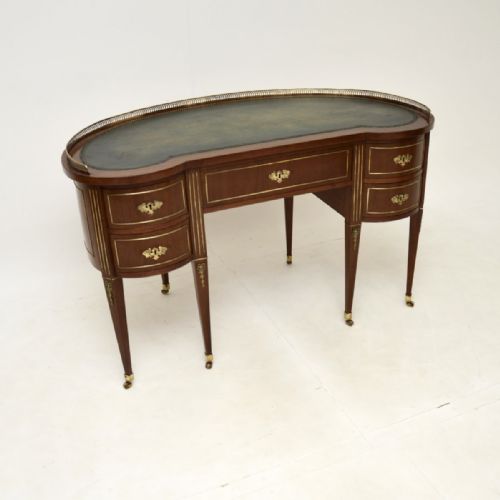
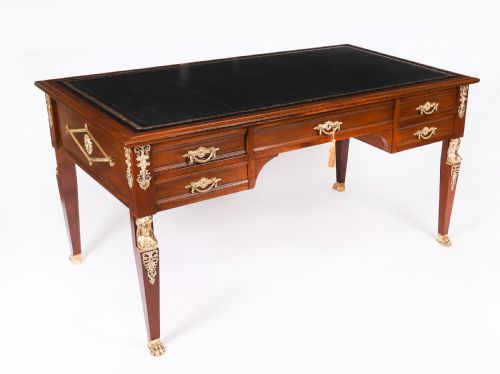
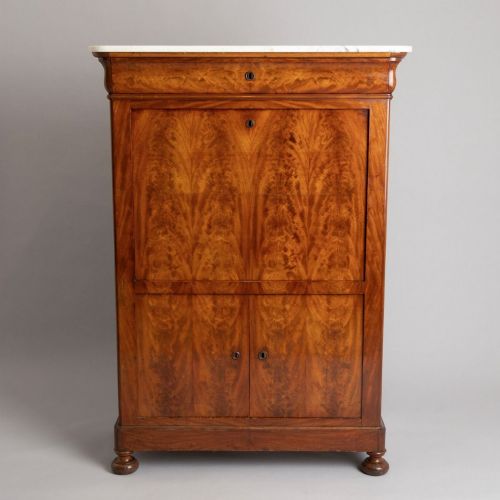
An empire bureau desk encompasses formal writing furniture produced across continental Europe through the nineteenth century and subsequent revival periods. These pieces range from grand bureau plat writing tables to vertical secretaire a abattant cabinets featuring drop-down writing flaps.
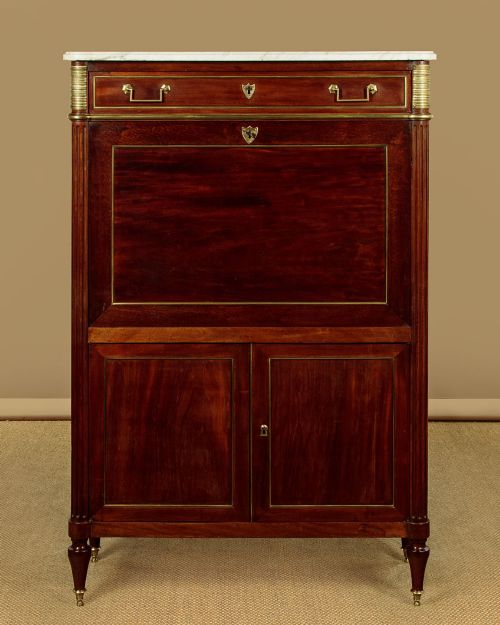
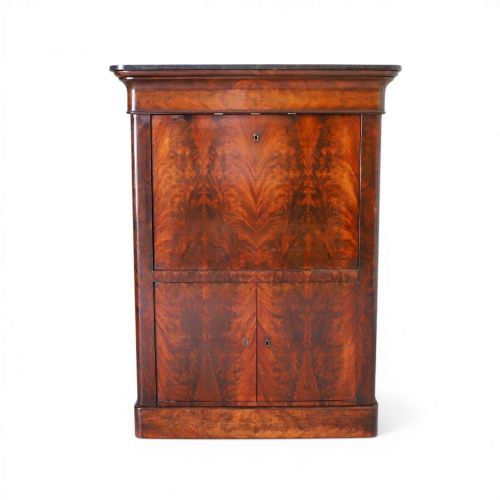
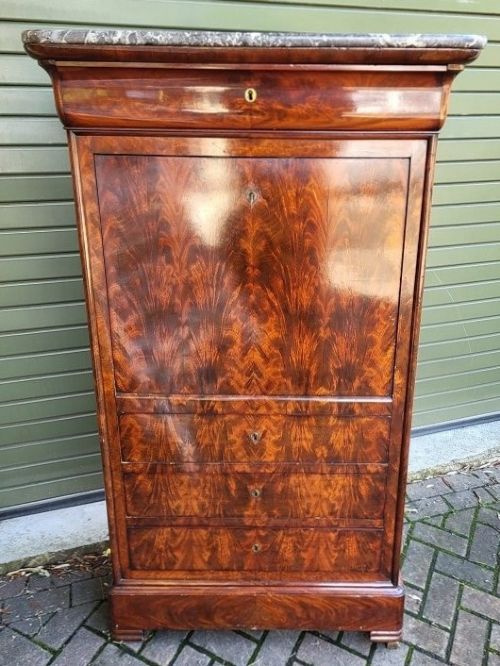
The version met most frequently on this page is the French mahogany secretaire cabinet or bureau plat, often retaining original marble tops and brass mounts. Walnut, flame mahogany, and ebonised finishes appear alongside Austrian and Swedish Biedermeier interpretations.
Forms extend from ladies writing desks and cylinder bureaus to executive partners desks and desk chairs. Each iteration prioritises symmetrical dignity, classical hardware, and functional compartments intended for correspondence.
Materials and Construction
Cabinet makers utilised dense timber foundations of mahogany, walnut, and birch, frequently applying dramatic flame mahogany or burr walnut veneers to primary surfaces. Structural stability relied on traditional joinery housed within robust carcases designed to support heavy marble slabs.
Gilt bronze and ormolu mounts punctuate the dark timber surfaces, framing drawers, corners, and apron rails with classical motifs. Leather inserts frequently line the writing surfaces, bordered by blind tooling in gold leaf.
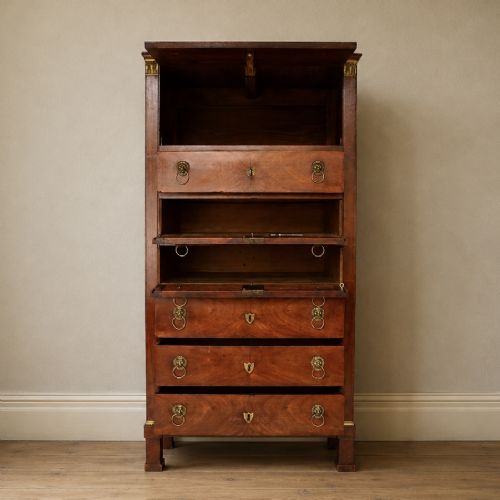
Internal configurations incorporate secret drawers, pigeonholes, and fitted compartments accessed via mechanical releases or drop fronts. Secondary woods support internal framing, while brass locks and keyplates secure the compartments.
Secret drawers require discovering hidden wooden latches or releasing spring-loaded catches before the private compartments deign to slide open.
Evaluating Quality and Execution
Quality rests upon the selection and matching of wood veneers, where continuous grain patterns across drawer fronts demonstrate superior craftsmanship. Plain timbers or mismatched veneers indicate more commercial workshop production.
The crispness and weight of ormolu mounts define the upper tier of execution, as finely chased bronze details outlast routine brass stampings. Heavy marble tops with bevelled edges and precise corner fits further elevate the status of a cabinet.
Internal complexity, such as functioning secret drawers, concealed spring mechanisms, and intact leather writing surfaces with original tooling, separates standard utility writing pieces from masterworks.
The Empire Bureau Desk Glossary
- Secretaire a abattant
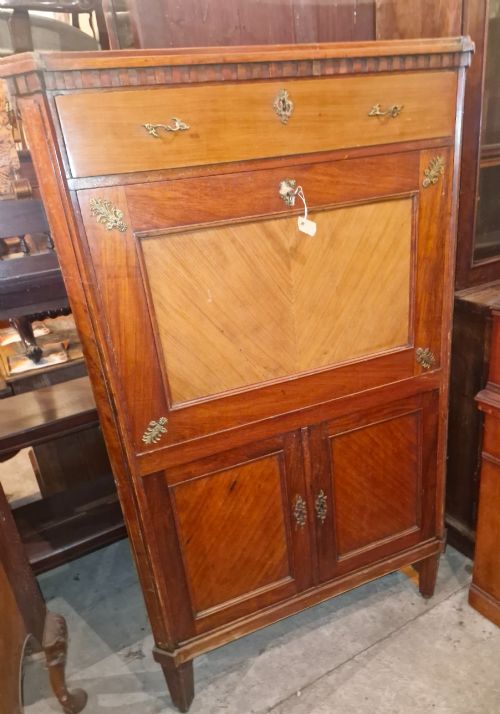
- A tall vertical cabinet featuring a hinged writing flap that folds down to reveal a fitted interior of small drawers and pigeonholes. This form conceals paperwork behind a uniform facade when closed.
- Bureau plat
- A freestanding writing table fitted with drawers across the frieze, finished on all sides to allow placement in the centre of a room. These tables feature inset leather writing surfaces.
- Ormolu
- Gilt bronze ornamentation applied to furniture mounts, cast and chased to produce crisp classical details. The technique involves mercury gilding on bronze substrates.
- Biedermeier
- A Central European style spanning the nineteenth century that favours clean architectural lines, warm domestic woods, and minimal ornamentation. This aesthetic prioritises utility and polished timber grains.
- Cylinder bureau
- A desk featuring a quarter-cylinder rolling shutter that retracts to expose a writing surface and internal pigeonholes. The mechanism uncovers the entire workspace in one motion.
Empire Bureau Desk: Frequently Asked Questions
How do I use an empire bureau desk today?
These pieces function effectively as writing tables, laptop stations, or statement dressing consoles within a modern home. The enclosed compartments provide dedicated storage for stationery and correspondence.
Drop-front secretaires allow users to conceal working materials at the end of the day, restoring a neat architectural profile to the room.
What is the difference between a bureau plat and a secretaire?
A bureau plat is a flat-topped writing table supported by legs, designed to sit away from the walls in the centre of a room. It provides an open surface with frieze drawers.
A secretaire is a vertical cabinet featuring a vertical drop front or drawer that opens to reveal an internal writing desk and storage pigeonholes.
Are the marble tops original to these desks?
Many nineteenth-century secretaire cabinets retain their original thick marble slabs, which added necessary weight and a durable surface to the upper carcase. Replacement marble occurs when earlier tops suffered cracking or breakage during transport.
Examining the underside and edges reveals mounting habits consistent with period workshop practices.
How do I care for the timber and ormolu?
Maintain timber surfaces by applying quality beeswax sparingly and buffing with a soft cloth to preserve the natural lustre of the veneer. Avoid silicone-based polishes that degrade historic polishes over time.
Dust ormolu mounts gently with a dry brush, avoiding liquid cleaners that might strip the historic gilding from the bronze.