


Black Side Cabinet
A black side cabinet brings dark, lustrous presence and disciplined storage to a room through ebonised wood or lacquered finishes.
Black Side Cabinet
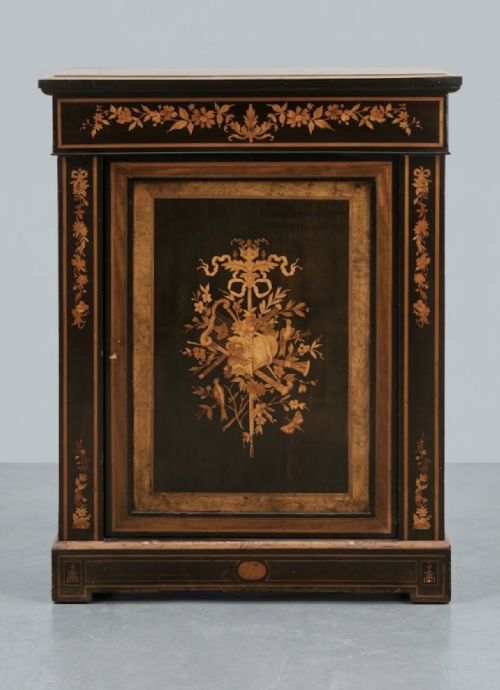
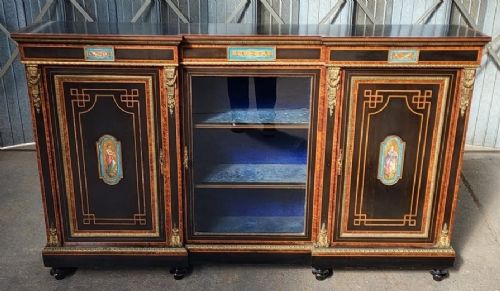
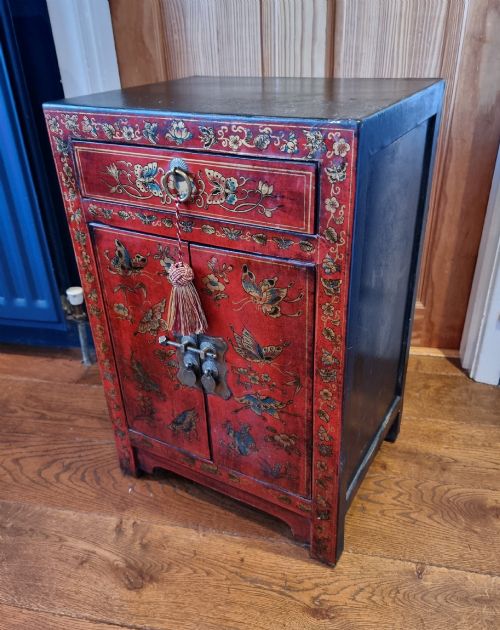
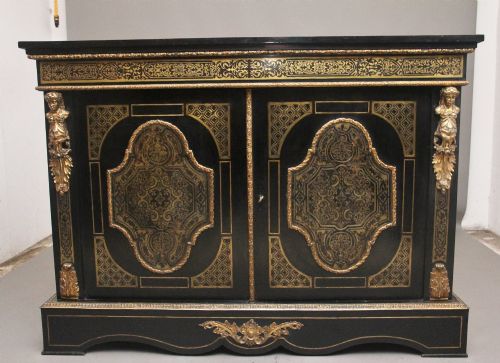
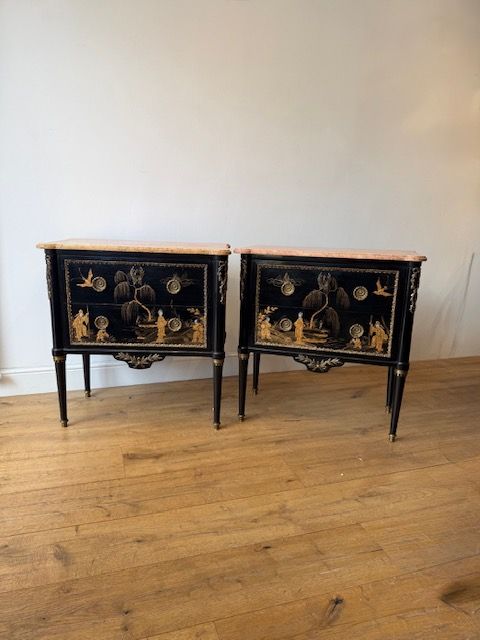
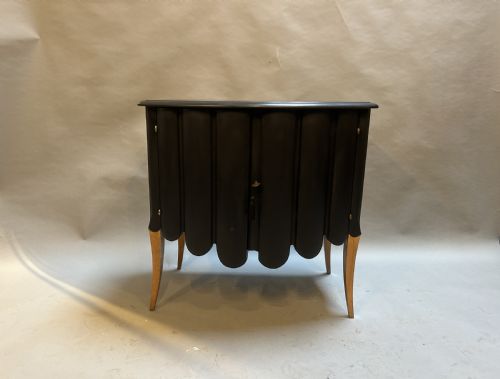
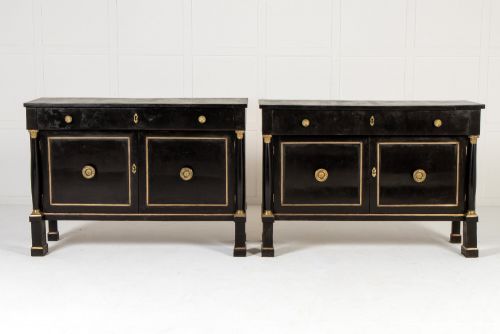
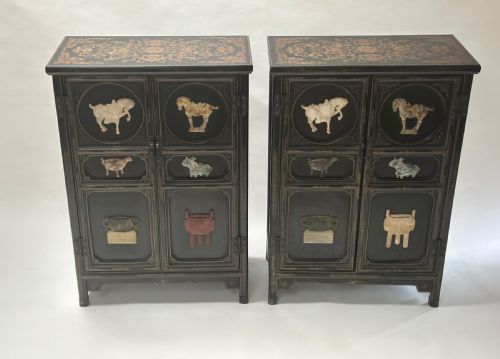
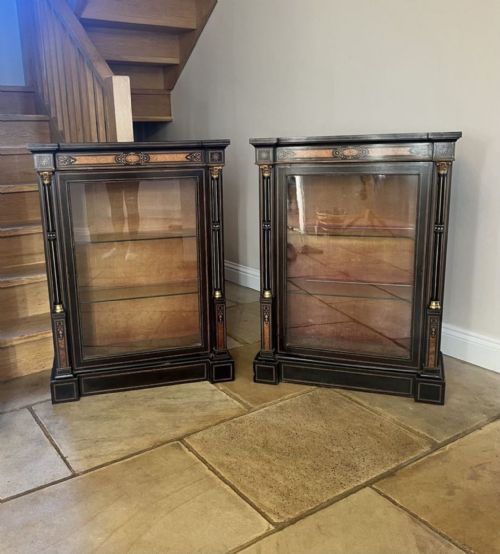
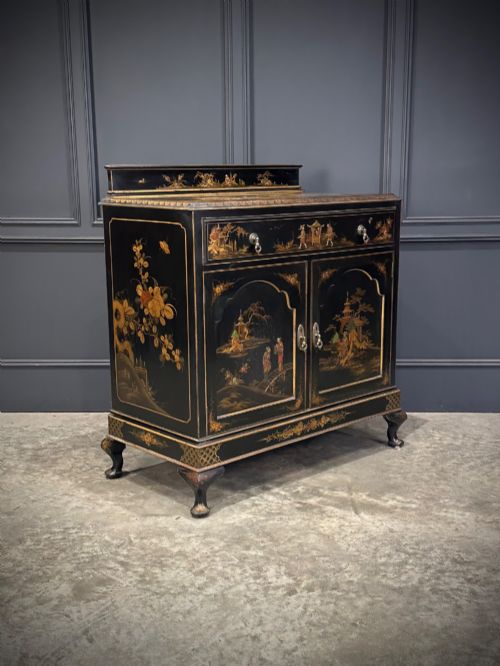
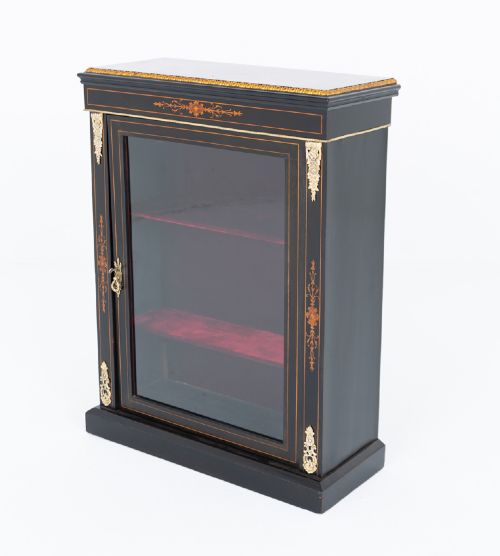
A black side cabinet appears in several distinct forms across these listings, spanning compact pier cabinets, glazed display pieces, and substantial credenzas. The Victorian period dominates the selection with ebonised wood surfaces, while French Napoleon III pieces and Chinoiserie lacquered examples introduce contrasting decorative traditions.
Buyers also encounter smaller bedside cabinets alongside larger breakfront configurations and open bookcases. These pieces serve primarily to display porcelain plaques or glassware while holding items within enclosed shelving or cupboards.
Materials and Technique
Craftsmen built these cabinets using timber substrates such as walnut, mahogany, or pine, subsequently applying ebonisation or black lacquer to achieve a dark, uniform tone. Surface enrichment frequently incorporates brass mounts, ormolu, and tortoiseshell inlay set within boullework patterns.
Gilt highlights and hand-painted Chinoiserie motifs provide ornamental detail, while marble tops appear on select French examples. Glazed doors protect interior shelves, supported by fitted hinges and brass locks.
Materials recorded across the inventory include amboyna, brass, ormolu, porcelain, lacquer, and tortoiseshell.
Distinctions in Execution
The standard of a black side cabinet rests on the precision of its marquetry and the crispness of its metal mounts. Pieces featuring hand-painted lacquer or detailed ormolu enrichment demonstrate greater artisanal investment than simpler painted pine variants.
Integration of specialised elements, such as Sevres style porcelain plaques or intricate pen-work, elevates the execution of the design. The structural integrity of the ebonised finish and the alignment of cabinet doors indicate the original standard of workshop production.
The Black Side Cabinet Glossary
- Ebonised Wood
- Timber treated to imitate ebony through staining or painting. This process creates a dense, dark surface typical of Victorian furniture.
- Ormolu
- Gilded bronze used for decorative mounts and fittings. It provides metallic contrast against dark ebonised wood.
- Boulle
- Marquetry technique utilising brass and tortoiseshell inlaid into wood surfaces. This decorative method is associated with French cabinet work.
- Pier Cabinet
- A narrow display cabinet designed to stand against a wall pier between windows. These pieces often feature glazed doors and velvet-lined interiors.
Black Side Cabinet: Frequently Asked Questions
Where should I place a black side cabinet?
These cabinets suit dining rooms, living spaces, or hallways where they provide both surface display area and concealed storage.
Their dark finishes work effectively against lighter walls to create strong visual contrast within a room.
How do I identify Victorian ebonised furniture?
Victorian ebonised pieces typically utilise timber carcasses stained or painted black, often combined with gilt highlights, marquetry, or porcelain plaques.
They frequently date from the mid to late nineteenth century and reflect the period's interest in revival styles.
What is the difference between a credenza and a side cabinet?
A credenza is generally a low, multi-door cabinet originally designed for dining rooms, frequently incorporating curved glass ends or extensive marquetry.
A side cabinet encompasses a broader category of smaller storage and display furniture including pier cabinets and bedside units.
How do I care for antique lacquered surfaces?
Lacquered and ebonised surfaces require gentle dusting with a soft, dry cloth to prevent abrasion.
Avoid placing these items in direct sunlight or near heat sources to protect the finish from fading or cracking.