
French Rococo Chest
A french rococo chest brings sweeping serpentine lines and rich marquetry into a room, offering both practical storage and theatrical continental flair.
French Rococo Chest
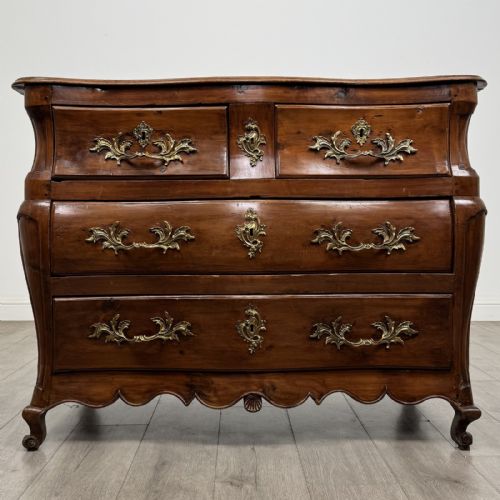
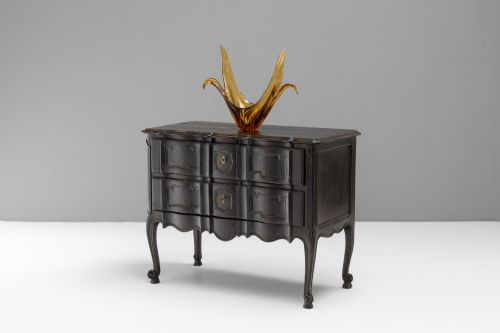
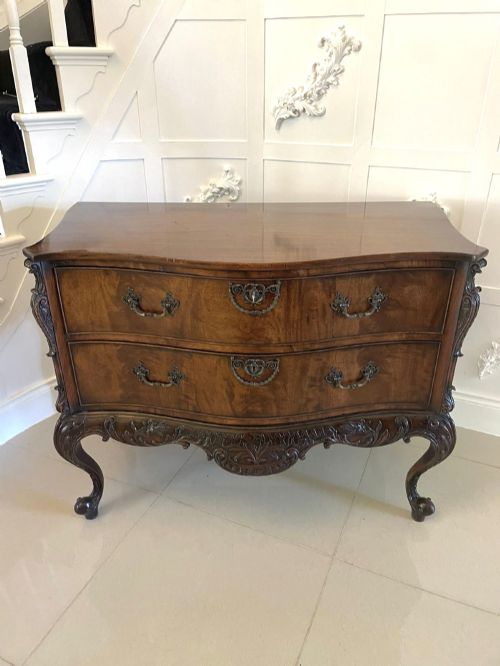
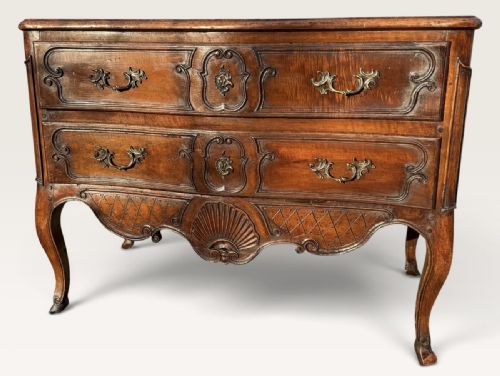
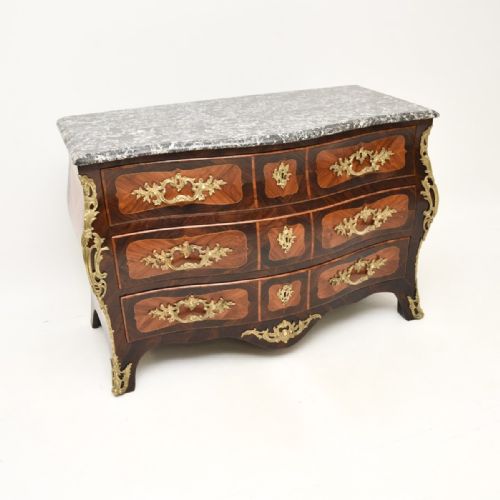
When you search for a french rococo chest, you are looking at continental storage furniture defined by asymmetric curves, bombé profiles and exuberant scrolling ornamentation. These pieces originate primarily from the eighteenth century through to various revival periods in the nineteenth and early twentieth centuries.
How they were made
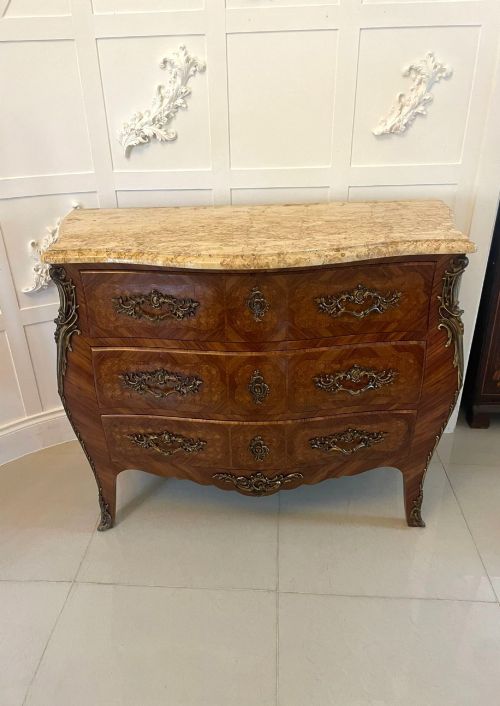
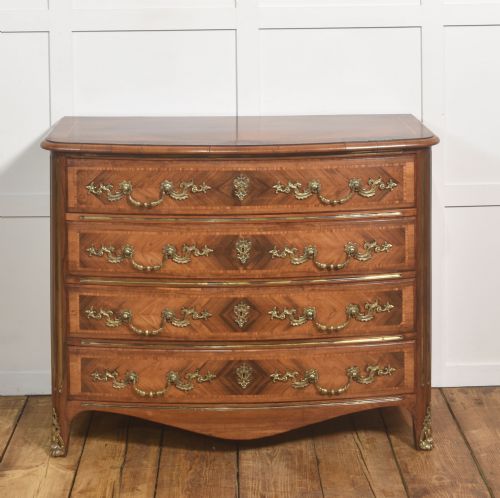
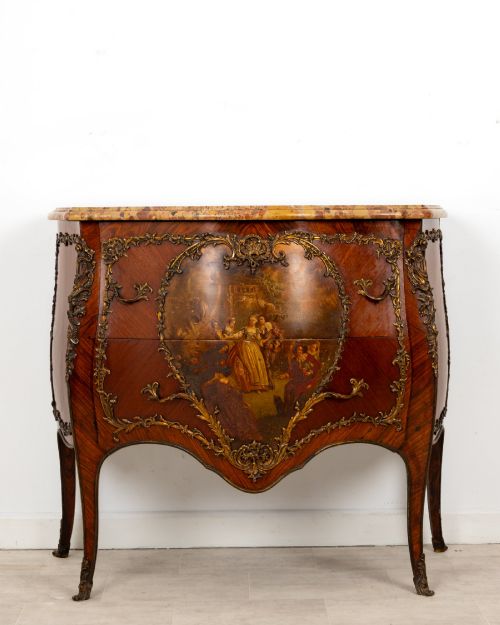
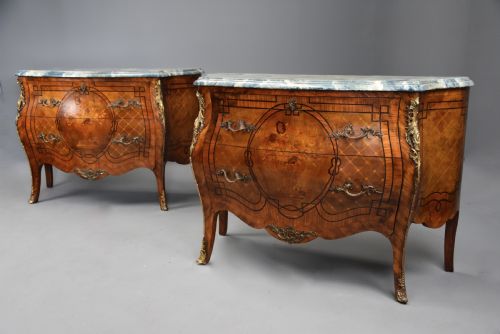
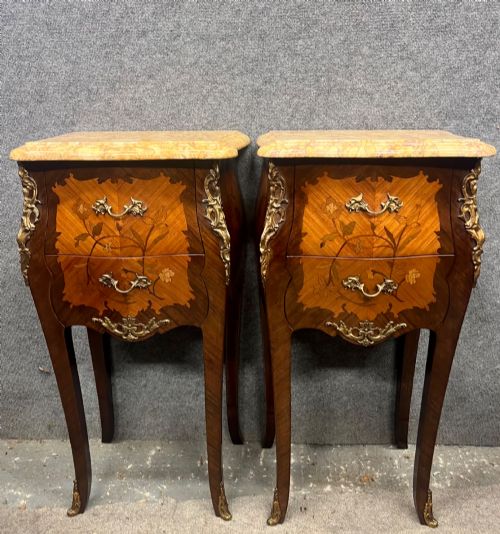
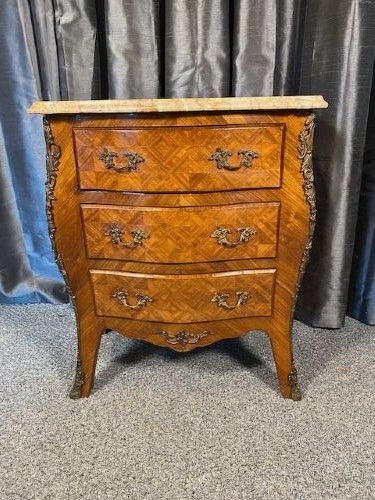
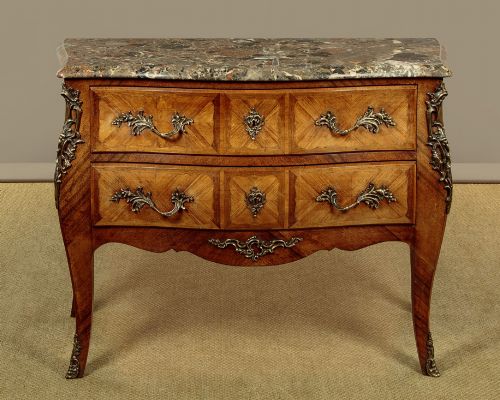
Cabinetmakers constructed carcasses using native and exotic timbers like oak, walnut and kingwood, often applying complex parquetry or floral marquetry veneers in geometric and pictorial patterns. Serpentine and bombé shapes required specialist steaming and shaping of wood before mounting decorative elements.
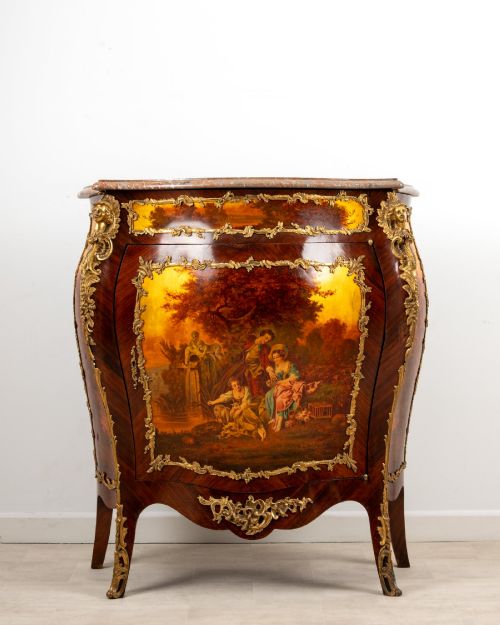
Finished surfaces frequently incorporated thick marble slabs cut to follow the undulating contours of the chest top, alongside cast or chased ormolu and gilt-bronze mounts fixed at the corners and handles. Some specialist examples utilised Vernis Martin or japanned lacquer panels to achieve painted orientalist scenes.
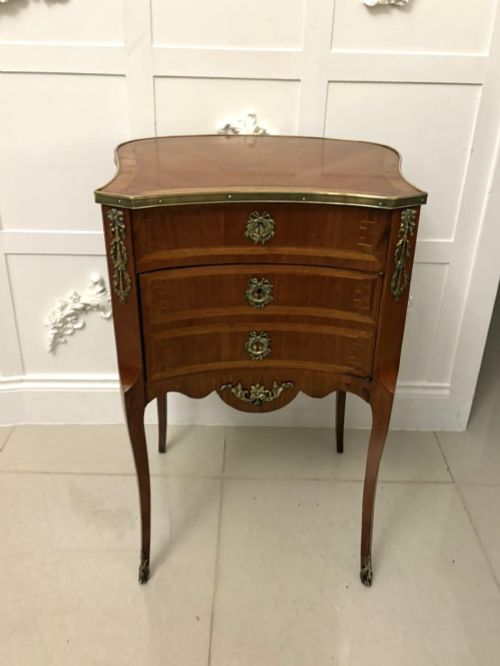
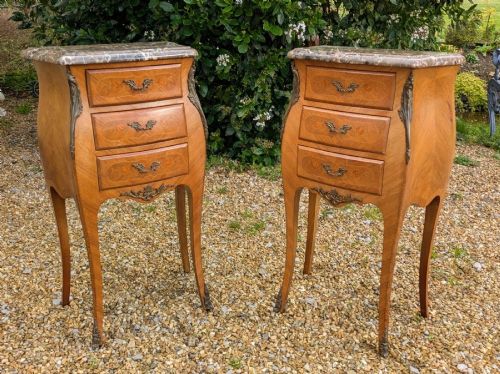
Several bedside cabinets arrived with proportions neat enough to convince anyone that eighteenth-century French nobility slept in very compact rooms.
What varies in quality
The distinction between standard commercial output and superior cabinetwork rests on the fluidity of the carved lines and the precision of the veneer work. Master makers integrated mounts so that they hugged every contour of the wood seamlessly, whereas lesser examples reveal gaps and heavy-handed casting.
The choice of materials also dictates the standing of the piece, with thick, figured marble tops and finely detailed gilt-bronze fittings marking out the higher echelon. Structural integrity in the curved drawers and the crispness of the marquetry cutting separate everyday items from the finest surviving examples.
Jacques Bircklé·E. Kahn
The French Rococo Chest Glossary
- Bombe
- A swelling, bulging outward shape characteristic of continental furniture. This silhouette requires considerable skill to veneer accurately.
- Ormolu
- Gilt bronze mounts applied to the angles and feet of furniture. The process involves coating bronze with a mercury and gold amalgam.
- Marquetry
- The art of applying small pieces of veneer to form decorative patterns and pictures. Craftsmen selected woods of contrasting colours to create depth.
- Parquetry
- Geometric mosaic woodwork arranged in patterns such as squares or lozenges. It forms a structured contrast to flowing floral marquetry.
- Vernis Martin
- A type of decorative lacquer finish developed in France to imitate Asian lacquer. It uses multiple resin layers polished to a high sheen.
French Rococo Chest: Frequently Asked Questions
What is a commode?
A commode is a low chest of drawers or cabinet developed in France during the seventeenth century. Over time, it evolved into a decorative centrepiece for the salon and bedroom.
These pieces typically sit lower than standard English chests and often feature marble tops. Their primary function shifted from simple utility to displaying the wealth and taste of the owner.
How do I spot a revival piece?
Revival pieces from the nineteenth and twentieth centuries copy the forms of the eighteenth century. Cabinetmakers during the Victorian era and the early nineteen-hundreds revived these styles with great technical skill.
To understand the age, look closely at the internal construction methods, secondary timbers, and the wear patterns on the drawer runners. Nineteenth-century workshops often utilised machine-sawn elements alongside hand-cut dovetails.
Where should I place a bombé chest?
A bombé chest makes a strong visual statement in a hallway, bedroom or living room. Because these pieces feature curved sides and bulging fronts, they require adequate floor space to be fully appreciated.
Keep them away from direct heat sources and strong sunlight to protect the fragile veneers and polished marble surfaces. Their rounded proportions suit rooms that need softening from rigid architectural lines.
How do I clean marble tops?
Marble tops require gentle maintenance using soft cloths and pH-neutral soap mixed with warm water. Avoid acidic cleaners, vinegar or abrasive scouring pads that etch the polished surface.
Dry the stone thoroughly after washing to prevent water marks. Periodic application of specialist stone wax helps protect the surface from everyday stains.