





Ebonised French Commodes
These ebonised french commodes combine dark polished timber, marble tops and gilt mounts to bring stately Continental presence into a room.
Ebonised French Commodes
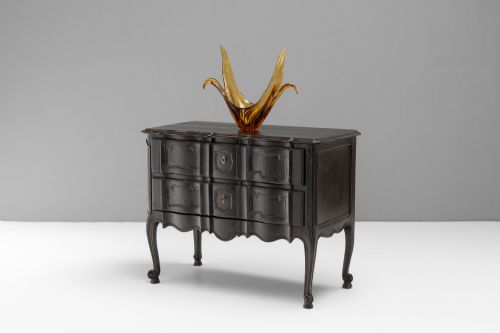
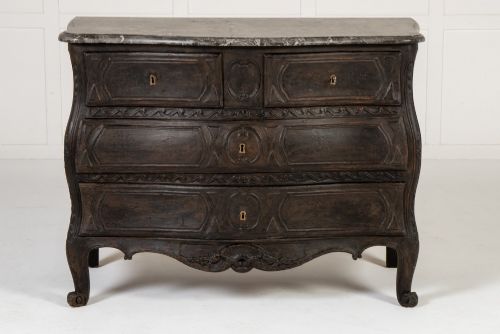
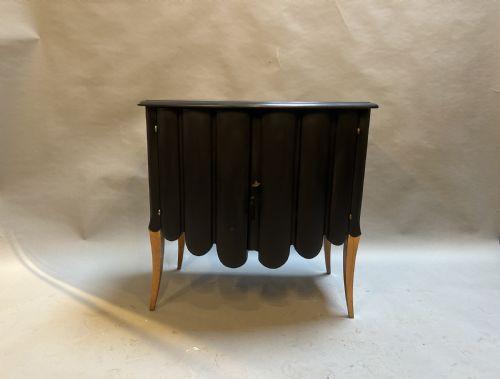
When you search for ebonised french commodes, you encounter storage furniture ranging from eighteenth-century bombe forms to later art deco creations. The selection includes side cabinets and chests of drawers featuring marble tops and marquetry.
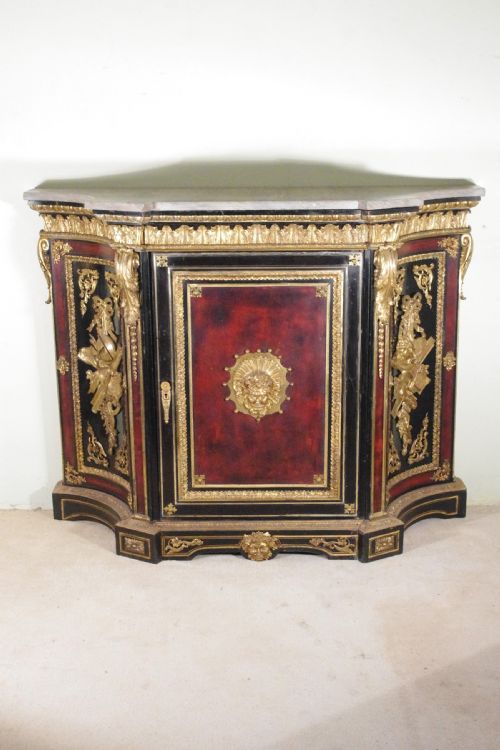
You are most likely to meet nineteenth-century Napoleon III examples alongside 1930s art deco interpretations. These items reflect various French provincial and chateau styles built across multiple decades.
How they were made
Cabinet makers utilised ebonised wood alongside walnut, burr elm, kingwood and palisander to construct these chests and side cabinets. Surfaces often incorporate floral marquetry or parchment-covered drawers.
Construction relied on combining dense timber with heavy marble tops, brass inlays and ormolu or gilt metal mounts. Artisans shaped fronts into serpentine and bombe profiles requiring precise joinery.
Ebonised French Commodes Retail Price Guide 2026
Typical asking prices for ebonised french commodes among the pieces listed under this phrase on Sellingantiques today, from the lower quarter to the upper quarter. They describe what is for sale here now, not the wider market.
Materials recorded across the inventory include marble, brass, ormolu, kingwood, walnut, and painted finishes.
What varies in quality
Quality depends upon the crispness of the gilt metal mounts and ormolu detailing fitted to the ebonised carcase. Finer examples display superior timber selection, such as burr elm or kingwood beneath the dark finish.
The integration of heavy marble tops and the precision of brass inlay distinguish finer cabinet work. Proportion and silhouette, particularly on serpentine and bombe forms, dictate the overall standard of manufacture.
The Ebonised French Commodes Glossary
- Ebonised wood
- Timber treated and polished to resemble ebony, providing a dark, uniform surface finish. This technique was widely utilised across nineteenth-century French furniture.
- Bombe
- A swelling, outward-curved commode or cabinet profile associated with eighteenth-century design. This serpentine shaping requires advanced woodworking skill.
- Ormolu
- Gilt bronze mounts applied to furniture edges and feet as decoration. These metal additions enhance the visual richness of the piece.
- Marquetry
- Inlaid wood pieces arranged to form decorative patterns and floral motifs across drawer fronts. Artisans select contrasting veneers to create detailed imagery.
- Serpentine front
- A curved furniture front featuring a concave centre flanked by convex ends. This flowing contour appears frequently on marble-topped side cabinets.
Ebonised French Commodes: Frequently Asked Questions
What periods do these commodes span?
The pieces date from the eighteenth century through the nineteenth century, including Victorian and Napoleon III periods, up to 1930s art deco designs.
This broad timeline means construction methods and decorative styles shift from ornate floral marquetry to sleek modernist forms.
What materials are used in these cabinets?
Makers utilised ebonised wood, walnut, burr elm, kingwood, and palisander, frequently pairing them with marble tops.
Additional decorative elements include brass inlays, parchment-covered drawers, and gilt metal or ormolu mounts.
Are these commodes suitable for modern interiors?
Their dark ebonised surfaces and marble tops allow them to function effectively as side cabinets or statement chests in contemporary spaces.
They provide practical storage while anchoring a room with traditional French proportions.