




Black Marble Top Console
A black marble top console anchors a room with weight and stillness, offering a cool stone surface above timber or iron.
Black Marble Top Console
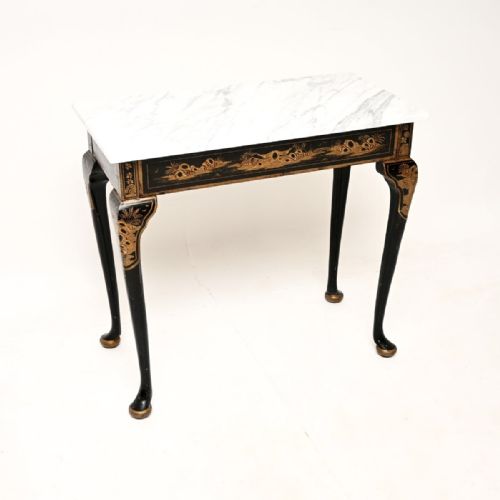
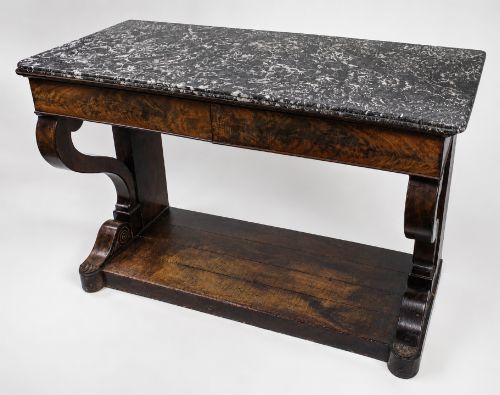
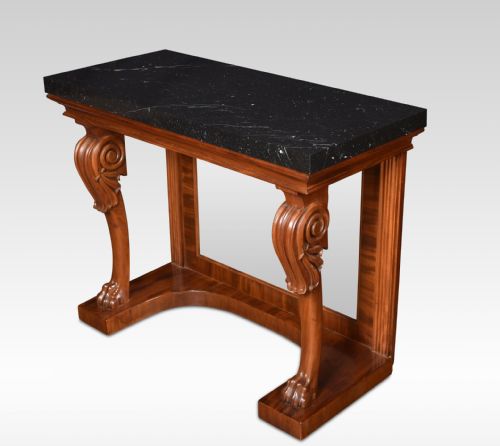
When you search for a black marble top console, you encounter substantial side pieces designed to sit flat against a wall in hallways and reception rooms. These surfaces provide a heavy, dark stone slab carried on frames of mahogany, satinwood, painted pine, or wrought iron.
The versions most common on this page span the nineteenth century, including Regency designs, French Empire pieces, and later Victorian examples. Alongside traditional console tables, you will find related forms such as chiffoniers, side tables, buffets, and wall brackets sharing the same dark stone top.
Origins stretch across France, England, Sweden, and the Netherlands, reflecting varied regional tastes in cabinet making and metalwork. Some pieces retain straightforward utilitarian forms like washstands or patisserie tables, while others adopt elaborate French provincial or Chinoiserie decoration.
How they were made
Carpenters constructed the structural frames using dense timbers like mahogany, satinwood, and elm, often applying veneer or lacquer to the exterior surfaces. Gilt embellishments and painted pine details enhanced the visual weight of the woodwork.
Heavy slabs of marble were cut and polished to fit the exact dimensions of each frame, providing a durable and cool horizontal plane. Wrought iron and brass components appear in supporting scrollwork and mounts, securing the heavy stone tops to their bases.
Two nineteenth century Black Forest side tables take the surprising form of seated hounds beneath their flat stone tops.
What varies in quality
The grade of the timber and the depth of the carving separate standard utility furniture from sophisticated salon pieces. Finer examples display carefully selected flame mahogany veneers, intricate marquetry, or meticulous lacquer work.
The weight and finish of the marble slab, alongside the precision of the joinery in the underframe, dictate the overall integrity of the piece. Superior construction ensures the slender legs or iron brackets securely bear the considerable mass of the stone top.
Gillows·Krieger of Paris
The Black Marble Top Console Glossary
- Console table
- A table designed to stand against a wall, frequently secured to it with brackets for stability.
- Flame mahogany
- A timber veneer displaying a distinctive swirling grain pattern resembling flickering flames, prized for high-end cabinet work.
- Chiffonier
- A tall sideboard or cabinet with shelves and drawers, developed during the nineteenth century for storage and display.
- Satinwood
- A durable, hard wood from tropical trees yielding a yellowish timber with a lustrous satin-like sheen.
- Gilt
- A thin layer of gold leaf applied to the surface of wood or metal to create a brilliant decorative finish.
Black Marble Top Console: Frequently Asked Questions
Where should I place a console table?
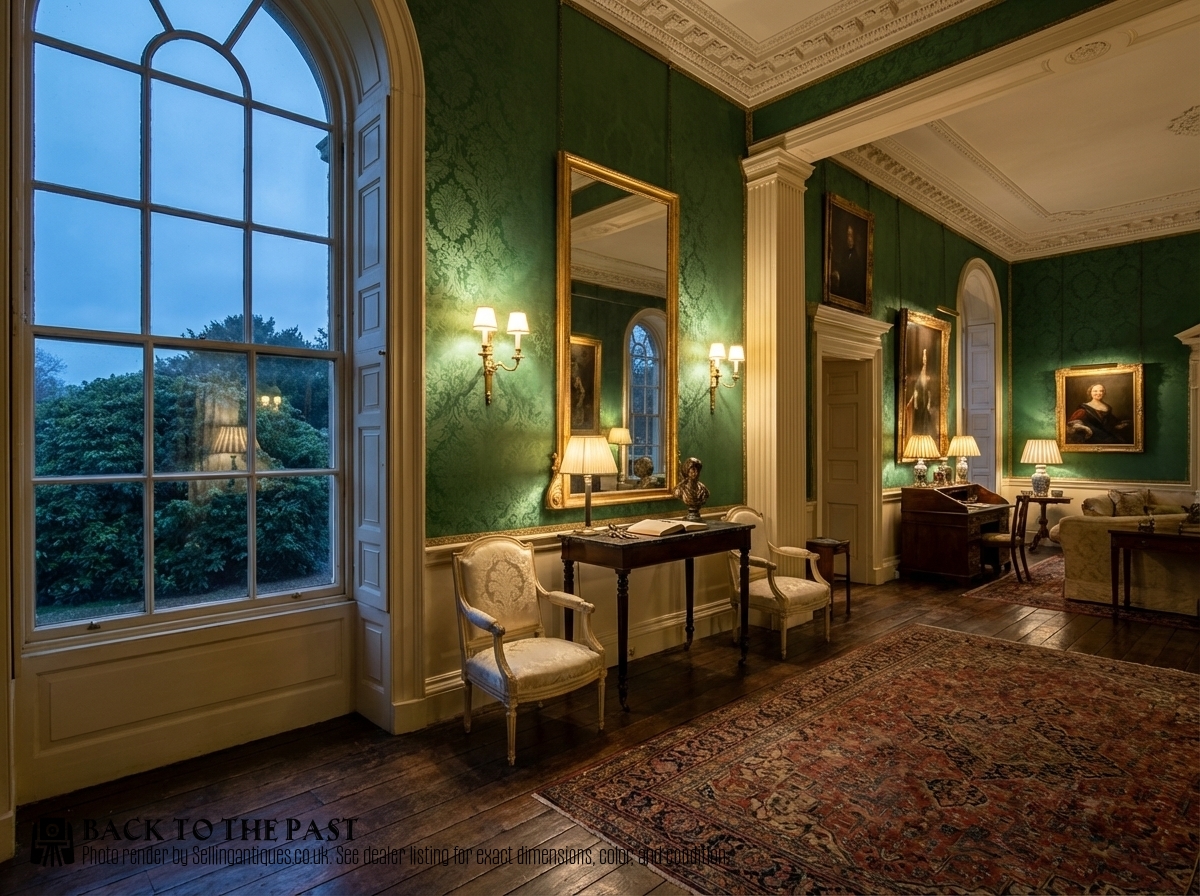
These pieces suit entrance halls, drawing rooms, and dining areas where a narrow footprint leaves floor space clear.
Because they stand flush against the wall, they provide a stable surface for lamps and decorative objects without blocking movement.
How do I care for the marble top?
Wipe the stone with a damp cloth and mild soap, avoiding acidic cleaners that can etch the polished surface.
Using coasters and placemats protects the dark marble from stains and moisture rings during daily use.
Are these tables sturdy enough for daily use?
The heavy stone tops provide natural gravity that keeps the frames firmly planted in position.
Wall brackets and sturdy timber or iron legs distribute the substantial weight safely across the floor.
How do I distinguish Regency from Victorian examples?
Regency pieces often exhibit neoclassical restraint with clean lines, mahogany veneers, and classical mounts.
Victorian variations frequently introduce bolder ornamentation, including Chinoiserie lacquer, darker painted pine, or elaborate mirror backs.