
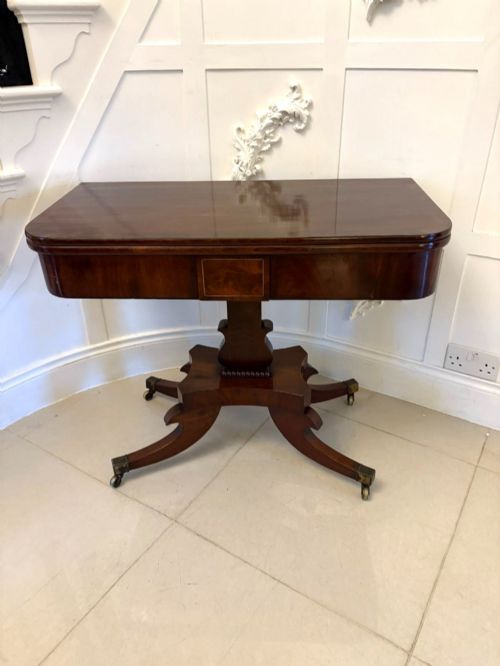
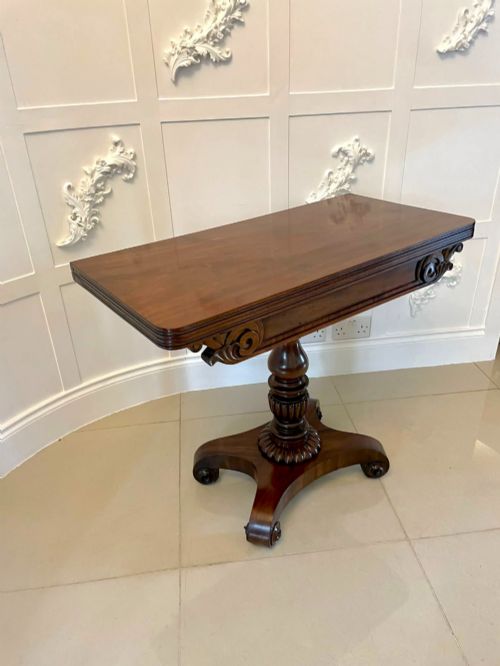
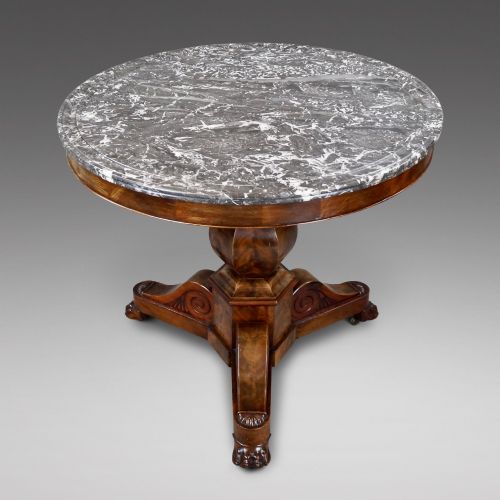
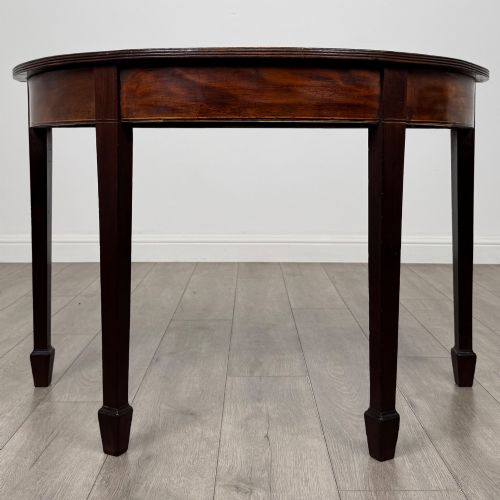




Nineteenth Century Entry Table
These nineteenth century entry table examples bring period timber and proportion into a hallway, offering practical surface space with distinct historical character.
Nineteenth Century Entry Table
A nineteenth century entry table encompasses console tables, hall tables, and side tables designed to sit against a wall or in a central circulation space. They serve as functional furniture that grounds an entranceway while displaying the rich timber work typical of the period.
The selections encountered here span formats such as demi-lune shapes, rectangular console forms, and galleried hall tables. These pieces draw on Regency, Victorian, and French aesthetic traditions to suit various interior scales.
Materials and construction
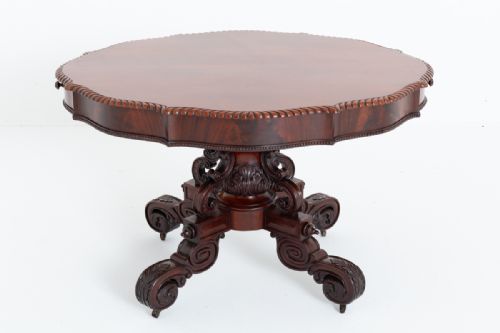
Cabinet makers utilised dense hardwoods like mahogany, rosewood, and walnut, often selecting figured veneers such as flame mahogany to create striking surface grain. These timbers were worked by hand to form structural frames, turned legs, and curved console brackets.
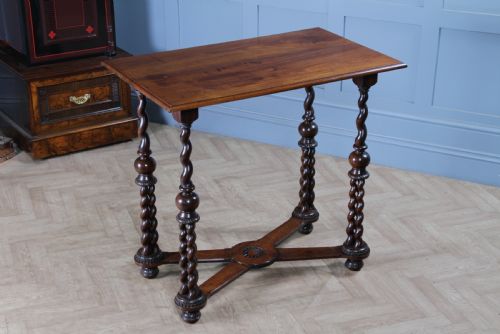
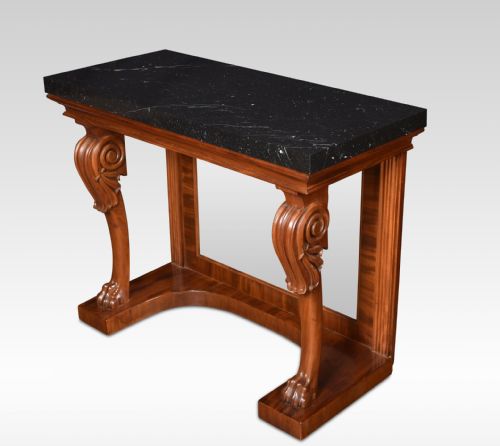
Secondary elements include inset marble tops, brass mounts, and carved details like barley twist supports. Construction relied on traditional joinery methods suited to the weight of stone and solid timber.
Listings feature mahogany, rosewood, walnut, and oak, alongside marble and brass.
Distinctions in quality
Quality rests in the selection of timber veneers and the crispness of hand-carved or turned details, such as triple barley twists or moulded edges. Superior examples display careful matching of wood grain across expansive surfaces like console tops.
The structural integrity of the frame and the refinement of stylistic references, whether referencing French Rococo Revival or English Regency design, separate standard utilitarian pieces from high-status cabinet work.
The Nineteenth Century Entry Table Glossary
- Console table
- A table designed to be fixed against a wall, frequently supported by front legs or console brackets. These forms often feature shaped marble tops.
- Demi-lune
- A half-moon shape used for side and console tables designed to sit flush against a wall in narrow spaces. This configuration maximises floor clearance in hallways.
- Flame mahogany
- A veneer cut from timber fork where the grain pattern resembles flickering flames. Cabinet makers used this figure to create decorative symmetry on table tops.
- Barley twist
- A spiral turning technique resembling a twist of barley sugar found on table legs and supports. It appears frequently on Victorian and French period pieces.
- Sofa table
- A rectangular table traditionally placed in front of a sofa, adapted over time for wider reception use. They often feature drop leaves and double pedestal bases.
Nineteenth Century Entry Table: Frequently Asked Questions
Where should a nineteenth century entry table be placed?
These tables fit naturally in entrance halls, corridors, or reception rooms where surface space is needed without blocking thoroughfares. Demi-lune and console formats sit flush against walls to make efficient use of narrow perimeters.
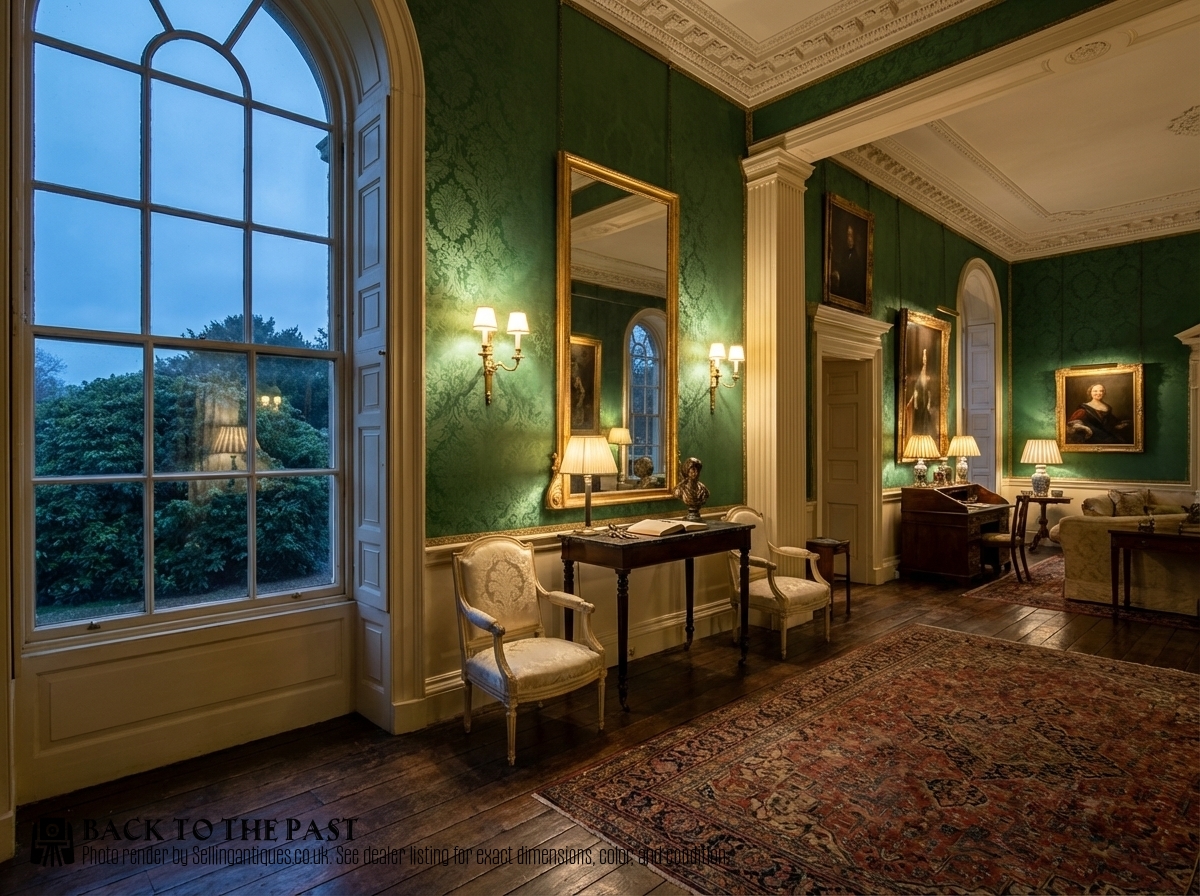
Positioning them beneath a mirror or artwork creates a traditional focal point upon entering a home. Their surface accommodates small daily items while establishing the period tone of the interior.
How do I care for antique mahogany and rosewood surfaces?
Polishing timber surfaces with traditional beeswax helps preserve the natural lustre and protects the wood grain from moisture. Avoid placing untreated hot items or liquids directly onto polished wood.
Keep tables away from direct heat sources and strong sunlight to prevent timber shrinkage and veneer lifting. Gentle dusting with a dry lint-free cloth maintains the finish without abrasive wear.
What is the difference between a console table and a hall table?
Console tables traditionally relied on wall brackets or front legs for support, often featuring decorative friezes and marble tops. Hall tables tended to be freestanding four-legged furniture pieces designed specifically for entrance spaces.
In modern usage, the terms often overlap depending on the maker's configuration and the presence of drawers or galleries. Both types served to furnish circulation areas in period homes.
How can I identify the period of a nineteenth century table?
Dating relies on examining the combination of timber selection, stylistic motifs, and construction methods. Regency pieces often show classical restraint with brass inlay, whereas Victorian examples may incorporate heavier turned elements like barley twists.
French pieces from the era frequently display regional variations such as provincial walnut or elaborate Rococo Revival carving. Comparing the leg turnings and edge moulding against documented period forms clarifies the date.